
NepalShakti
Guhyeshwari Temple
Located near Pashupatinath in Kathmandu, Guhyeshwari Temple is one of the 51 Shakti Peethas, representing the most secret and powerful manifestation of the goddess.
Kathmandu, Nepal Shiva/Shakti Built: 17th century (current structure), earlier origins
Share
Overview
Guhyeshwari Temple, also known as Guheswari, ranks among the most esoteric and powerful temples in the Hindu world. Located just 500 meters northeast of Pashupatinath Temple in Kathmandu, Guhyeshwari is one of the 51 Shakti Peethas, the most sacred sites of the goddess Shakti. The name 'Guhyeshwari' means 'Secret Goddess' or 'Hidden Goddess,' reflecting the Tantric nature of the worship performed here.
The temple holds a unique position in Hindu spirituality as the site where the 'secret part' (guhya) of Sati's body is believed to have fallen. Unlike most Shakti Peethas that are open and accessible, Guhyeshwari maintains an atmosphere of mystery and exclusivity. The goddess here is worshipped in the form of a yoni (female generative organ), representing the primordial creative energy of the universe.
Non-Hindus are not permitted inside the temple, and even Hindu devotees must observe strict purity rules before entry. The temple's Tantric associations and restricted access have contributed to its mystique, making it a destination for serious spiritual seekers rather than casual tourists. For initiates of the Shakta and Kaula traditions, Guhyeshwari is among the most potent spiritual power centers on earth.
Quick Facts
Deity
Shakti
Location
Kathmandu, Nepal
Built
17th century (current structure), earlier origins
Built By
King Pratap Malla (rebuilt)
Coordinates
27.71, 85.35
Timings
6:00 AM – 6:00 PM daily (closed 12-1 PM for bhog)
Entry Fee
Free entry; donations customary (inner shrine restricted to Hindus)
History
The origins of Guhyeshwari Temple are deeply rooted in the mythology of Daksha Yagna and Sati's self-immolation. According to the Shakti Peetha legends, this is the site where the goddess's reproductive organs fell after Vishnu's discus dismembered Sati's body. However, the physical temple structure as it exists today dates primarily from the 17th century, rebuilt by King Pratap Malla of Kathmandu.
The original temple was much older, possibly dating to the Licchavi period (5th-8th centuries CE). Historical records suggest that a temple existed at this site from at least the 7th century, but the current structure was completely rebuilt after the original was damaged, possibly during the Muslim invasions of the Kathmandu Valley in the 14th century.
King Pratap Malla, the great Malla king of Kathmandu who reigned from 1641 to 1674, undertook the reconstruction as part of his extensive temple-building program. He was a learned king, well-versed in Hindu and Buddhist philosophy, and his personal spiritual inclinations leaned toward Tantric Shakta worship. The temple was later renovated and expanded in the 18th and 19th centuries under the Shah dynasty.
Architecture
The Guhyeshwari Temple is a compact, rectangular structure built in a blend of Nepalese pagoda and North Indian shikhara styles. Unlike the open, airy design of most Nepalese temples, Guhyeshwari is deliberately enclosed and inward-facing, creating an atmosphere of secrecy and intimacy. The temple's dark interior, lit only by oil lamps, heightens the sense of entering a hidden, sacred space.
The most striking architectural feature is the silver-plated entrance door, decorated with intricate repoussé work depicting the goddess, various Tantric symbols, and the images of the eight mother goddesses (Ashta Matrikas). The door is flanked by two stone lions, the traditional mounts of Durga, serving as guardians of the sanctum. Above the door, a torana (decorative arch) features the image of the goddess Bhairav.
The inner sanctum is small and low-ceilinged, accessed by descending a short flight of stairs (the temple is built partially below ground level). The central shrine features a natural stone depression shaped like a yoni, covered with silver plating and continuously bathed in water and milk offerings. Above the yoni, a small silver image of the goddess is installed. The surrounding walls are lined with brass and copper vessels used in rituals.
Main Deity
Shakti
Shiva/Shakti
Religious Significance
Guhyeshwari Temple's primary significance is as one of the 51 Shakti Peethas, the most sacred network of goddess temples in Hinduism. Among these 51 sites, Guhyeshwari is considered among the most powerful because the body part that fell here — the female reproductive organ — represents the creative source of the universe. In Tantric philosophy, the yoni is the ultimate symbol of Shakti, the dynamic feminine principle that creates and sustains all existence.
The temple is exceptionally significant for followers of the Tantric and Kaula traditions, who consider Guhyeshwari a preeminent center of esoteric practices. The worship here incorporates elements of the left-hand path (Vamachara) that are not found in orthodox Hindu temples, including secret mantras, yantras, and rituals performed in the dead of night.
Guhyeshwari is also deeply connected to Pashupatinath in the spiritual geography of Kathmandu. While Pashupatinath represents the masculine principle of Shiva, Guhyeshwari represents the feminine principle of Shakti. Together, they form a complete circuit of Shiva-Shakti worship that is considered essential for those seeking both worldly power and spiritual liberation.
Temple Legends
The central legend of Guhyeshwari Temple is inseparable from the story of Daksha Yagna. When Sati immolated herself in the sacrificial fire of her father Daksha, the grieving Shiva carried her body across the universe. To stop Shiva's cosmic dance of destruction, Vishnu used his sudarshana chakra to dismember Sati's body into 51 pieces. The secret parts (guhya) of Sati fell at this spot, and the site became among the most sacred of the Shakti Peethas.
Another legend tells of the goddess Guhyeshwari appearing to the Tantric master Matsyendranath in a vision. Matsyendranath, the 9th-century Buddhist and Hindu Tantric sage, was granted the secret knowledge of the yoni worship at this site. This legend establishes a connection between Guhyeshwari and the Tantric Buddhism of Nepal, which coexists and intermingles with Hindu Tantra in this region.
A third tradition states that the great philosopher Adi Shankaracharya visited this temple in the 8th century CE. At Guhyeshwari, Shankaracharya is said to have composed the Guhyeshwari Stotram, a hymn praising the secret goddess. He established the Smarta tradition of worship here that continues to this day, combining Tantric elements with orthodox Vedic rituals.
Festivals & Celebrations
The most important festival at Guhyeshwari Temple is Maha Shivaratri, which paradoxically is more intensively celebrated here than at Pashupatinath despite being a goddess temple. This is because the union of Shiva and Shakti is the philosophical focus of the temple, and Shivaratri represents the night of their cosmic union. On Shivaratri night, special Tantric rituals are performed inside the temple, closed to the public and accessible only to initiated priests.
The temple also observes Navaratri with particular intensity, especially the Ashtami (eighth day) and Navami (ninth day) celebrations. During these nine nights of the goddess, the temple is illuminated with lamps, and continuous chanting of the Devi Mahatmya fills the air. The temple is closed to the general public during the most secret rituals of Navaratri.
Teej, the women's festival in August-September, sees thousands of women in red saris visiting the temple to pray for marital bliss and family prosperity. The full moon night of Kartik Purnima and the dark moon night of Mahalaya are also important dates in the temple's ritual calendar.
Visitor Information
Timings
6:00 AM – 6:00 PM daily (closed 12-1 PM for bhog)
Entry Fee
Free entry; donations customary (inner shrine restricted to Hindus)
Dress Code
Traditional Hindu attire required; men must be shirtless from the waist up (traditional dhoti); women in sari or salwar kameez
Photography
Strictly prohibited inside the temple
Best Time to Visit
The best time to visit Guhyeshwari Temple is during the autumn months of September to November, when the weather in Kathmandu is pleasant and the major festivals of Dashain and Tihar create an atmosphere of heightened spiritual activity. The early morning hours (6:00 AM – 8:00 AM) are ideal for darshan, as the temple is quieter and the morning rituals create a serene atmosphere.
Visiting during Maha Shivaratri in February-March offers the most powerful spiritual experience but is also the most crowded. The temple sees a steady flow of pilgrims throughout the year, but it never experiences the overwhelming crowds of Pashupatinath, allowing for a more contemplative visit.
The monsoon months (June-August) see reduced crowds, and the temple's cool stone interior provides relief from the rain and humidity. However, the slippery stone paths leading to the temple require caution during wet weather.
How to Reach
Guhyeshwari Temple is located in the Deopatan neighborhood of Kathmandu, approximately 500 meters northeast of the main Pashupatinath Temple complex. The temple is within easy walking distance of Pashupatinath, and most pilgrims visit both temples in a single trip. From the main gate of Pashupatinath, follow the path along the Bagmati River upstream for about 10 minutes.
From Kathmandu's city center, taxis can reach the temple in 20-30 minutes. Local buses to Chabahil or Gaushala stop within a 10-minute walk of the temple. The nearest significant landmark is the Pashupatinath Temple, which is well-known to all transportation services.
For international visitors, Tribhuvan International Airport is the main entry point, located about 3 kilometers from the temple. Most visitors combine a visit to Guhyeshwari with their Pashupatinath pilgrimage.
Nearby Attractions
Pashupatinath Temple is the most significant nearby attraction, just a 10-minute walk away. The Bagmati River ghats, where cremation ceremonies can be observed, lie along the path between the two temples. The Boudhanath Stupa, one of the largest Buddhist stupas in the world, is about 2 kilometers to the east.
The National Museum of Nepal in Chhauni, housing ancient artifacts and religious art, is 3 kilometers southwest. The Kathmandu Durbar Square with its ancient royal palace and temples is 4 kilometers to the southwest. The Swoyambhunath Stupa, atop a hill west of Kathmandu, offers panoramic views and is about 5 kilometers from Guhyeshwari.
Interesting Facts
- Guhyeshwari is one of the few temples where the yoni (female reproductive organ) is the primary object of worship rather than an anthropomorphic image of the goddess.
- The temple's main priest must come from a specific Tantric lineage and undergoes special initiation rites before being allowed to perform the inner sanctum rituals.
- Unlike most Hindu temples, Guhyeshwari's main doors open only in one direction — toward Pashupatinath — symbolically aligning the masculine and feminine divine principles.
- The temple is built partially underground, with the sanctum at a lower level than the courtyard, reflecting the hidden (guhya) nature of the worship.
- Offerings at Guhyeshwari include items not typically seen at other temples, such as special Tantric substances, red flowers, and specific types of cloth used in esoteric rituals.
- The temple has a unique tradition where the priest performs rituals completely naked during certain Tantric ceremonies, representing the state of being beyond all worldly covering.
Frequently Asked Questions
Are non-Hindus allowed inside Guhyeshwari Temple?
No, non-Hindus are not permitted inside the inner temple. The outer courtyard and the area outside the main gate are accessible to all visitors. This restriction is strictly enforced.
What is the dress code for Guhyeshwari Temple?
The dress code is stricter than at most Hindu temples. Men must wear a dhoti and be bare-chested from the waist up. Women must wear a sari or salwar kameez. Modern clothing is not permitted inside.
Is Guhyeshwari more important than Pashupatinath?
They are complementary rather than competitive. Pashupatinath represents Shiva (the masculine), while Guhyeshwari represents Shakti (the feminine). In Hindu philosophy, they are two aspects of the same ultimate reality, and many pilgrims visit both in sequence.
Can I take photographs at Guhyeshwari Temple?
Photography is strictly prohibited inside the temple building. Photography in the outer courtyard is discouraged out of respect for the temple's secretive nature.
What makes Guhyeshwari a Shakti Peetha?
According to Hindu tradition, Guhyeshwari is the site where Sati's reproductive organs (guhya) fell to earth during Vishnu's dismemberment of her body. It is counted among the 51 Shakti Peethas and is especially revered in Tantric tradition.
Sources & References
— every record linked above was re-requested for this release, so the link still resolves and the publisher still serves the document. It is a link check, not a re-verification of every sentence on this page.
More Temples in Nepal
Explore other Hindu temples in Nepal.
UNESCO 1979
Nepal
Pashupatinath Temple
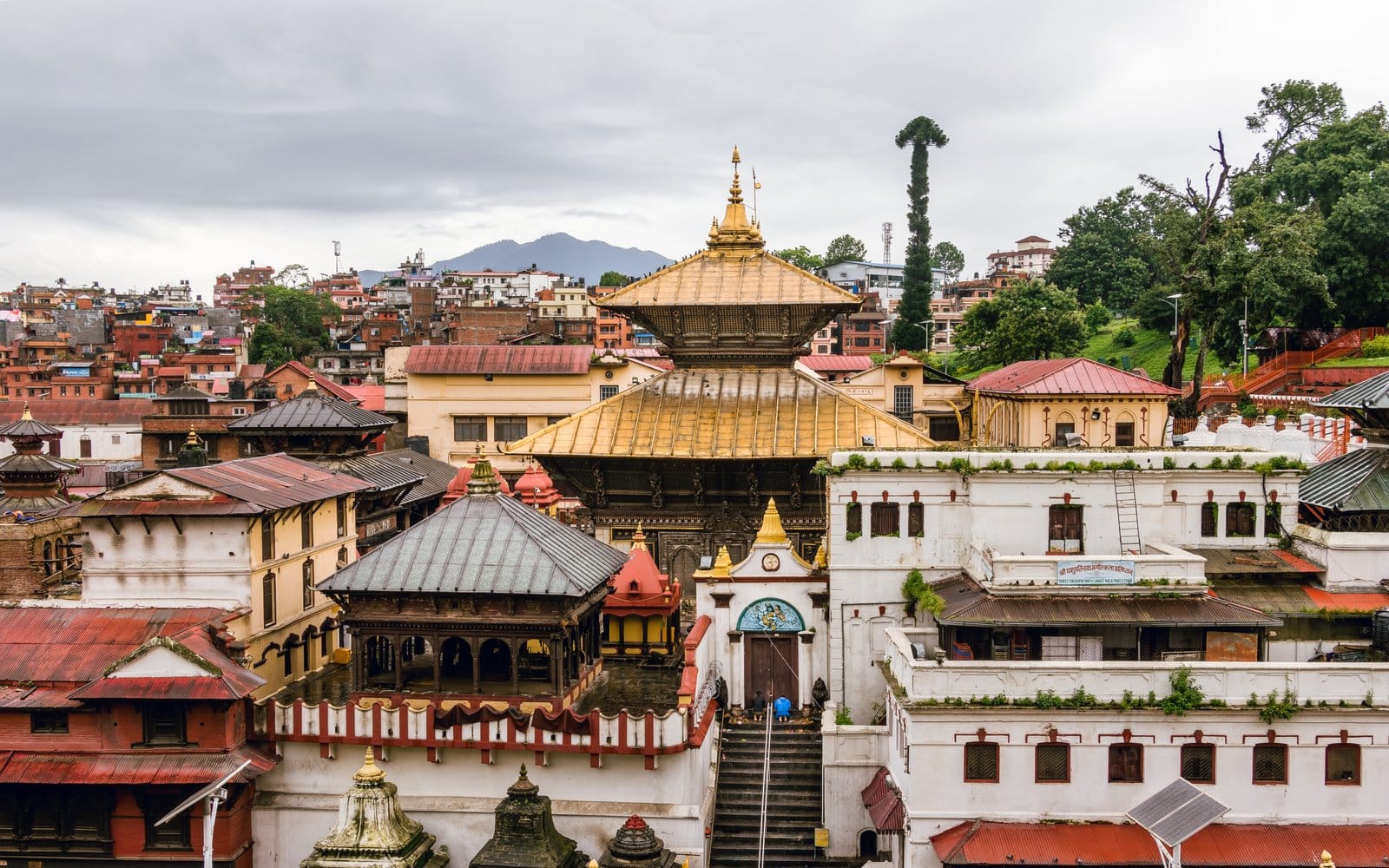
Explore Pashupatinath Temple in Kathmandu, Nepal. Complete guide to the UNESCO World Heritage Shiva shrine, four-faced linga, Bagmati ghats, and timings.
Explore Temple
Nepal
Muktinath Temple
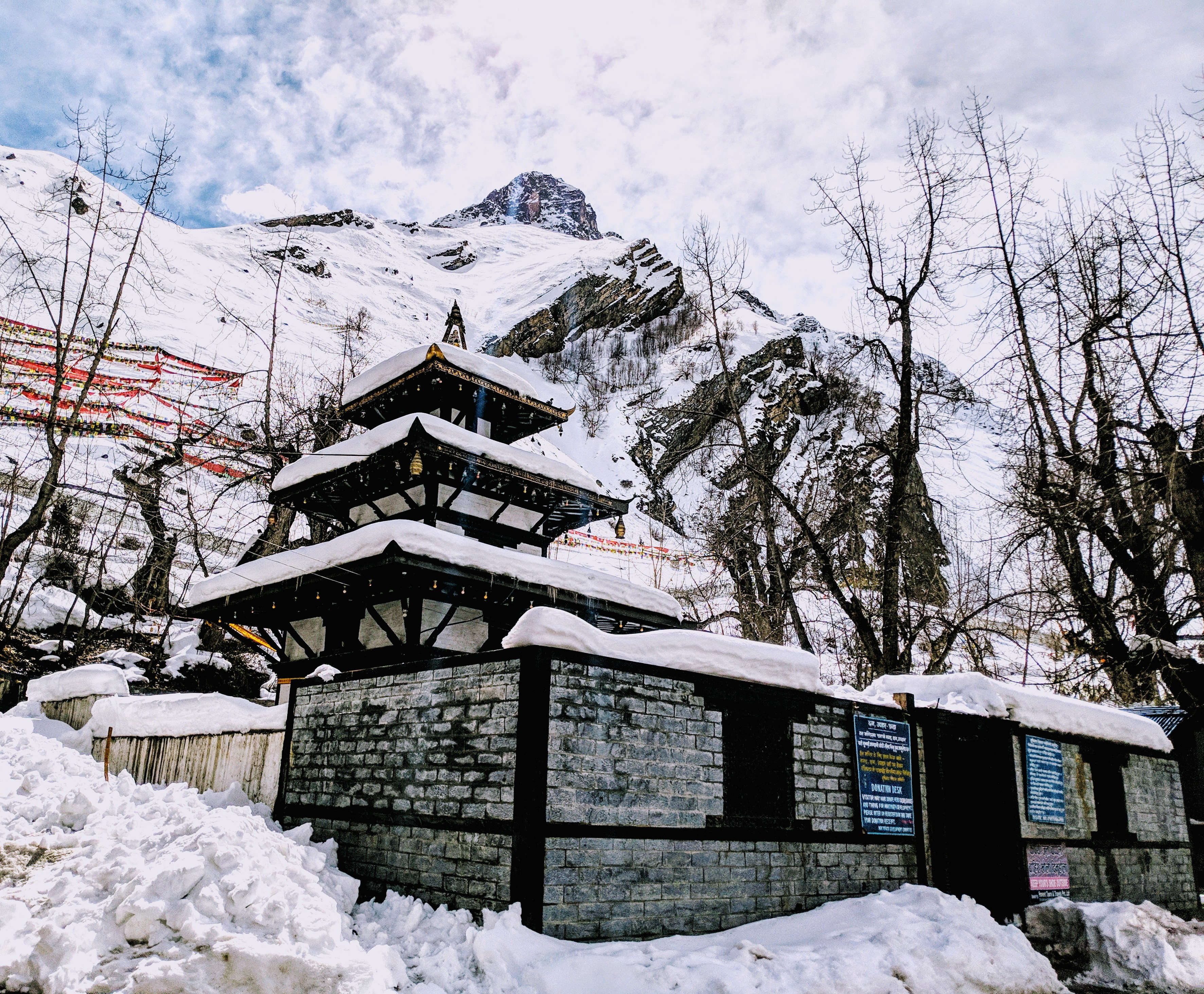
Situated at 3,710 meters in the Mustang district, Muktinath Temple is sacred to both Hindus and Buddhists, known for its 108 water spouts and eternal flame.
Explore Temple

Nepal
Manakamana Temple
Perched at 1,300 meters in the Gorkha district, Manakamana Temple is dedicated to the goddess Bhagwati and is renowned as a wish-fulfilling shrine accessible by cable car.
Explore Temple