
NepalDurga
Manakamana Temple
Perched at 1,300 meters in the Gorkha district, Manakamana Temple is dedicated to the goddess Bhagwati and is renowned as a wish-fulfilling shrine accessible by cable car.
Gorkha, Nepal Durga (Bhagwati) Built: 1623 CE (original structure)
Share
Overview
Manakamana Temple, whose name translates to 'Wish-Fulfilling' in Nepali, is Nepal's beloved and accessible pilgrimage sites. Dedicated to the goddess Bhagwati, a form of Durga, the temple sits atop a small hill at approximately 1,300 meters in the Gorkha district of central Nepal. The temple has been a center of Shakta worship for over three centuries, drawing devotees who believe that the goddess grants their sincerely made wishes.
The temple's popularity surged dramatically after the construction of the Manakamana Cable Car in 1998, which reduced the previously arduous two-day uphill trek to a ten-minute aerial ride. The cable car, spanning 2.8 kilometers across the Trisuli Valley, was among the longest in Asia at the time of its construction. Today, the temple receives over a million visitors annually, making it among the most visited religious sites in Nepal.
The Manakamana experience is unique because of the stunning journey: the cable car rises steeply from the river valley, offering panoramic views of the Trisuli River, terraced farmlands, and the surrounding hills. On clear days, the snow-capped peaks of the Annapurna and Manaslu ranges provide a spectacular backdrop.
Quick Facts
Deity
Durga
Location
Gorkha, Nepal
Built
1623 CE (original structure)
Built By
King Ram Shah of Gorkha
Coordinates
27.78, 84.67
Timings
6:00 AM – 6:00 PM daily (cable car operates 8:00 AM – 5:00 PM)
Entry Fee
Cable car fare: NPR 750 (round trip, foreign nationals); no entry fee for the temple itself
History
The history of Manakamana Temple dates back to the 17th century, during the reign of King Ram Shah of Gorkha. According to historical records, the original temple was built in 1623 CE. King Ram Shah was a devout Shakta and received the goddess's blessings in a dream, instructing him to establish her temple at this site. The temple played a significant role in the religious life of the Gorkha Kingdom, which later unified Nepal under Prithvi Narayan Shah.
For centuries, Manakamana remained a relatively remote pilgrimage destination, accessible only by foot through dense forests and steep hillsides. The journey from the nearest road head at Anbu Khaireni took nearly two days, and only the most determined pilgrims made the trip. The temple's remoteness contributed to its mystique and spiritual cachet.
The transformative moment came in the 1990s, when the Nepal government partnered with private investors to build the cable car system. Inaugurated in November 1998, the Manakamana Cable Car was a landmark infrastructure project that revolutionized access to the temple. The lower station at Kurintar, located on the Prithvi Highway between Kathmandu and Pokhara, made the temple a convenient stop for travelers on Nepal's main tourist corridor.
Architecture
The Manakamana Temple is constructed in the traditional Nepalese pagoda style, featuring a two-tiered roof with distinctive bronze and copper ornamentation. The temple's compact size belies its visual impact: the golden finial atop the roof catches the sunlight and can be seen from miles away, serving as a beacon for approaching pilgrims. The roof eaves are supported by carved wooden struts (tundals) depicting various Hindu deities, mythical animals, and floral patterns.
The sanctum sanctorum houses the image of Bhagwati: a stunning representation of Durga with eight arms, each holding a symbolic weapon. The goddess is adorned with elaborate silver and gold ornaments, including a distinctive crown (mukuta) donated by devotees. The image is flanked by smaller representations of Ganesh and Kumar (Kartikeya), Bhagwati's sons in the Devi Mahatmya tradition.
The temple courtyard features several subsidiary shrines dedicated to Shiva (as a linga), Ganesh, and the Navagraha (nine planets). A large brass bell hangs at the entrance, which devotees ring to announce their presence to the goddess. The surrounding compound includes rest houses (dharamshalas), a community kitchen, and a viewing platform that offers panoramic vistas of the surrounding landscape.
Main Deity
Durga
Durga (Bhagwati)
Religious Significance
Manakamana Temple holds profound significance for Nepalese Hindus as a Siddha Peetha, a place where the goddess is believed to be present in a particularly powerful form to fulfill wishes. The name itself — Manakamana — denotes the heart's desire, and the temple's reputation as a wish-fulfilling shrine attracts devotees from all walks of life. Farmers pray for good harvests, business people seek prosperity, couples pray for children, and students seek academic success.
The temple is especially significant for the Shakta tradition, which worships the divine feminine (Devi) as the supreme cosmic power. The Bhagwati form worshipped here is considered a particularly benevolent aspect of Durga, approachable and responsive to the prayers of ordinary people. This accessibility — both spiritual and, since the cable car, physical — distinguishes Manakamana from many other Shakta temples.
The temple also holds historical importance as the family deity of the Shah dynasty, which ruled Nepal from 1768 to 2008. The Shah kings considered Manakamana Bhagwati their protective goddess and made regular offerings at the temple. This royal association elevated the temple's status and contributed to its national importance.
Temple Legends
The most famous legend of Manakamana Temple tells of a farmer who had the unique ability to understand the language of animals. One day, the farmer overheard a cow revealing to its calf that the queen of Gorkha was actually an incarnation of the goddess Bhagwati. Shocked by this revelation, the farmer unintentionally revealed his secret knowledge.
The queen, realizing her divine identity had been discovered, vanished into the earth, leaving behind instructions that a temple be built at the spot.
Another legend states that the goddess Bhagwati appeared to King Ram Shah in a dream and instructed him to find her image at the base of a particular banyan tree. The king discovered the self-manifested (swayambhu) image of the goddess and built the temple around it. This legend explains why the temple's central image is considered especially powerful — it was not made by human hands but appeared spontaneously.
A third narrative involves the goddess testing her devotees' faith. According to local stories, the goddess sometimes appears as an old woman at the temple gate, asking pilgrims for food or money. Those who treat her kindly receive blessings; those who dismiss her face misfortune. This story reinforces the temple's emphasis on compassion and the unpredictability of divine grace.
Festivals & Celebrations
The grandest festival at Manakamana Temple is Dashain (Vijayadashami), the most important Hindu festival in Nepal, celebrated for 15 days in September-October. During Dashain, the temple is decorated with thousands of lights and flowers, and special pujas are performed throughout the day. The eighth day (Ashtami) and ninth day (Navami) see the highest footfall, with devotees offering animal sacrifices — traditionally goats and roosters — as part of the worship.
The temple also celebrates Chaitra Dashain (in March-April) with similar fervor. Full moon days (Purnima) are considered especially auspicious, and the temple conducts special havan (fire offerings) on these days. The Tuesday and Saturday of each week are considered the most favorable for worship, drawing larger crowds.
Navaratri, the nine-night festival of the goddess, is observed twice a year (spring and autumn) with nightly bhajan sessions, recitation of the Devi Mahatmya, and special offerings. During Navaratri, the temple stays open late into the night, and the atmosphere is charged with devotional energy.
Visitor Information
Timings
6:00 AM – 6:00 PM daily (cable car operates 8:00 AM – 5:00 PM)
Entry Fee
Cable car fare: NPR 750 (round trip, foreign nationals); no entry fee for the temple itself
Dress Code
Modest clothing required
Photography
Photography allowed in the courtyard but not inside the sanctum
Best Time to Visit
The best time to visit Manakamana Temple is from October to March, when the weather in central Nepal is cool and dry. The skies are clearest during these months, offering unobstructed views of the Manaslu and Annapurna ranges during the cable car ride. The Dashain festival in October provides the most vibrant temple experience, with the compound decorated and alive with celebration.
Weekdays are far less crowded than weekends and Tuesdays, which are considered the goddess's favored day. Early morning visits (8:00 AM – 10:00 AM) allow for a peaceful darshan before the rush. The cable car queues can exceed an hour during peak season and festival days, so planning ahead is essential.
The monsoon season (June-September) brings heavy rainfall and cloud cover that can obscure the mountain views. However, the hillsides turn lush green, and the temple sees fewer crowds. The cable car operates throughout the year, though services may be suspended temporarily during thunderstorms for safety reasons.
How to Reach
Manakamana Temple is among the most accessible pilgrimage sites in Nepal thanks to the cable car system. The lower cable car station at Kurintar is located on the Prithvi Highway, approximately 106 kilometers west of Kathmandu and 72 kilometers east of Pokhara. Regular tourist and local buses ply this route, making the temple a convenient stop on the Kathmandu-Pokhara journey.
From Kurintar, the cable car ascends 2.8 kilometers to the upper station near the temple. The ride takes approximately 10 minutes and climbs from 276 meters to 1,302 meters, a vertical ascent of over 1,000 meters. The cable car system has 36 cars, each carrying six passengers, and operates from 8:00 AM to 5:00 PM daily.
For those who prefer a more traditional approach, a walking trail from Anbu Khaireni (about 6 kilometers from Kurintar) climbs to the temple in 4-5 hours. This route follows ancient pilgrimage paths through forests and offers a more contemplative journey, though it is steep and physically demanding.
Nearby Attractions
The Gorkha Durbar, the historic palace of the Shah kings, is located approximately 20 kilometers north of Manakamana. This hilltop fortress-palace is the birthplace of Prithvi Narayan Shah, the unifier of Nepal, and offers excellent views of the surrounding hills and the Manaslu range. The town of Gorkha itself is a historic settlement with traditional Newari and Gurung architecture.
The Trisuli River valley below Kurintar is popular for white-water rafting, with Class III-IV rapids offering adventure for visitors combining pilgrimage with outdoor activities. The Manakamana Cable Car also provides access to several Gurung villages near the temple, where visitors can experience traditional village life and homestay accommodations.
For wildlife enthusiasts, the Chitwan National Park, a UNESCO World Heritage Site, is about a two-hour drive from Kurintar via Bharatpur. The park offers jungle safaris, elephant rides, and sightings of one-horned rhinoceroses, Bengal tigers, and numerous bird species.
Interesting Facts
- The Manakamana Cable Car was the first public cable car system in Nepal and, at 2.8 km, was among the longest in Asia when it opened in 1998.
- The temple's name is a compound of 'mana' (heart) and 'kamana' (desire), literally 'heart's desire' in Nepali.
- Manakamana was the family deity of the Shah dynasty that ruled Nepal for 240 years, and each Shah king made a mandatory pilgrimage after their coronation.
- The cable car transports over 1.2 million passengers annually, with each car capable of carrying 6 passengers at a speed of 6 meters per second.
- The temple conducts approximately 200 animal sacrifices daily during Dashain, mostly goats, which are then distributed as prasad.
- A documentary titled 'Manakamana' (2013) by Stephanie Spray and Pacho Velez, composed entirely of single static shots in the cable car, won awards at international film festivals.
Frequently Asked Questions
What is the best day to visit Manakamana Temple?
Tuesdays and Saturdays are considered the most auspicious days for worshipping the goddess and see the highest attendance. For a quieter experience, visit on weekdays, especially Monday through Thursday.
Are non-Hindus allowed inside the temple?
Yes, Manakamana Temple welcomes visitors of all faiths. Modest dress is required, and visitors must remove their footwear before entering the temple building.
How long does the cable car ride take?
The cable car journey from Kurintar to Manakamana takes approximately 10 minutes and is among the most scenic cable car rides in Nepal, offering panoramic views of the Trisuli River valley and Himalayan foothills.
Is it necessary to sacrifice an animal at Manakamana?
No, animal sacrifice is not mandatory. Devotees who prefer non-violent offerings can offer fruits, coconuts, flowers, and money instead. Many modern devotees choose vegetarian offerings.
Can I stay overnight at Manakamana?
Yes, there are basic guesthouses and dharamshalas (pilgrim rest houses) near the temple. For more comfortable accommodation, Kurintar at the base of the cable car has several hotels with modern amenities.
Sources & References
— every record linked above was re-requested for this release, so the link still resolves and the publisher still serves the document. It is a link check, not a re-verification of every sentence on this page.
More Temples in Nepal
Explore other Hindu temples in Nepal.
UNESCO 1979
Nepal
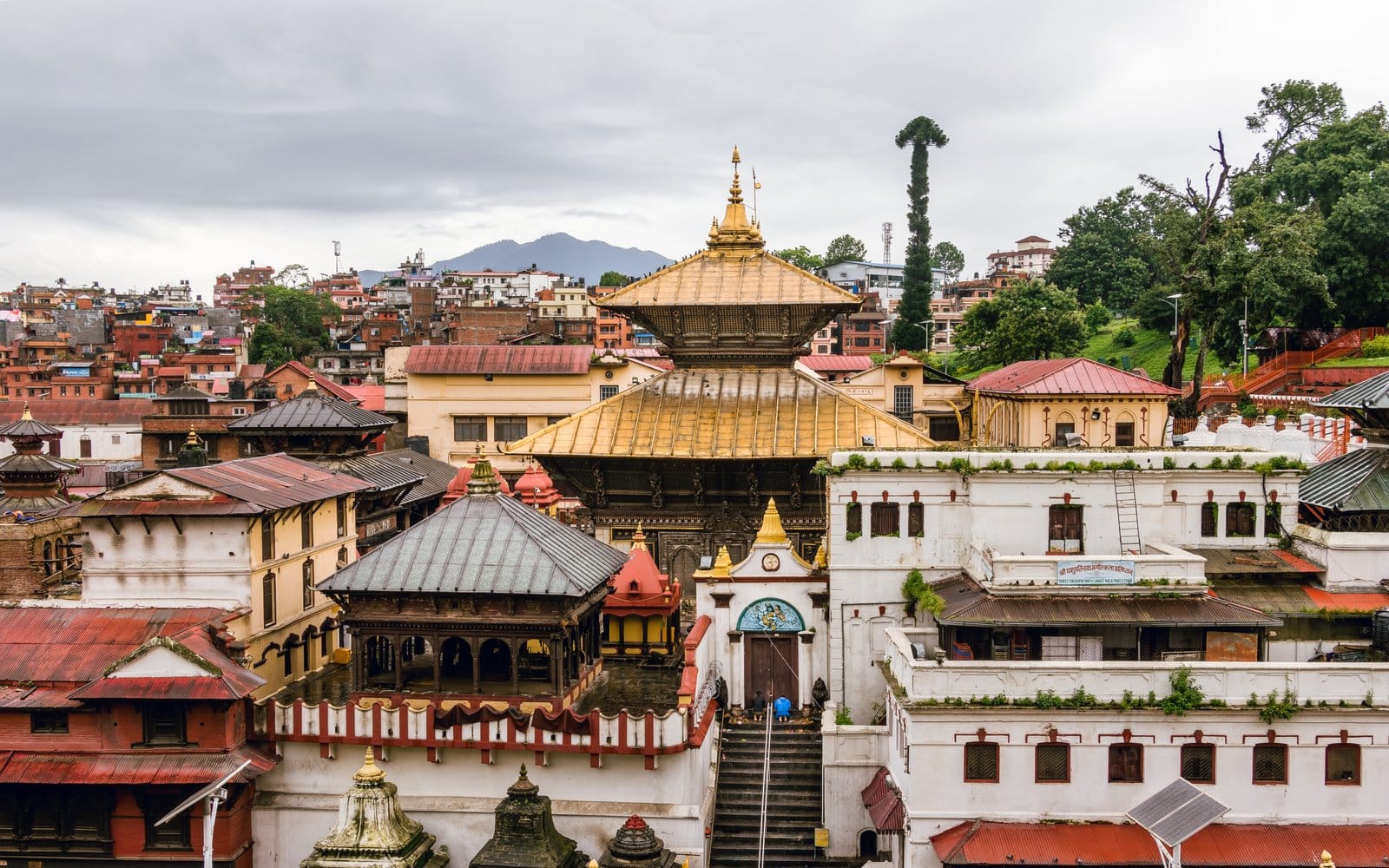
Pashupatinath Temple
Explore Pashupatinath Temple in Kathmandu, Nepal. Complete guide to the UNESCO World Heritage Shiva shrine, four-faced linga, Bagmati ghats, and timings.
Explore Temple
Nepal
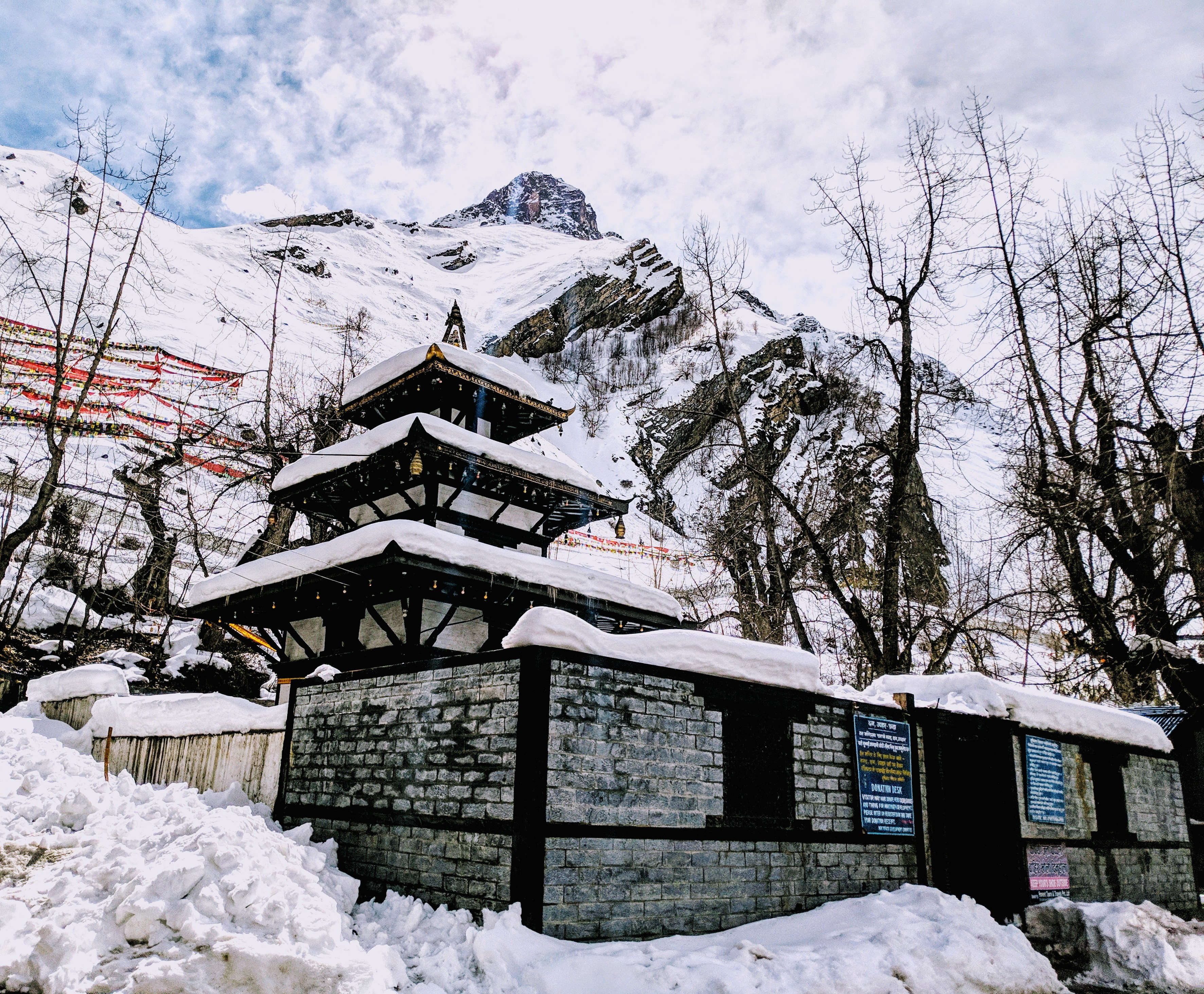
Muktinath Temple
Situated at 3,710 meters in the Mustang district, Muktinath Temple is sacred to both Hindus and Buddhists, known for its 108 water spouts and eternal flame.
Explore Temple

Nepal
Guhyeshwari Temple
Located near Pashupatinath in Kathmandu, Guhyeshwari Temple is one of the 51 Shakti Peethas, representing the most secret and powerful manifestation of the goddess.
Explore Temple