NepalVishnu
Muktinath Temple
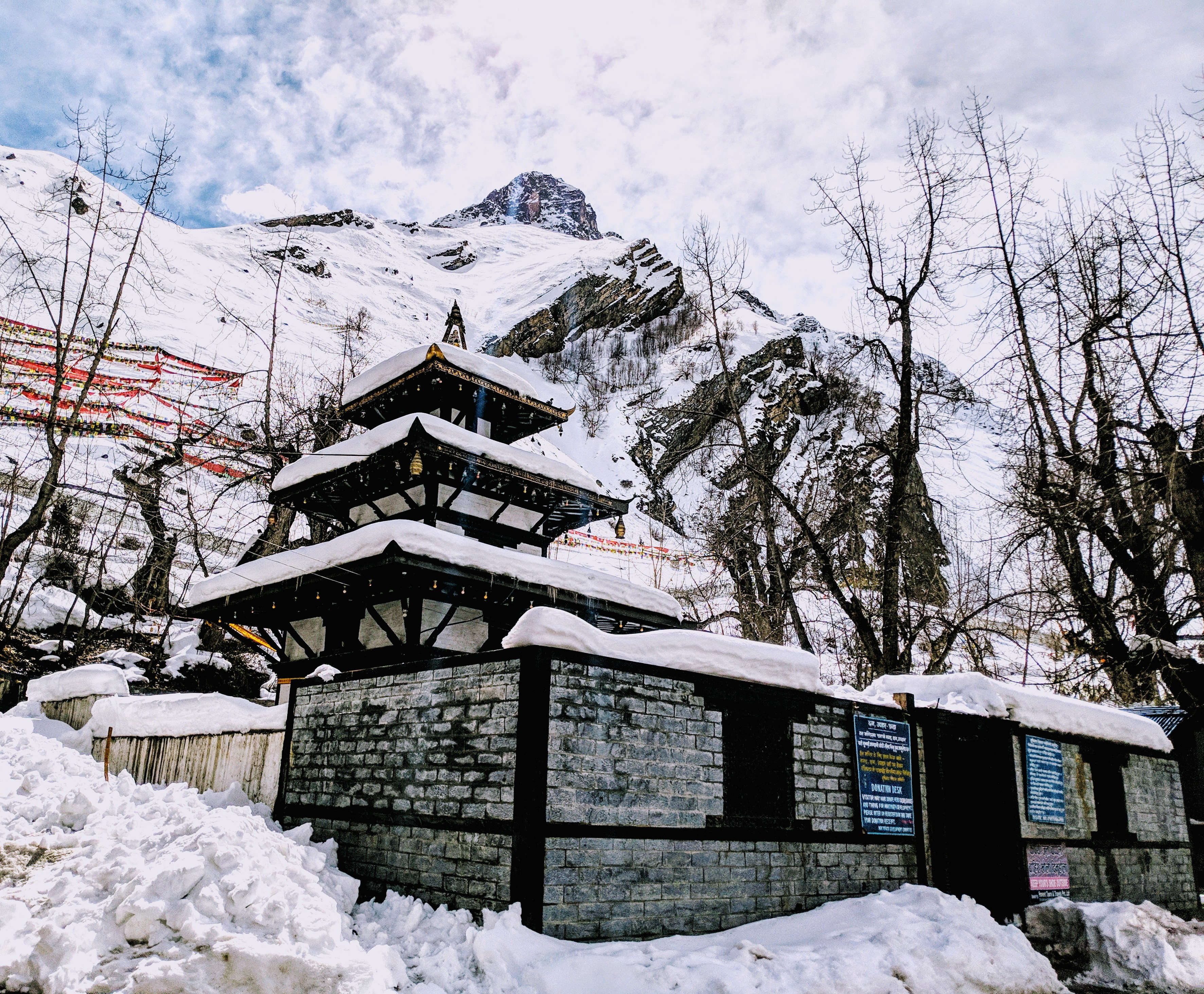
Situated at 3,710 meters in the Mustang district, Muktinath Temple is sacred to both Hindus and Buddhists, known for its 108 water spouts and eternal flame.
Mustang, Nepal Vishnu Built: 18th century (current structure)
Share
Overview
Muktinath Temple, also known as Mukti Kshetra (the place of liberation), is a supremely sacred Hindu temple, located at an elevation of 3,710 meters in the remote Mustang district of north-central Nepal. The temple is dedicated to Lord Vishnu, who is worshipped here as Muktinath, the Lord of Liberation. For Hindus, a pilgrimage to Muktinath is believed to grant moksha, release from the endless cycle of birth and death.
The temple complex is a remarkable fusion of Hindu and Buddhist traditions. While the main shrine serves Hindu devotees, a nearby Buddhist gompa (monastery) and the presence of Buddhist monks reflect the syncretic religious culture of the Himalayan region. The site's most distinctive feature is a semicircle of 108 stone water spouts shaped like cow heads, through which ice-cold water flows continuously, fed by an underground spring.
Surrounded by the stark, windswept landscape of the Tibetan Plateau, Muktinath presents a dramatic and unforgettable sight. The Annapurna and Dhaulagiri mountain ranges loom in the distance, their snow-capped peaks creating a breathtaking backdrop. The thin air at this altitude adds to the spiritual intensity of the pilgrimage experience.
Quick Facts
Deity
Vishnu
Location
Mustang, Nepal
Built
18th century (current structure)
Built By
King Ranjit Malla of Bhaktapur
Coordinates
28.82, 83.87
Timings
5:00 AM – 6:00 PM daily (hours may vary in winter due to daylight)
Entry Fee
Free darshan for all visitors; ACAP (Annapurna Conservation Area) permit NPR 3,000 for foreign nationals, NPR 1,000 for SAARC nationals
History
The history of Muktinath Temple is deeply intertwined with both Hindu and Buddhist traditions. According to Hindu scriptures, the temple was established in antiquity and is mentioned in various Puranas and Tantric texts. The Vaishnavite tradition considers Muktinath one of the 108 Divya Desams, the sacred abodes of Vishnu, and the only one located in Nepal. The Sri Vaishnava saint-poet Nammalvar praised Muktinath in his Divya Prabandham hymns composed between the 7th and 9th centuries CE.
The current temple structure was built in the 18th century by King Ranjit Malla of Bhaktapur, one of the three Malla kingdoms of the Kathmandu Valley. However, the site had been a pilgrimage destination for centuries before this construction. Tibetan Buddhists call the site Chumig Gyatsa, meaning 'Hundred Waters,' and believe it is one of the twenty-four Buddhist power places where dakinis (female spirits) gather.
In the 19th and early 20th centuries, the temple fell into disrepair due to its remote location and the difficulty of pilgrimage. However, the late 20th century saw a revival of interest, with improved roads, the construction of airstrips at Jomsom, and growing religious tourism from India. The temple underwent major renovations in the 1990s, funded by Indian and Nepali donors.
Architecture
The Muktinath Temple complex is a modest yet striking example of Himalayan temple architecture adapted to extreme environmental conditions. The main Vishnu temple is a pagoda-style structure with a single tier roof built of stone and wood, designed to withstand heavy snow loads and fierce winds. The sanctum houses a golden murti of Vishnu standing in the padmasana (lotus) posture, a rare representation in itself.
The most architecturally distinctive feature of Muktinath is the semicircular arcade of 108 stone water spouts, each carved in the shape of a cow's head (mukha). The spouts are arranged in three rows of 36, fed by a natural spring channeled through an intricate stone aqueduct system. The water is sourced from the nearby Kali Gandaki River via underground channels that have functioned continuously for centuries.
Adjacent to the main Vishnu temple is the Jwala Mai temple, a small shrine housing the sacred eternal flame that burns from a natural gas spring. The flame, which is believed to have been burning for thousands of years, is enclosed within a stone chamber with a brass roof. The temple also features a Tibetan Buddhist gompa with traditional prayer wheels, colorful murals, and a three-tiered pagoda roof decorated with Buddhist symbols.
Main Deity
Vishnu
Religious Significance
Muktinath holds extraordinary significance for Hindus as among the holiest Vaishnavite pilgrimage sites. It is the only Divya Desam located outside India, making it a must-visit for devout Sri Vaishnavas. The name Muktinath literally means 'Lord of Liberation,' and the temple is believed to have the power to grant moksha to those who faithfully make the pilgrimage. The combination of the 108 water spouts and the eternal flame represents the five elements (pancha bhuta): water, fire, air, earth, and space.
For Tibetan Buddhists, Muktinath is among the most important pilgrimage sites outside Tibet. The site is associated with Padmasambhava (Guru Rinpoche), the 8th-century Buddhist master who brought Buddhism to Tibet. A nearby cave is said to be where Padmasambhava meditated. The site's Buddhist name, Chumig Gyatsa, reflects the 108 water spouts that are also sacred in Buddhism, where 108 is a significant number representing the 108 defilements to be overcome.
The temple's location at high altitude adds to its spiritual cachet. Pilgrims who complete the arduous journey to Muktinath are believed to have their sins cleansed and their spiritual merit multiplied many times over. Many elderly Hindus make the journey specifically in hope of attaining liberation in this lifetime.
Temple Legends
The most prominent legend of Muktinath tells of Lord Vishnu's curse and redemption. According to the story, Vishnu was once angered by the sage Brighu, who kicked Vishnu on his chest. Vishnu cursed Brighu and then sought to purify himself of the anger and sin. He came to the remote Himalayan valley that is now Muktinath and performed severe penance for thousands of years.
Pleased with his devotion, the gods declared the spot sacred and promised that anyone who bathed in the 108 water spouts would be liberated from the cycle of rebirth.
Another legend connects Muktinath to the Ramayana. After Ravana's defeat, Lord Rama is said to have visited this site to purify himself of the sin of killing a Brahmin (Ravana was a Brahmin). Rama installed the original linga at the nearby Jwala Mai temple and worshipped Shiva, who appeared as the eternal flame. This legend explains the site's simultaneous association with both Vishnu (the main shrine) and Shiva (the flame).
Buddhist traditions tell of the great master Milarepa, who meditated in a cave near Muktinath and attained enlightenment. The cave, which still exists, is a pilgrimage site for Buddhists who come to meditate in the same spot where Milarepa achieved his realization. The wind howling through the valley is said to be the sound of Milarepa's songs of realization echoing through the ages.
Festivals & Celebrations
The most important festival at Muktinath is Janai Purnima (Raksha Bandhan), celebrated in August during the full moon. On this day, Brahmin priests change their sacred threads (janai) and tie protective threads (raksha) on devotees' wrists. Thousands of pilgrims visit Muktinath specifically for this festival, believing that the thread tied here has special protective powers.
Rama Navami, celebrating Lord Rama's birth, is another major festival marked by special pujas and bhajan singing. The temple also celebrates Kartik Purnima (November full moon), when a special fair is organized. During the Tibetan Buddhist Losar (New Year), the monastery adjacent to the temple holds cham dances performed by monks wearing elaborate masks and costumes.
Throughout the year, special yajnas (fire ceremonies) are performed on auspicious astronomical dates. The temple is particularly crowded during the summer months (June-August) when the weather is relatively mild and the pilgrimage route is accessible. During winter, the temple takes on a stark, frozen beauty but sees fewer visitors due to heavy snowfall and extreme cold.
Visitor Information
Timings
5:00 AM – 6:00 PM daily (hours may vary in winter due to daylight)
Entry Fee
Free darshan for all visitors; ACAP (Annapurna Conservation Area) permit NPR 3,000 for foreign nationals, NPR 1,000 for SAARC nationals
Dress Code
Modest clothing; warm layers essential due to high altitude and cold temperatures
Photography
Photography allowed in the complex, but avoid photographing the main sanctum and idols
Best Time to Visit
The ideal time to visit Muktinath is from June to September, when the weather is relatively warm and the pilgrimage route is fully accessible. Daytime temperatures range from 10°C to 20°C (50°F – 68°F), though nights remain cold. The monsoon rains from July to August bring afternoon cloud cover and occasional rain, but mornings are clear, offering stunning mountain views.
May and June are also favorable months, with blooming rhododendrons and wildflowers carpeting the hillsides. The temple is open for darshan from around 5:00 AM to 6:00 PM. Early morning visits are recommended to beat the afternoon winds that sweep through the Mustang Valley, often reaching 40-50 km/h.
Winter (November to March) is extremely cold, with temperatures dropping to -20°C (-4°F) at night and frequent snowfall. The temple remains open, but the journey is much more challenging. Many pilgrims avoid winter unless they are prepared for severe conditions. Heavy snow can block the road from Jomsom to Muktinath for days at a time.
How to Reach
Muktinath is the most challenging pilgrimage sites to reach, located in remote north-central Nepal near the Tibetan border. The most common route involves flying from Kathmandu to Pokhara (30 minutes), then taking a domestic flight from Pokhara to Jomsom (20 minutes). From Jomsom, a 4-hour uphill jeep ride or a two-day trek covers the 20 kilometers to Muktinath. Helicopter services from Pokhara to Muktinath are available for those with higher budgets.
For the more adventurous, a multi-day trek from Pokhara via Ghorepani and Tatopani offers spectacular mountain views. This route takes 7-10 days and passes through traditional Thakali villages, rhododendron forests, and across the Kali Gandaki Valley. Experienced trekkers can also approach from Manang via the Thorong La pass (5,416m), one of the highest trekking passes in the world.
From India, pilgrims fly to Kathmandu and then proceed to Pokhara and Jomsom. An overland route exists through the Sunauli border crossing to Pokhara, followed by the Jomsom road. The road from Pokhara to Jomsom is now paved but remains subject to landslides during the monsoon season.
Nearby Attractions
The Jwala Mai Temple with its eternal flame stands just 100 meters from the main Muktinath shrine. The nearby Buddhist monastery, with its prayer wheels and colorful murals, is a serene complement to the Hindu temple. The Kali Gandaki Valley below offers some of the world's deepest river gorges and excellent fossil hunting for shaligrams, sacred black stones believed to represent Vishnu.
The town of Jomsom, the district headquarters of Mustang, lies 20 kilometers south of Muktinath and serves as the main gateway. Jomsom offers the opportunity to experience Thakali culture, known for its distinct cuisine and hospitality. The Muktinath Valley itself is a stark, high-altitude desert with unique geological formations and views of Dhaulagiri (8,167m), Nilgiri, and Annapurna.
For those with more time, the walled city of Lo Manthang in Upper Mustang is a two-day journey from Muktinath, offering a glimpse into a preserved medieval Tibetan kingdom. The Marpha village, famous for its apple orchards and brandy, is a scenic stop on the way to Jomsom.
Interesting Facts
- Muktinath is the only Divya Desam (sacred abode of Vishnu) located outside India, making it uniquely important for Sri Vaishnava tradition.
- The 108 water spouts represent the 108 names of Vishnu and also correspond to the 108 beads of a japamala (prayer beads).
- The eternal flame at Jwala Mai temple burns continuously from a natural gas spring and is considered one of the five elements of nature.
- Despite being a Hindu temple, Muktinath has a Tibetan Buddhist monastery within its complex, and Buddhist monks participate in daily rituals.
- The Kali Gandaki river valley near Muktinath is the deepest river gorge in the world, with a depth of approximately 5,571 meters.
- Shaligrams, the fossilized ammonite stones sacred to Vishnu, are found in the Kali Gandaki riverbed and are an important part of Muktinath's spiritual economy.
Frequently Asked Questions
Is Muktinath Temple open to all faiths?
Yes, Muktinath is open to people of all faiths. Unlike many orthodox Hindu temples, Muktinath has a tradition of inclusivity and welcomes Hindus, Buddhists, and visitors of any background.
Do I need special permits to visit Muktinath?
Yes, entering Mustang district requires a special trekking permit from the Department of Immigration in Kathmandu. The Annapurna Conservation Area Permit (ACAP) is also required. These can be arranged through trekking agencies or directly in Kathmandu.
How long does the pilgrimage to Muktinath take?
A typical pilgrimage from Kathmandu takes 4-5 days: a day to reach Pokhara, a day to fly or drive to Jomsom, a day at Muktinath, and return travel. A trekking approach adds 7-12 days depending on the route chosen.
What is the significance of 108 water spouts?
Bathing under the 108 water spouts is the central ritual at Muktinath. Pilgrims must pass under all 108 spouts, ideally in a single session, to wash away their sins and attain liberation. The number 108 is sacred in Hinduism, Buddhism, and Jainism.
Is altitude sickness a concern at Muktinath?
Yes, at 3,710 meters, Muktinath is at high altitude. Visitors arriving directly by helicopter or jeep can experience acute mountain sickness (AMS). Acclimatizing in Jomsom (2,720m) for a night is strongly recommended before ascending.
Sources & References
— every record linked above was re-requested for this release, so the link still resolves and the publisher still serves the document. It is a link check, not a re-verification of every sentence on this page.
More Temples in Nepal
Explore other Hindu temples in Nepal.
UNESCO 1979
Nepal
Pashupatinath Temple
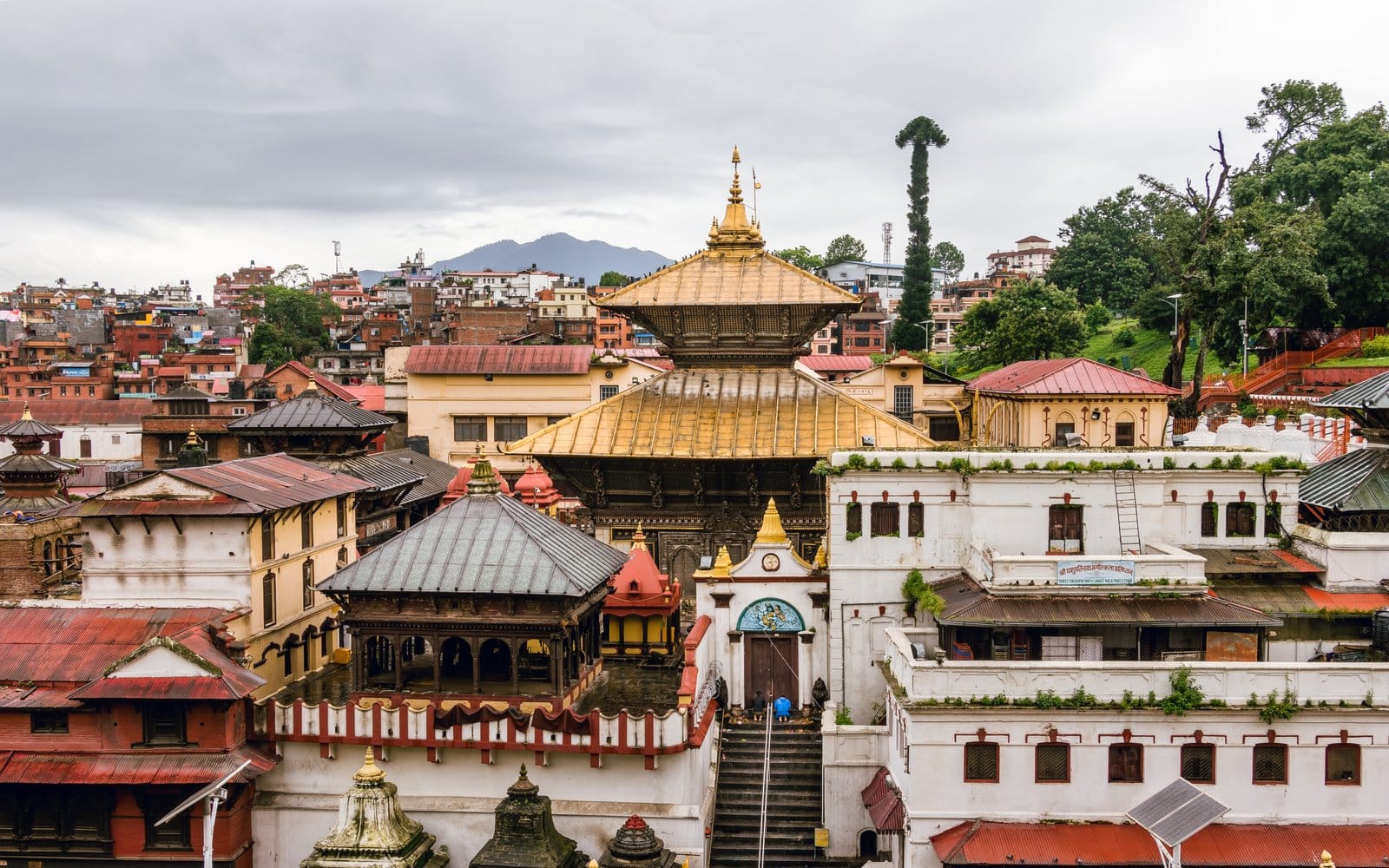
Explore Pashupatinath Temple in Kathmandu, Nepal. Complete guide to the UNESCO World Heritage Shiva shrine, four-faced linga, Bagmati ghats, and timings.
Explore Temple

Nepal
Manakamana Temple
Perched at 1,300 meters in the Gorkha district, Manakamana Temple is dedicated to the goddess Bhagwati and is renowned as a wish-fulfilling shrine accessible by cable car.
Explore Temple

Nepal
Guhyeshwari Temple
Located near Pashupatinath in Kathmandu, Guhyeshwari Temple is one of the 51 Shakti Peethas, representing the most secret and powerful manifestation of the goddess.
Explore Temple