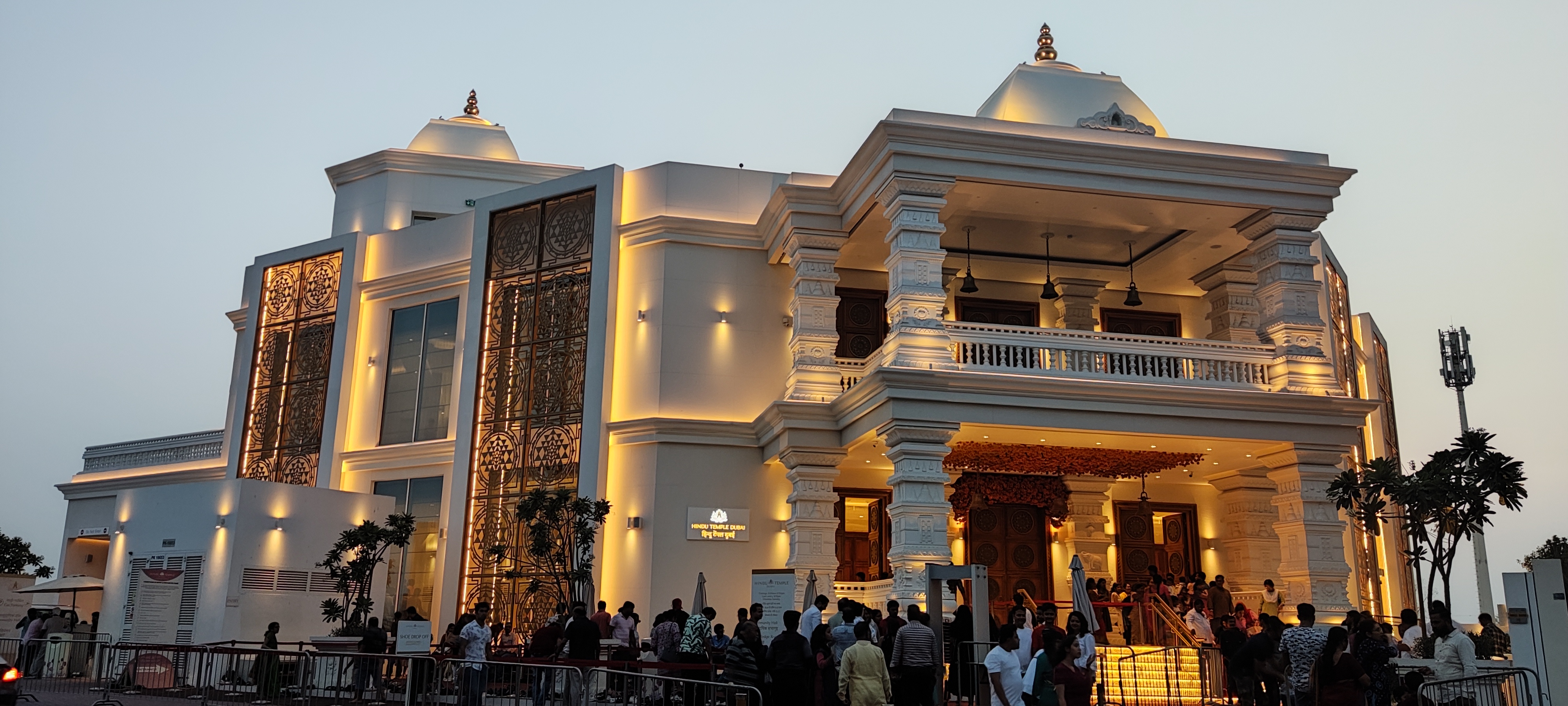
UAE
Shiva and Krishna Temple
The oldest Hindu temple in Dubai, established in 1958 in the historic Al Fahidi neighborhood, serving the South Indian expatriate community with dual shrines to Shiva and Krishna.
Dubai, UAE Shiva, Krishna Built: 1958
Share
Overview
The Shiva and Krishna Temple in Bur Dubai is the oldest Hindu temple foundation in the United Arab Emirates, established in 1958, decades before the UAE was formed. In January 2024 the historic complex's Shiva Mandir and adjoining Gurudwara relocated to the new Hindu Temple Dubai in Jebel Ali (opened October 2022), while its Krishna shrine continues to welcome devotees at the Bur Dubai location.
The temple historically served as a central shrine for Dubai's Hindu community through the city's transformation from a regional trading port to a global metropolis, housing two complete shrines under one roof before the Shiva shrine's relocation: one dedicated to Lord Shiva and another to Lord Krishna.
The temple's origins trace back to Indian merchants who settled in Dubai along Dubai Creek. These early residents, primarily from Gujarat, Kerala, and Sindh, established the temple in a traditional wind-tower house (barjeel) characteristic of old Dubai architecture. The temple has been expanded and renovated multiple times over the decades to accommodate the growing Hindu population, while retaining its location in the historic quarter.
Walking through the narrow lanes of Al Fahidi to reach the temple reveals the traditional urban fabric of old Dubai. The neighborhood's coral stone buildings, wind towers, and shaded alleys reflect the pre-oil trade links between the western coast of India and the Persian Gulf.
Quick Facts
Deity
Shiva, Krishna
Location
Dubai, UAE
Built
1958
Coordinates
25.26, 55.30
Timings
Note: the Shiva Mandir relocated to the Hindu Temple Dubai complex in Jebel Ali on 3 January 2024. The Krishna shrine continues at the Bur Dubai complex, open approximately 6:00 AM – 12:00 PM and 4:30 PM – 8:30 PM daily
Entry Fee
Free entry
History
The Shiva and Krishna Temple was established in 1958 by Indian merchants who had settled in Dubai along the Dubai Creek. Dubai at the time was a small pearling and trading port with a population of just 40,000. The Indian community, though small, was economically significant, controlling much of the gold and textile trade. These early Indian settlers pooled resources to create a place of worship in a traditional barjeel (wind-tower) house in the Al Fahidi district.
As Dubai's economy grew following the discovery of oil in 1966 and the formation of the UAE in 1971, the Indian expatriate community expanded dramatically. The temple underwent its first major expansion in the 1980s, adding space to accommodate the growing congregation. In the 1990s, the temple was extensively renovated and the existing structure was rebuilt while preserving its traditional Arabian architectural character.
The temple was traditionally the only Hindu place of worship in Dubai for decades. As the community grew to over 200,000 Hindus, the Dubai government granted permission for additional temples, including the Shree Krishna Haveli and the Sindhi Guru Darbar Temple. However, the Shiva and Krishna Temple remains the most historic and continues to hold a special place in the hearts of Dubai's Hindu community.
It operates under the official patronage of the Dubai government and the Hindu Temple Management Committee.
Architecture
The Shiva and Krishna Temple is housed in a traditional Arabian courtyard building typical of Dubai's pre-oil architecture. The structure features a wind tower (barjeel), thick coral stone walls, and a central courtyard that allows natural light and ventilation. The architecture blends local building traditions with the functional requirements of a Hindu temple. Unlike the grand stone shikharas of India, the temple adapts to the available urban space in the historic neighborhood.
The Shiva shrine occupies the northern hall of the complex, featuring a traditional linga installation with a Nandi (bull) sculpture facing the sanctum. The Krishna shrine is in the southern hall, with a murti of Krishna playing the flute, accompanied by Radha. Both sanctums are decorated with colorful floral garlands, oil lamps, and traditional South Indian temple ornaments.
The courtyard serves as the main gathering space for festivals and ceremonies. A gopura-style entrance arch, painted in bright colors with images of deities, marks the temple entrance from the alley. The walls feature murals depicting scenes from the Ramayana, Mahabharata, and the life of Krishna. The small size and intimate scale of the temple add to its charm, creating a sense of closeness to the divine that larger, more monumental temples sometimes lack.
Main Deity
Shiva, Krishna
Religious Significance
The Shiva and Krishna Temple is the foundational Hindu institution in the UAE. For over six decades, it has provided spiritual services, cultural continuity, and community support to generations of Indian expatriates. Many of Dubai's most successful Indian families trace their connection to the temple back three or four generations, and the temple has witnessed countless weddings, naming ceremonies, and festivals in the community.
The temple's significance extends beyond the Hindu community. It is recognized by the Dubai government as an official place of worship and is frequently visited by government officials, diplomats, and international visitors interested in Dubai's multicultural heritage. The temple management maintains strong relationships with the local authorities and other religious communities, embodying the UAE's model of interfaith coexistence.
For the South Indian community, the temple is particularly important as it follows Kerala-style temple traditions, with Tamil and Malayalam used in rituals alongside Sanskrit. The presence of both a Shiva linga and a Krishna murti in a single complex reflects the inclusive approach that characterizes Hinduism in the diaspora, where different traditions worship together in shared spaces.
Temple Legends
The most cherished legend of the Shiva and Krishna Temple relates to its founding. According to oral tradition, a group of Indian merchants were traveling across the desert from Sharjah to Dubai when a sudden sandstorm threatened to bury their caravan. One of the merchants, a devotee of Shiva, prayed intensely. The storm cleared, revealing a small rocky outcrop.
Taking this as a divine sign, the merchants vowed to build a temple in Dubai. Shortly after arriving in the city, they discovered the old barjeel house in Al Fahidi, which they felt was the destined location.
Another tradition involves the Krishna murti in the temple. The murti was reportedly brought from a temple in Guruvayur, Kerala, among the most famous Krishna temples in South India. According to devotees, the murti arrived in Dubai with a mysterious weight that made it difficult to lift, but as soon as it was placed in the temple sanctum, it became light, as if the deity had chosen this spot as his new home.
A third narrative involves a devotee who was facing deportation from Dubai due to visa issues. After praying intensely at the Shiva linga, the devotee's paperwork was miraculously resolved within hours. This story has become legendary in the community, reinforcing the temple's reputation as a place where sincere prayers are answered.
Festivals & Celebrations
The Shiva and Krishna Temple celebrates all major Hindu festivals with enthusiasm, drawing thousands of devotees from across Dubai. Maha Shivaratri is the most significant festival at the Shiva shrine, with all-night celebrations, abhishekam (ritual bathing) of the linga every three hours, and special bhajan sessions. The temple stays open throughout the night, and thousands queue for darshan.
Janmashtami, the birthday of Lord Krishna, is equally grand at the Krishna shrine. The temple organizes a midnight aarti, performances of Krishna's childhood stories, and free distribution of sweets. The utsava murti (procession deity) of Krishna is taken around the neighborhood in a palanquin, passing through the streets of Al Fahidi.
Other major festivals include Navaratri (with nine nights of garba), Diwali (with thousands of lamps), Vinayaka Chaturthi (Ganesh's birthday), and Pongal (the Tamil harvest festival). The festival calendar follows both the North Indian lunar calendar and the Malayalam calendar to serve the diverse linguistic and cultural groups represented in the congregation.
Visitor Information
Timings
Note: the Shiva Mandir relocated to the Hindu Temple Dubai complex in Jebel Ali on 3 January 2024. The Krishna shrine continues at the Bur Dubai complex, open approximately 6:00 AM – 12:00 PM and 4:30 PM – 8:30 PM daily
Entry Fee
Free entry
Dress Code
Modest dress required; removal of footwear before entering the temple
Photography
Photography allowed in the courtyard; restrictions may apply inside the sanctums
Best Time to Visit
The best time to visit the Shiva and Krishna Temple is during the cooler months from November to March, when Dubai's weather is pleasant for walking through the Al Fahidi neighborhood. Early morning visits (6:00 AM – 8:00 AM) offer a serene experience with the morning rituals in progress and the temple at its most peaceful. The temple is less crowded on weekdays, while weekends (Friday-Saturday in the UAE) see higher attendance.
Visiting during major festivals provides a unique cultural experience but involves large crowds and longer waiting times. Maha Shivaratri (February-March) and Janmashtami (August-September) are the most spectacular times to visit. The temple management organizes volunteers to manage crowds during these periods.
The temple closes from 12:00 PM to 4:30 PM daily, and plan accordingly. Friday mornings are particularly busy as it is the weekend holiday in the UAE, and families often visit the temple after Friday prayers at nearby mosques.
How to Reach
The Shiva and Krishna Temple is located in the Al Fahidi Historical Neighbourhood of Bur Dubai, approximately 1 kilometer from the Dubai Creek. The nearest metro station is Al Fahidi Metro Station on the Green Line, which is a 5-minute walk from the temple. The station connects to the rest of Dubai's metro network, making the temple accessible from anywhere in the city.
From Dubai International Airport (DXB), the temple is about 8 kilometers away, a 15-minute taxi ride. From Burj Khalifa/Downtown Dubai, it's approximately 10 kilometers via the Dubai Creek. The temple is accessible by taxi, ride-sharing services, and public buses. Parking in the Al Fahidi area is limited, so public transport is recommended.
For those staying in nearby hotels (particularly in Bur Dubai or Deira), the temple is within walking distance or a short taxi ride. The surrounding Al Fahidi neighborhood is pedestrian-friendly, and visitors can combine a temple visit with a walk through the historic district, visiting the Dubai Museum, Dubai Creek, and the traditional souks.
Nearby Attractions
The Al Fahidi Historical Neighbourhood itself is a major attraction, preserving Dubai's pre-oil architecture with winding alleys, wind towers, and courtyard houses. The Dubai Museum, housed in the 18th-century Al Fahidi Fort, is just 500 meters from the temple and offers fascinating exhibits on Dubai's history. The Dubai Creek, the historic heart of the city, is a 10-minute walk away, where traditional abras (water taxis) cross the water.
The Textile Souk, Gold Souk, and Spice Souk are within 15 minutes' walk on the Deira side of the creek (accessible by abra). The Grand Mosque of Dubai, the city's largest mosque, is adjacent to the Al Fahidi neighborhood. The Sheikh Mohammed Centre for Cultural Understanding, offering guided tours and cultural meals, is also in the neighborhood.
For modern Dubai attractions, the Burj Khalifa and Dubai Mall are about 10 minutes by taxi. The Dubai Frame, offering panoramic views of old and new Dubai, is 3 kilometers away.
Interesting Facts
- The Shiva and Krishna Temple was established in 1958, thirteen years before the formation of the United Arab Emirates in 1971.
- The temple is housed in a traditional Arabian wind-tower (barjeel) house, a style of architecture designed to provide natural air conditioning before electricity.
- During the temple's early years, it served the entire Hindu population of the UAE — which then numbered fewer than 1,000 people.
- The temple's management committee was officially recognized by the Dubai government through a decree in 1961, making it one of the oldest officially registered religious organizations in the UAE.
- The temple is one of the few places in Dubai where the traditional art of Vaastu Vidya (South Indian Vastu) was applied to the building's orientation, despite the structure being an existing Arabian building.
- During Ramadan, the temple adjusts its schedule to respect the holy month, with reduced hours and quieter celebrations.
Frequently Asked Questions
Which is the oldest Hindu temple in the UAE?
The Shiva and Krishna Temple in Bur Dubai, established in 1958, is the oldest Hindu temple in the UAE. The BAPS Hindu Mandir in Abu Dhabi (2024) is the largest and most recent.
Is the Shiva and Krishna Temple open to all faiths?
Yes, the temple welcomes visitors of all faiths and nationalities. Visitors are expected to dress modestly and remove footwear before entering the sanctums.
Can I attend aarti at the temple?
Yes, the temple holds daily aarti ceremonies. Morning aarti is at approximately 6:30 AM and evening aarti is at 6:30 PM. Visitors are welcome to participate.
How do I reach the temple by public transport?
The temple is a 5-minute walk from Al Fahidi Metro Station (Green Line). The C1, C2, and 27 bus routes also serve the area. From the station, the temple is visible from the main road.
Are there parking facilities near the temple?
Parking in the Al Fahidi area is limited. The nearest public parking is at the Dubai Museum parking lot (500 meters away) or at the Al Ghubaiba bus station parking area.
Sources & References
— every record linked above was re-requested for this release, so the link still resolves and the publisher still serves the document. It is a link check, not a re-verification of every sentence on this page.
More Temples in UAE
Explore other Hindu temples in UAE.
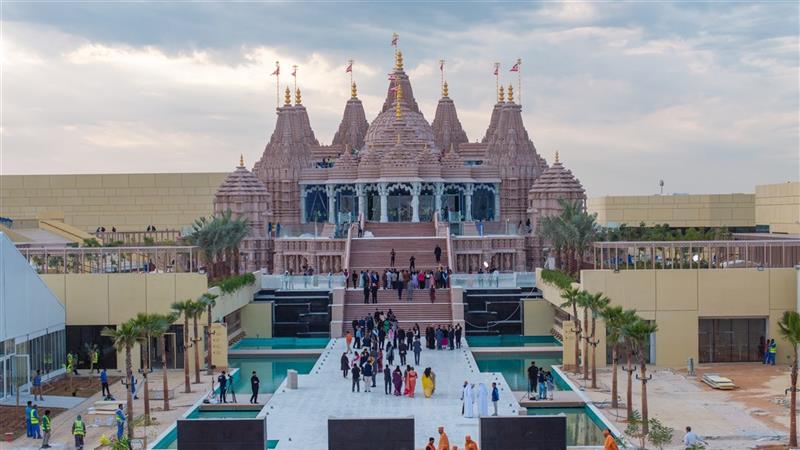
UAE
BAPS Hindu Mandir Abu Dhabi
The first traditional hand-carved Hindu stone temple in the Middle East, inaugurated in 2024 on 13.5 acres in Abu Dhabi, symbolizing interfaith harmony.
Explore Temple

UAE
Shree Krishna Haveli
A historic Krishna temple established in 1972 in Bur Dubai, serving the Sindhi and North Indian Hindu communities with vibrant festivals and devotional services.
Explore Temple

UAE
Sindhi Guru Darbar Temple
A vibrant temple serving Dubai's Sindhi Hindu community with inclusive worship, regular satsangs, and one of the largest community kitchens in the UAE.
Explore Temple