
UAE
Shree Krishna Haveli
A historic Krishna temple established in 1972 in Bur Dubai, serving the Sindhi and North Indian Hindu communities with vibrant festivals and devotional services.
Dubai, UAE Krishna Built: 1972
Share
Overview
Shree Krishna Haveli is a beloved Hindu temple in the Bur Dubai district, established in 1972 to serve the growing Sindhi and North Indian Hindu expatriate community. Unlike the larger temples in the UAE, Shree Krishna Haveli maintains an intimate, family-oriented atmosphere while hosting some of the most vibrant religious celebrations in Dubai. The temple is dedicated exclusively to Lord Krishna, distinguishing it from the multi-deity temples elsewhere in the city.
Following the closure of the adjoining Shiva Mandir and Gurudwara complex in January 2024 — which relocated to Jebel Ali — Shree Krishna Haveli continues to receive devotees at its original Bur Dubai location.
The name 'Haveli' refers to the traditional North Indian style of a temple that is also a community mansion, serving both as a place of worship and a hub for cultural and social activities. The temple occupies a multi-story building that blends into the residential texture of Bur Dubai, identifiable by its colorful facade, devotional music that drifts through the neighborhood, and the steady stream of devotees arriving throughout the day.
Shree Krishna Haveli has played a crucial role in preserving and transmitting Sindhi Hindu culture in the diaspora. The Sindhi community, which migrated from the Sindh region (now in Pakistan) during the 1947 Partition, found a new home in Dubai's trading economy. The temple became the focal point for maintaining Sindhi language, music, devotional poetry, and culinary traditions in the UAE.
Quick Facts
Deity
Krishna
Location
Dubai, UAE
Built
1972
Coordinates
25.26, 55.30
Timings
6:00 AM – 12:00 PM, 4:00 PM – 9:00 PM daily
Entry Fee
Free entry
History
Temple and community records trace Krishna worship on this Bur Dubai site back several decades before the modern trust: the Shri Krishna Temple (Shreenathji Haveli) is documented as serving the Indian community in the UAE since 1902, and its building was rebuilt in 1958 with land and permission granted by Sheikh Rashid Bin Saeed Al Maktoum.
The current Shree Krishna Haveli trust was established in 1972 by a group of Sindhi Hindu businessmen active in Dubai's gold, textile, and electronics trading sectors. The original prayer space was a modest rented villa in Bur Dubai; as the community grew, the temple was expanded to its current location in the Al Mankhool area of Bur Dubai.
The 1980s and 1990s saw significant growth in the Sindhi and North Indian expatriate population in Dubai. Shree Krishna Haveli became a central institution for these communities, expanding its facilities to include a larger prayer hall, community kitchen, and spaces for cultural events. The temple was renovated and modernized in the early 2000s while retaining its traditional devotional character.
The temple operates under the Dubai Hindu Temple Management Committee, which coordinates with local authorities on religious matters. The temple has maintained strong relations with the Dubai government and regularly hosts interfaith events. In recent years, the temple has also become a popular destination for tourists interested in experiencing the living religious traditions of Dubai's multicultural society.
Architecture
Shree Krishna Haveli occupies a purpose-built multi-story building in a residential area of Bur Dubai. Unlike traditional Hindu temples constructed from stone with elaborate shikharas, the Haveli's architecture reflects its urban location and functional requirements. The building's exterior is painted in colorful patterns with images of Krishna playing the flute, floral motifs, and traditional Indian decorative elements that make it clearly identifiable as a Hindu place of worship.
The main prayer hall on the ground floor features a central sanctum with a beautifully adorned murti of Krishna with Radha. The murti is dressed in elaborate costumes that are changed according to the season and festival calendar. The hall is surrounded by pillars decorated with brass lamps and garlands, and the floor is covered with carpets for devotees to sit during bhajans.
The upper floors house additional prayer rooms, a community hall for cultural events, a library with religious books in Hindi, Sindhi, and English, and residential quarters for the temple priests and staff. A separate area is dedicated to the temple kitchen (bhandara), which prepares vegetarian meals distributed as prasad on festival days. The roof terrace is used for large gatherings, particularly during cold-weather festivals.
Main Deity
Krishna
Religious Significance
Shree Krishna Haveli holds immense significance for the Sindhi community in the UAE, serving as a vital institution for cultural preservation. The Sindhi language and devotional traditions, particularly the poetry of the 18th-century Sindhi Sufi-poet Shah Abdul Latif Bhittai, are regularly featured in the temple's bhajan programs. For Sindhi Hindus, the temple is a space where their unique cultural identity — combining Hindu devotion with Sindhi language and customs — can flourish away from the homeland.
The temple is also significant for the broader North Indian Hindu community in Dubai, including those from Gujarat, Rajasthan, Uttar Pradesh, and Punjab. The temple's Krishna-centric focus attracts devotees from all Vaishnavite traditions, and its inclusive policies ensure all feel welcome regardless of caste, regional origin, or sectarian affiliation.
In the context of Dubai's religious landscape, Shree Krishna Haveli represents the successful integration of traditional Hindu worship into a modern, cosmopolitan city. The temple demonstrates that Hindu religious life can thrive in a Muslim-majority context, contributing to the UAE's reputation for religious tolerance and multicultural harmony.
Temple Legends
The primary devotional narrative of Shree Krishna Haveli centers on the image of Krishna installed in the sanctum. According to temple tradition, this particular murti was brought from the historic Krishna temple in Dwarka, Gujarat — one of the four sacred Char Dham pilgrimage sites. The murti is considered a direct descendant of the original Dwarkadhish image and is believed to carry the same spiritual power.
Another beloved tradition at the Haveli involves the daily 'bhog' (food offering) to Krishna. According to temple lore, the food offered to Krishna at this temple has a special sweetness because the deity himself instructed the first priest in a dream to add a particular blend of cardamom and saffron to the preparation. The recipe has been passed down through generations of temple cooks.
The temple also celebrates a unique local tradition: every year during Janmashtami, a child from the congregation is selected to play the role of 'baby Krishna' and is placed in a decorated cradle. The child is believed to be particularly blessed by the deity, and families bring their newborns to receive blessings from this child, a practice that echoes the temple's emphasis on community and family traditions.
Festivals & Celebrations
Janmashtami, the celebration of Lord Krishna's birth, is the grandest festival at Shree Krishna Haveli. The celebration spans two days, beginning with a midnight aarti followed by the distribution of sweets and prasad. The temple is elaborately decorated with flowers, lights, and a specially constructed cradle (jhula) for the baby Krishna murti. Devotional songs, dance performances, and tableau enactments of Krishna's early life continue through the night.
Holi, the festival of colors, is celebrated with great enthusiasm at the Haveli. The temple organizes community Holi celebrations with dry colors, gulal, and traditional snacks. The event is one of the largest Holi gatherings in Dubai, drawing hundreds of participants from across the city.
Other important festivals include Diwali (with the temple illuminated by diyas and special pujas), Gopashtami (celebrating Krishna's transformation from a cowherd to a charioteer), Annakut (the festival of food offerings in November), and Radhashtami (the appearance day of Radha). Weekly Sunday satsangs include discourses on the Bhagavad Gita and the Srimad Bhagavatam.
Visitor Information
Timings
6:00 AM – 12:00 PM, 4:00 PM – 9:00 PM daily
Entry Fee
Free entry
Dress Code
Modest dress required; removal of footwear before entering the temple
Photography
Photography allowed with permission
Best Time to Visit
The best time to visit Shree Krishna Haveli is during Janmashtami (August-September) or Holi (March), when the temple is at its most vibrant and the community celebrations are at their peak. These festivals offer visitors a chance to experience the temple's devotional energy at its fullest. For a quieter visit, weekday mornings between 8:00 AM and 11:00 AM are ideal.
The winter months (November to March) provide pleasant weather for visiting Dubai, and the temple's festivities during Diwali (October-November) are particularly beautiful with thousands of lamps lighting up the building. The temple celebrates Annakut the day after Diwali, where a magnificent display of over 100 vegetarian dishes is offered to Krishna.
The temple is busiest on Sunday mornings when families attend the weekly satsang. Friday afternoons and Saturday mornings are also popular visiting times. Visitors should avoid the afternoon closure (12:00 PM – 4:00 PM) when planning their visit.
How to Reach
Shree Krishna Haveli is located in the Al Mankhool area of Bur Dubai, approximately 1.5 kilometers from the Dubai Creek. The nearest metro station is Al Fahidi Station on the Green Line, about a 10-minute walk from the temple. The Al Ghubaiba Bus Station, a major bus terminus, is about 1 kilometer away.
From Dubai International Airport, the temple is about 10 kilometers away, a 20-minute taxi ride depending on traffic. The temple is accessible by taxi and ride-sharing services from any part of Dubai. Parking is limited in the area; the nearest public parking is at the Al Mankhool Road parking area or the Al Ghubaiba bus station parking.
The temple is in a pedestrian-friendly area surrounded by Indian restaurants, textile shops, and grocery stores catering to the South Asian community. Visitors can easily combine a temple visit with a walk through the Bur Dubai neighborhood, exploring its multicultural character.
Nearby Attractions
The Shiva and Krishna Temple, Dubai's oldest Hindu temple, is just a 10-minute walk from Shree Krishna Haveli, making it easy to visit both temples in a single trip. The Al Fahidi Historical Neighbourhood, Dubai Museum, and Dubai Creek are all within 15 minutes' walk. The Meena Bazaar area, famous for its Indian textile shops and jewelry stores, is adjacent to the temple.
The Dubai Frame, a landmark architectural attraction offering views of old and new Dubai, is about 2 kilometers away. The Gold Souk and Spice Souk on the Deira side of the creek are accessible via a short abra (water taxi) ride across the creek. The Indian consulate and several community organizations are located within walking distance, reflecting the area's role as the center of Dubai's Indian community.
For dining, the surrounding streets are lined with authentic South Indian, North Indian, and Pakistani restaurants. Udupi restaurants serving vegetarian South Indian food are particularly popular for their quality and value.
Interesting Facts
- Shree Krishna Haveli is one of the few temples in the UAE where the hereditary priest lineage has been maintained, with the current priest being the son of the founding priest.
- The temple's Janmashtami celebration is the largest Krishna Janmashtami gathering in the UAE, attracting over 5,000 devotees annually.
- The temple has a dedicated community kitchen that serves free vegetarian meals to over 1,000 people during major festivals, regardless of their faith or background.
- Shree Krishna Haveli was one of the first Hindu temples in the UAE to install a digital display system for broadcasting bhajans and announcements in multiple languages.
- The temple maintains a library with over 2,000 religious books in Hindi, Sindhi, English, and Gujarati, including rare manuscripts of Sindhi devotional poetry.
- During the COVID-19 pandemic, the temple organized virtual darshan and online satsangs, reaching devotees across the UAE and in India, Pakistan, and the UK.
Frequently Asked Questions
What are the darshan timings for Shree Krishna Haveli in Bur Dubai?
Shree Krishna Haveli is open daily in two shifts: morning darshan from 6:00 AM to 12:00 PM, and evening darshan from 4:00 PM to 9:00 PM. Special aarti ceremonies are held during morning and evening sessions.
Is Shree Krishna Haveli open to non-Hindus?
Yes, the temple welcomes visitors of all faiths and nationalities. Visitors are asked to dress modestly and remove footwear before entering the prayer hall.
What is the difference between Shree Krishna Haveli and the Shiva and Krishna Temple?
Shree Krishna Haveli is dedicated exclusively to Krishna and serves primarily the Sindhi and North Indian community. The Shiva and Krishna Temple (established 1958) is older and has twin shrines dedicated to both Shiva and Krishna, serving mainly the South Indian community.
Can I participate in the temple's food distribution?
Yes, the temple's community kitchen welcomes volunteers, especially during festivals. Anyone can receive the free prasad meals, which are distributed after the main ceremonies.
Does the temple offer religious classes?
Yes, the temple runs Sunday school classes for children on Bhagavad Gita, Ramayana, and Bhajans. Classes are conducted in English, Hindi, and Sindhi.
What is the significance of 'Haveli' in the temple name?
A Haveli is traditionally a large, palatial residence in North India. In temple contexts, it refers to a shrine that also functions as a community center, emphasizing hospitality, communal dining, and cultural activities alongside worship.
Sources & References
— every record linked above was re-requested for this release, so the link still resolves and the publisher still serves the document. It is a link check, not a re-verification of every sentence on this page.
More Temples in UAE
Explore other Hindu temples in UAE.
UAE
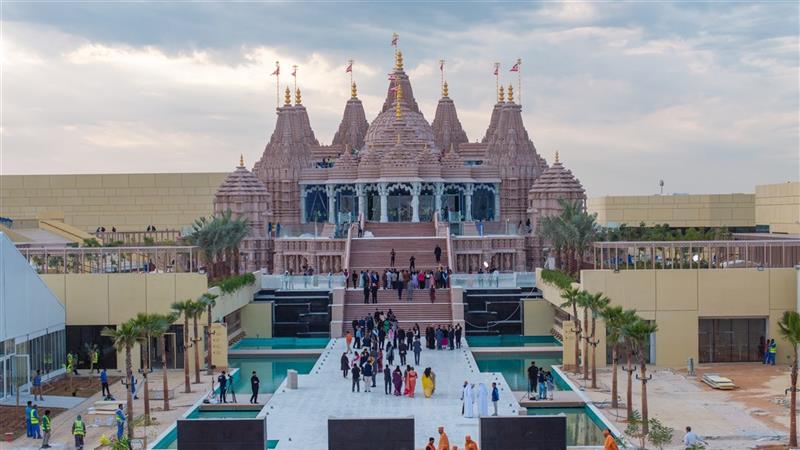
BAPS Hindu Mandir Abu Dhabi
The first traditional hand-carved Hindu stone temple in the Middle East, inaugurated in 2024 on 13.5 acres in Abu Dhabi, symbolizing interfaith harmony.
Explore Temple
UAE
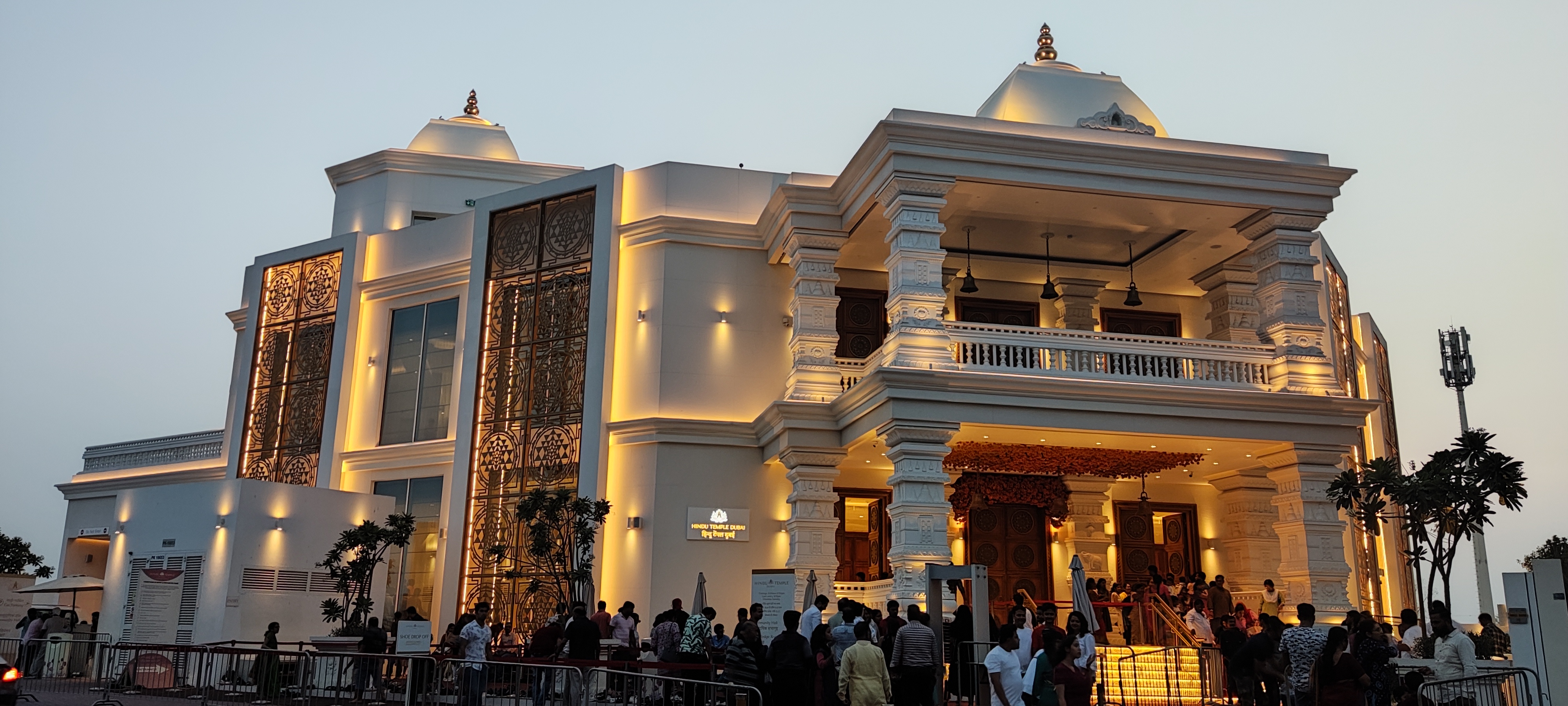
Shiva and Krishna Temple
The oldest Hindu temple in Dubai, established in 1958 in the historic Al Fahidi neighborhood, serving the South Indian expatriate community with dual shrines to Shiva and Krishna.
Explore Temple

UAE
Sindhi Guru Darbar Temple
A vibrant temple serving Dubai's Sindhi Hindu community with inclusive worship, regular satsangs, and one of the largest community kitchens in the UAE.
Explore Temple