USASwaminarayan
BAPS Swaminarayan Akshardham
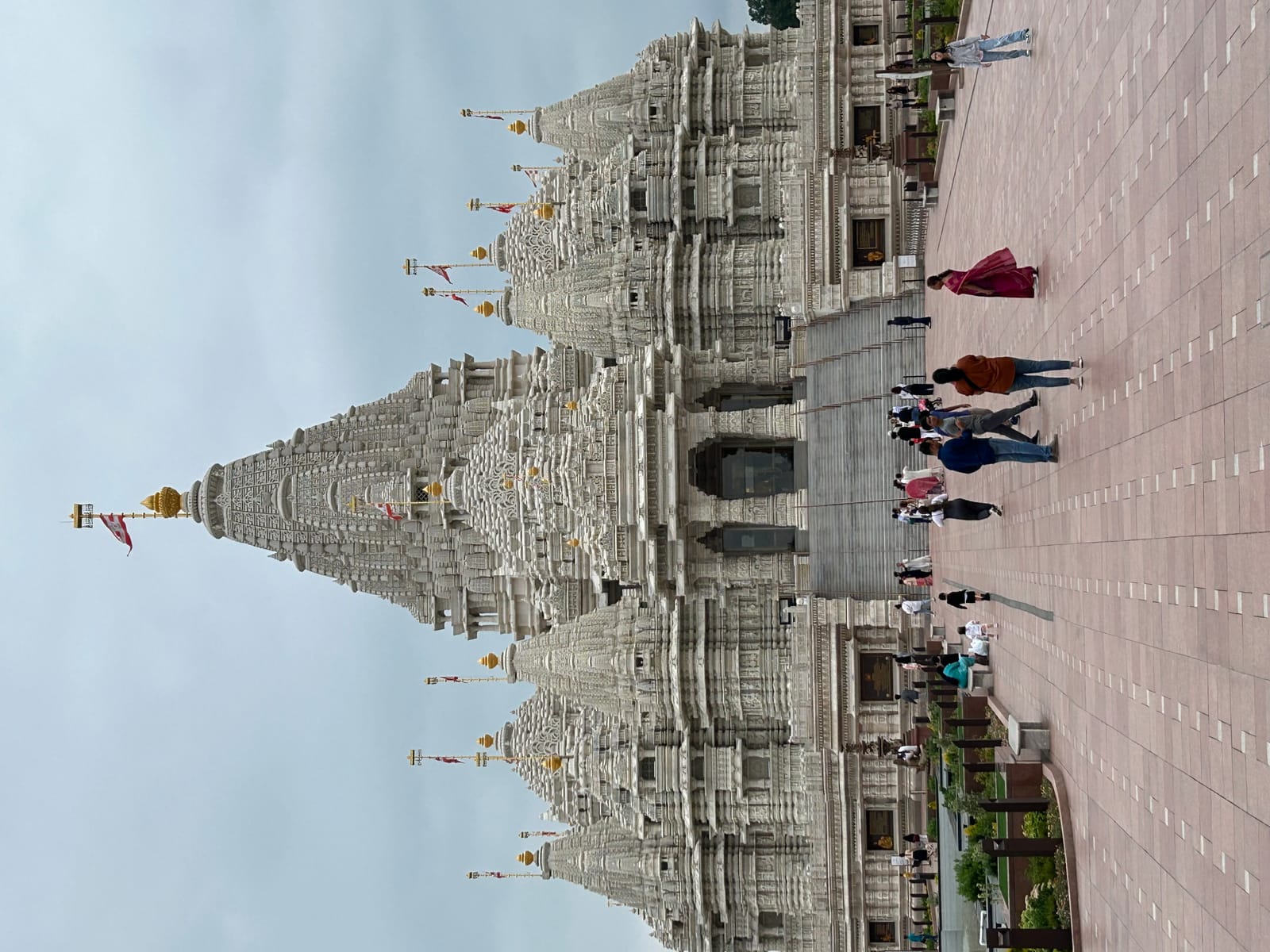
The largest Hindu temple in North America and the second-largest in the world, hand-carved from Italian marble and Indian pink sandstone on a 183-acre campus in central New Jersey.
Robbinsville, New Jersey, USA Swaminarayan Built: 2023
Share
Overview
BAPS Swaminarayan Akshardham in Robbinsville, New Jersey, is the largest Hindu temple in North America and the second-largest in the world, covering 183 acres of central New Jersey countryside. Consecrated in 2023, this magnificent mandir represents the culmination of over three decades of planning, 12 years of construction, and the labor of thousands of artisans and volunteers.
The temple rises 191 feet, spans 255 feet in length, and 345 feet in width, making it visible from miles across the flat farmland of Mercer County.
The mandir is constructed entirely from hand-carved Italian Carrara marble and Indian pink sandstone, assembled without any steel reinforcement. Over 2 million cubic feet of stone were used, carved into 10,000 statues and 10,000 architectural pieces by 1,400 artisans in Rajasthan and Gujarat before being shipped to New Jersey in 40,000 wooden crates. Each stone was individually numbered, shipped, and reassembled on-site like a cosmic jigsaw puzzle spanning continents.
The temple is part of a larger Akshardham campus that includes a 50-seat meditation center, a museum dedicated to Hindu culture and the Swaminarayan tradition, a convention center, a youth center, a nature preserve with walking trails, and a 4.5-acre lake with a musical fountain. The campus is designed to serve not only as a place of worship but as a center for community service, cultural education, and interfaith dialogue in the American Northeast.
Quick Facts
Deity
Swaminarayan
Location
Robbinsville, New Jersey, USA
Built
2023
Built By
BAPS Swaminarayan Sanstha
Coordinates
40.21, -74.53
Timings
9:00 AM – 7:00 PM daily (closed Mondays)
Entry Fee
Free entry (donations welcome)
History
The vision for Akshardham in North America originated in 1997 with Pramukh Swami Maharaj, the spiritual leader of BAPS, who envisioned a grand mandir on the American continent that would serve as a beacon of Indian spirituality and culture for future generations. The 183-acre site in Robbinsville was selected in 2010, chosen for its proximity to the major East Coast population centers — midway between New York City and Philadelphia.
The land, formerly farmland, provided the space needed for the ambitious project.
Construction began in 2012 with the reinforcement of the ground to support the massive stone structure. The foundation required 3,000 concrete piles driven 70 feet into the earth. The stone carving in India commenced simultaneously, with artisans working for over a decade in dedicated workshops in Rajasthan and Gujarat. The first shipment of carved stone arrived in the United States in 2015, and the assembly on-site progressed over the next eight years.
The temple was consecrated through a series of elaborate Vedic ceremonies in October 2023, led by Mahant Swami Maharaj, the current spiritual head of BAPS. The consecration (prana pratishtha) involved installing 155 murtis (sacred images) in the temple's various shrines, each brought from India in elaborate processions. The temple opened to the public in November 2023, and within its first month received over 200,000 visitors from across the United States and around the world.
Architecture
The Akshardham mandir is built in the Nagara style of North Indian temple architecture, characterized by its curvilinear shikharas (spires) and intricate exterior carvings. The temple has nine shikharas, the central spire rising 191 feet above the ground. The mandapas (pillared halls) feature 42 carved pillars, each with different patterns and imagery. The entire structure sits on a 7-foot-high plinth that elevates it above the surrounding landscape, creating a visual effect of the temple floating above the New Jersey farmland.
The exterior walls are covered with thousands of carved figures representing deities, sages, saints, and spiritual symbols from the Hindu tradition. The carvings also include representations of American cultural icons — eagles, the Liberty Bell, and Native American motifs — symbolizing the integration of Indian tradition with American culture. The temple has 10 large bronze entrance doors, each weighing 2,000 pounds and decorated with embossed images of deities.
The interior is equally magnificent. The central sanctum houses the murti of Swaminarayan, flanked by his spiritual successors. Additional shrines are dedicated to Shiva-Parvati, Sita-Ram, Radha-Krishna, and other Hindu deities. The interior pillars are carved with scenes from sacred texts, and the ceilings feature elaborate floral and geometric patterns. The temple is illuminated by natural light through strategically placed windows, while a complex system of LED lighting highlights the carvings at night.
Main Deity
Swaminarayan
Religious Significance
BAPS Swaminarayan Akshardham represents a landmark achievement for the Hindu diaspora in North America. For decades, Hindu temples in the United States were predominantly converted buildings, suburban homes, or modest purpose-built structures. Akshardham elevates the presence of Hinduism in America to a monumental scale, placing Hindu architecture and spirituality on par with the great religious monuments of other faiths on the continent.
The temple is a statement that Hinduism has arrived as a permanent and significant part of America's religious landscape.
The temple's significance extends beyond the Hindu community. S. Constitution. S.
senators, state governors, and members of Congress who have praised it as an asset to New Jersey and a model of cultural integration. The project involved close collaboration with local authorities, including zoning boards and historical preservation commissions, setting precedents for future large-scale religious construction in the United States.
For the Swaminarayan tradition specifically, Akshardham completes a global network of major mandirs that now spans Ahmedabad (1992), Delhi (2005), London (1995), Nairobi (1999), and Abu Dhabi (2024), establishing the BAPS organization as among the most prolific builders of Hindu temples in the modern era. Each Akshardham is designed as a permanent institution for preserving and transmitting Hindu culture, spirituality, and values to future generations.
Temple Legends
The Swaminarayan tradition traces its spiritual lineage to Sahajanand Swami (1781-1830), revered as Bhagwan Swaminarayan by followers. According to tradition, Sahajanand Swami was the manifestation of the supreme reality who appeared on earth to establish the principles of dharma, bhakti, and vairagya (detachment). A story recounts that as a young boy, Sahajanand Swami traveled across India on foot for seven years, studying various philosophical systems and spiritual practices before establishing his teachings in Gujarat.
A legend specific to the Robbinsville Akshardham involves the selection of the site. According to temple tradition, when Pramukh Swami Maharaj first visited the property in 2010, he walked the land and stopped at a particular spot, declaring that the main shrine should be built there. The spot was on a slight elevation, which after surveying, turned out to be the highest point on the property — a sign, devotees believe, of divine guidance in the selection.
Another narrative recounts that during the construction, a severe snowstorm in January 2016 dumped over 30 inches of snow on New Jersey, collapsing roofs across the region. Workers arrived at the site expecting to find the partially built temple structure damaged, but found the mandir frame completely intact while the surrounding temporary structures had been destroyed. Many devotees see this as evidence of divine protection over the temple even during its construction.
Festivals & Celebrations
Akshardham celebrates all major Hindu festivals with large gatherings drawing devotees from across the northeastern United States. Diwali, the festival of lights, is celebrated with the entire temple complex illuminated with thousands of lamps and lights, along with cultural performances and a spectacular fireworks display visible across Robbinsville. The temple's deepam (lamp-lighting) ceremony during Diwali involves over 10,000 oil lamps arranged in intricate patterns around the campus.
Janmashtami (Krishna's birthday) and Shivaratri are celebrated with special pujas, abhishek ceremonies, and night-long bhajan sessions. During Janmashtami, the temple recreates scenes from Krishna's early life with elaborate decorations and a midnight aarti that draws thousands. The Swaminarayan-specific festivals include the birth anniversaries of Bhagwan Swaminarayan (Chaitra Sud 9) and each of the spiritual successors in the guru lineage.
The temple also celebrates American national holidays such as Independence Day and Thanksgiving with special programs that blend Hindu spirituality with American patriotism, reflecting the dual identity of the Indian-American community. Weekly Sunday satsangs include spiritual discourses, devotional singing, and community fellowship, typically drawing 2,000-3,000 attendees.
Visitor Information
Timings
9:00 AM – 7:00 PM daily (closed Mondays)
Entry Fee
Free entry (donations welcome)
Dress Code
Modest clothing covering shoulders and knees required; removal of footwear before entering the temple
Photography
Photography permitted in exterior areas; restrictions apply inside the main temple sanctum
Best Time to Visit
The best time to visit Akshardham is from April to November, when the New Jersey weather is mild and the temple's extensive grounds and gardens are at their most beautiful. The campus includes 35 acres of gardens designed with traditional Indian landscaping principles, including lotus ponds, meditation gardens, and a 4.5-acre lake with musical fountains that operate from spring through fall.
Weekdays, especially Tuesday through Thursday, offer the most peaceful experience with smaller crowds. The temple hosts guided tours that provide detailed explanations of the architecture, symbolism, and the Swaminarayan tradition. The light and sound show at the musical fountain in the evening (seasonal) is a highlight not to be missed.
Festival days, particularly Diwali (October-November) and the temple's anniversary celebrations (October-November), offer the most vibrant experience but draw very large crowds. Parking arrangements during festivals are extensive but expect longer waiting times.
How to Reach
Akshardham is located at 112 Nave Drive in Robbinsville Township, New Jersey, approximately 50 miles southwest of New York City and 40 miles northeast of Philadelphia. The temple is accessible by car via Interstate 195 (Exit 7A) and Route 130. From New York City, the drive takes approximately 60-90 minutes depending on traffic; from Philadelphia, approximately 45-60 minutes.
For visitors without cars, the nearest major airports are Newark Liberty International (EWR, 35 miles), Philadelphia International (PHL, 40 miles), and John F. Kennedy (JFK, 65 miles). The closest train station is Princeton Junction on NJ Transit's Northeast Corridor Line, approximately 15 minutes from the temple by taxi or ride-share. Amtrak also serves Trenton Station (20 minutes from the temple).
The temple provides ample free parking on-site, including spaces for buses and RVs. For large groups, charter buses are a common option. The campus has dedicated drop-off and pick-up areas, and electric vehicle charging stations are available in the parking lot.
Nearby Attractions
Princeton University, one of the world's most prestigious academic institutions, is 10 miles from the temple and offers historic campus tours, the Princeton University Art Museum, and the beautiful Princeton Chapel. Grounds For Sculpture, a 42-acre sculpture park and museum featuring contemporary works in a landscaped setting, is 8 miles away in Hamilton.
Six Flags Great Adventure, one of the largest theme parks in the region, is 20 miles south in Jackson, New Jersey. The Delaware River towns of New Hope (Pennsylvania) and Lambertville (New Jersey), known for their antique shops, galleries, and restaurants, are about 30 minutes west. The historic downtowns of Trenton and Princeton offer a variety of dining options including Indian, American, and international cuisine.
For nature lovers, Assunpink Wildlife Management Area and Mercer County Park offer hiking, fishing, and boating opportunities within a 15-minute drive. The Jersey Shore beaches are about 50 miles east, making it possible to combine a temple visit with a beach day.
Interesting Facts
- Akshardham Robbinsville is the second-largest Hindu temple in the world, after Angkor Wat in Cambodia, and the largest outside of Asia.
- The temple contains over 10,000 carved statues and 10,000 architectural pieces, all hand-carved from Italian Carrara marble and Indian pink sandstone.
- No steel reinforcement was used anywhere in the temple structure — the stones are held together by gravity, precision carving, and traditional stone joinery techniques.
- The 40,000 crates of carved stone were shipped from India across the Atlantic Ocean in 1,000 containers over a span of 8 years.
- The central shikhara rises 191 feet (58 meters), making it taller than the dome of the U.S. Capitol Building.
- The temple's foundation incorporates 3,000 concrete piles driven 70 feet into the earth to ensure stability on the New Jersey coastal plain.
Frequently Asked Questions
Is Akshardham open to non-Hindus?
Yes, Akshardham welcomes people of all faiths and backgrounds. The temple is a place of worship for the BAPS Swaminarayan tradition, but all visitors are invited to explore, pray, and experience the spiritual atmosphere.
How much does it cost to visit Akshardham?
Entry to the temple is free. Donations are welcome but not required. The temple complex includes exhibits and cultural attractions that are also free of charge.
What is the dress code for visiting Akshardham?
Visitors are requested to dress modestly, covering shoulders and knees. Sleeveless tops, short shorts, and revealing clothing are not permitted. The temple provides shawls and wraps at the entrance if needed.
Can I take photographs inside the temple?
Photography is permitted in the exterior areas, gardens, and exhibits. Inside the main temple sanctum, photography is restricted out of respect for the devotional atmosphere.
Is there vegetarian food available at Akshardham?
Yes, the campus includes a vegetarian food court serving a variety of Indian cuisine. The temple also operates a free community kitchen that serves meals during certain events and festivals.
Sources & References
— every record linked above was re-requested for this release, so the link still resolves and the publisher still serves the document. It is a link check, not a re-verification of every sentence on this page.
More Temples in USA
Explore other Hindu temples in USA.
USA
Sri Venkateswara Temple
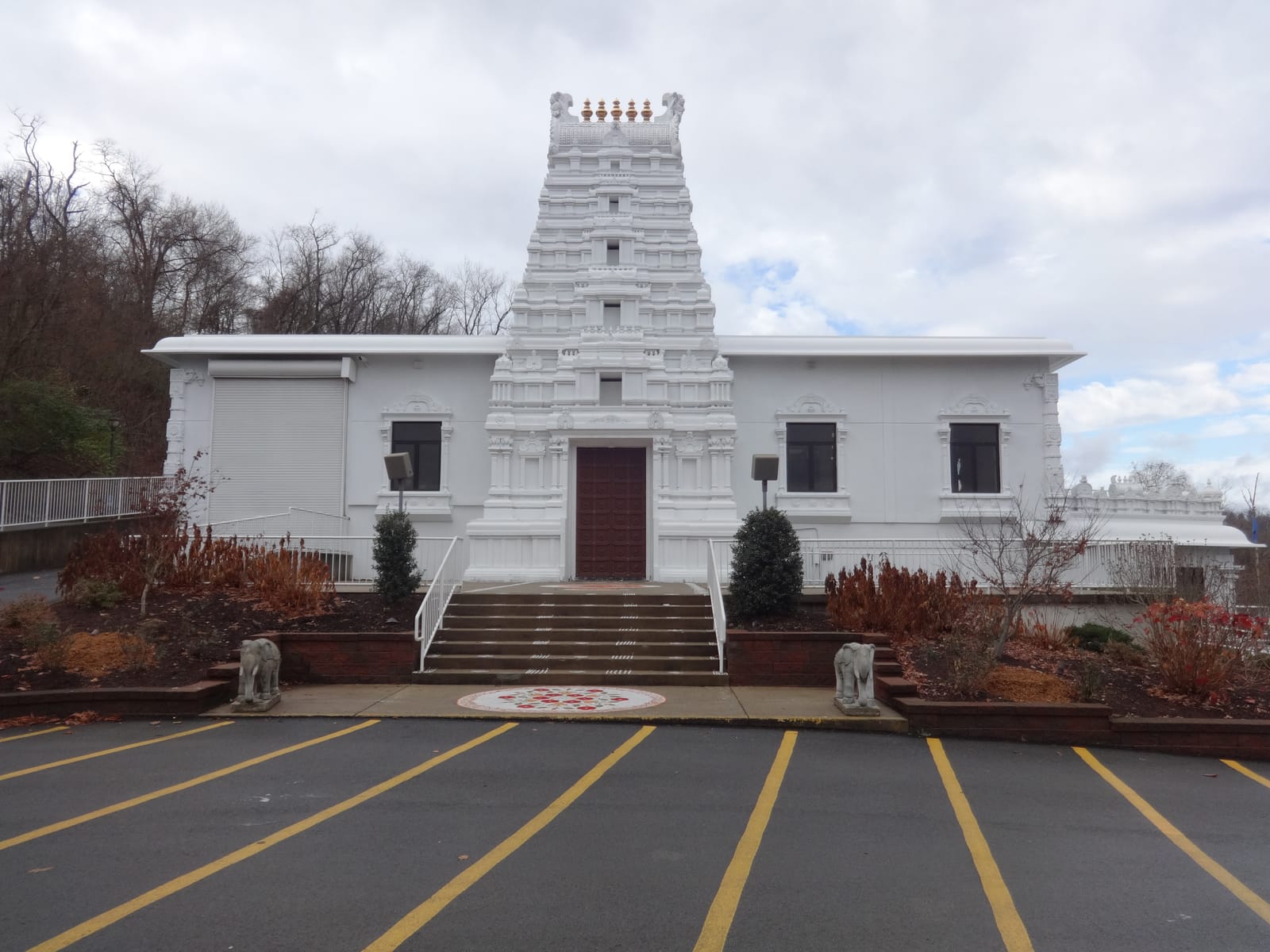
A stunning replica of the Tirumala Venkateswara Temple in Tirupati, built on 10 acres in Penn Hills, Pittsburgh, and serving as among the most authentic South Indian temples in North…
Explore Temple

USA
Malibu Hindu Temple
A serene Hindu temple complex in the Santa Monica Mountains overlooking the Pacific Ocean, serving the Southern California Hindu community since 1981 with shrines dedicated to Shiva and Vishnu.
Explore Temple

USA
Shri Swaminarayan Mandir
A magnificent hand-carved stone and marble mandir in the Chicago suburbs, built by BAPS and serving as a spiritual and cultural hub for the Midwest's Hindu community.
Explore Temple