🇺🇸
Hindu Temples in the USA
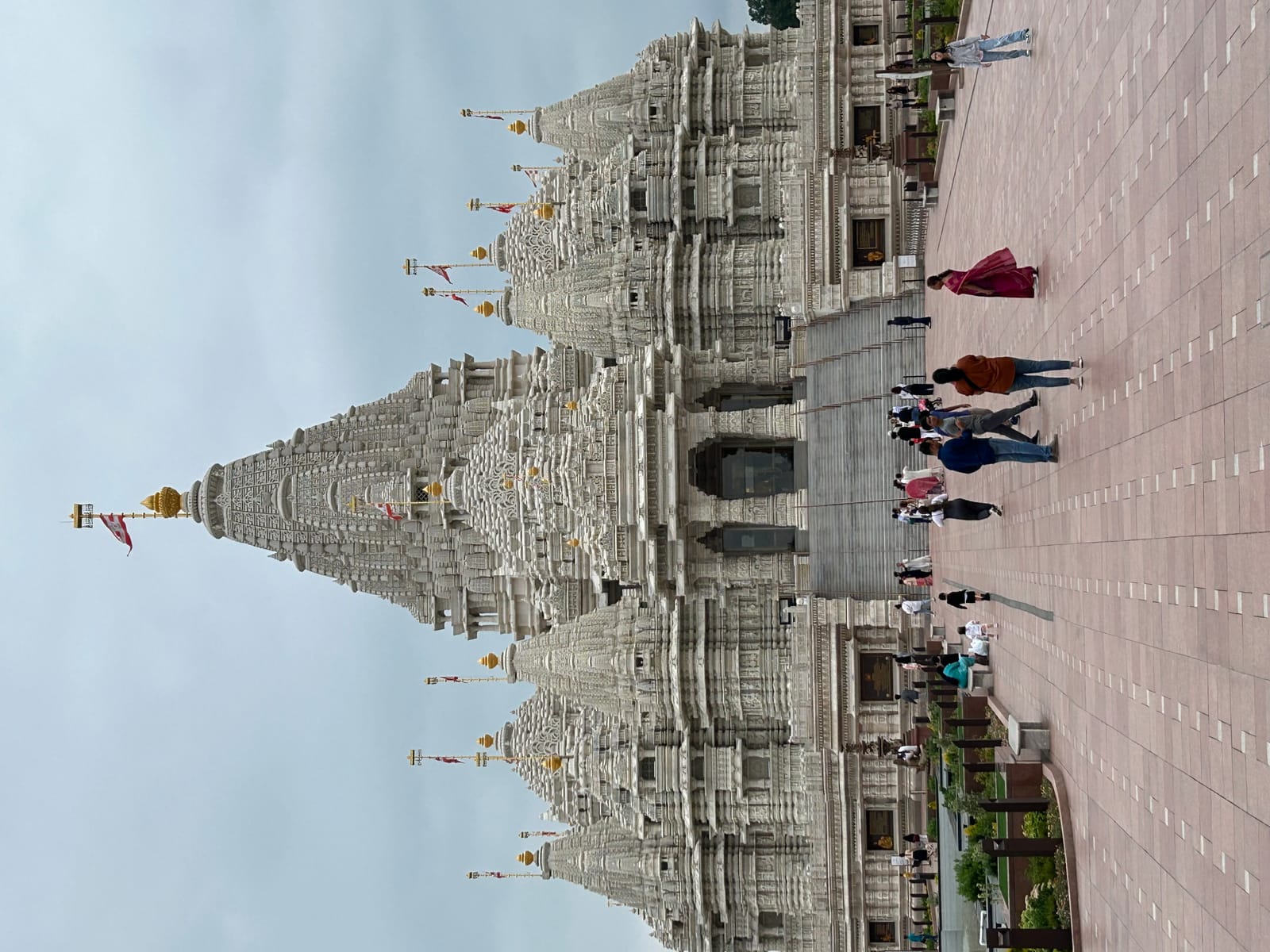
The United States is home to major traditional mandirs, including BAPS Swaminarayan Akshardham in Robbinsville, NJ, and pioneering institutions like the Sri Venkateswara Temple in Pittsburgh.
5 Temples Profiled North America Washington, D.C.
Direct Answer
How Many Hindu Temples Are in the USA?
There is no single authoritative nationwide census of Hindu temples in the United States, as the U.S. Census Bureau does not collect data on religious affiliation. However, academic research directories—notably the Pluralism Project at Harvard University—and congregation surveys by the Association of Statisticians of American Religious Bodies (ASARB) catalog between 800 and 1,000+ Hindu places of worship, Vedanta societies, and cultural centers across the country, serving an estimated diaspora of approximately 3.3 million Hindus.
Academic Directory Inventories
800–1,000+ Centers
Documented in academic datasets (Harvard Pluralism Project, ASARB), encompassing community mandirs, Chinmaya Mission centres, ISKCON ashrams, and local satsang halls.
Purpose-Built Shilpa Shastra Mandirs
~100+ Landmark Shrines
Freestanding canonical stone and Dravidian Agamic structures (pioneered by SV Temple Pittsburgh in 1976 and Ganesha Temple Flushing in 1977) constructed by traditional silpis.
Flagship Western Hemisphere Monument
1 (Robbinsville)
BAPS Swaminarayan Akshardham in Robbinsville, NJ: 255 ft wide, 345 ft long, 191 ft tall on an 183-acre campus.
Sacred Places India Directory
5 Flagship Mandirs
Comprehensive profiles for Robbinsville Akshardham, SV Temple Pittsburgh, Malibu Temple, BAPS Chicago, and BAPS Atlanta.
How Temple Numbers Are Counted
Because the U.S. Constitution prohibits the federal government from conducting a mandatory religious census, nationwide tallies rely on academic directories (such as the Harvard Pluralism Project), voluntary reporting in the U.S. Religion Census (ASARB), and IRS Form 990 tax-exempt filings under 501(c)(3) religious categories. Researchers distinguish between broad community gathering spaces (such as rented halls or suburban houses) and purpose-built traditional stone mandirs.
Sacred Places India Database Scope
Sacred Places India profiles 5 flagship traditional monuments in the USA with verified architectural milestones, campus acreages, and visitor guidelines. This curated selection focuses on architectural landmarks rather than every suburban community centre.
Introduction
The United States hosts an active Hindu diaspora of over 3.3 million people. Across the Northeast, Midwest, South, and Pacific coast, communities have moved from converted halls into major purpose-built stone temples. The consecration of BAPS Swaminarayan Akshardham in Robbinsville, New Jersey (2023)—measuring 255 feet wide, 345 feet long, and 191 feet high on an 183-acre campus—marks the largest traditional stone Hindu temple built in the Western Hemisphere.
5
Profiled Temples
North America
Region
Washington, D.C.
Capital
English
Language
Major Hindu Communities
The American Hindu community represents diverse regional traditions, including Telugu, Tamil, and Kannada Vaishnavite communities; Gujarati Swaminarayan, Pushtimarg, and Jain congregations; Bengali Durga Puja associations; and North Indian Arya Samaj and Sanatan Dharma societies.
Regional Temple Distribution
Major temple clusters are concentrated in the New York-New Jersey-Connecticut metropolitan corridor, the San Francisco Bay Area and Greater Los Angeles in California, the Dallas-Houston-Austin triangle in Texas, and metropolitan Chicago.
History of Hinduism in the USA
While philosophical interest in Hinduism dates to the 19th-century New England Transcendentalists and Swami Vivekananda's address at the 1893 World's Parliament of Religions in Chicago, permanent institutional temple building followed the Immigration and Nationality Act of 1965. Early community efforts established ground-up temples in the 1970s, notably the Sri Venkateswara Temple in Penn Hills near Pittsburgh (1976) and the Hindu Temple Society of North America in Flushing, Queens (1977). Subsequent decades saw traditional artisans (silpis) brought from India to construct canonical Dravidian and Nagara stone mandirs across metropolitan suburbs.
Pilgrimage & Cultural Significance
BAPS Swaminarayan Akshardham in Robbinsville functions as a premier destination for pilgrims and architectural scholars in North America. Regional centres such as the Sri Venkateswara Temple in Pittsburgh (modeled on Tirumala Tirupati), the Malibu Hindu Temple in California (dedicated to Venkateswara and Shiva), and the BAPS mandirs in Chicago and Atlanta serve as regional spiritual hubs.
Architecture Overview
American Hindu architecture represents two primary streams: South Indian Dravidian temples featuring granite sanctums, stucco-carved Rajagopurams, and pillared mandapas (as at Pittsburgh and Flushing), and West Indian Nagara-Maha-Gurjara stone temples assembled from imported hand-carved Bulgarian limestone, Italian Carrara marble, and Rajasthani pink sandstone (exemplified by Robbinsville, Chicago, and Chino Hills). Modern building codes, fire regulations, and winter heating systems are integrated within traditional Shilpa Shastra proportions.
Temple Directory
Explore documented Hindu temples in the USA.
USA
BAPS Swaminarayan Akshardham
The largest Hindu temple in North America and the second-largest in the world, hand-carved from Italian marble and Indian pink sandstone on a 183-acre campus in central New Jersey.
Explore Temple
USA
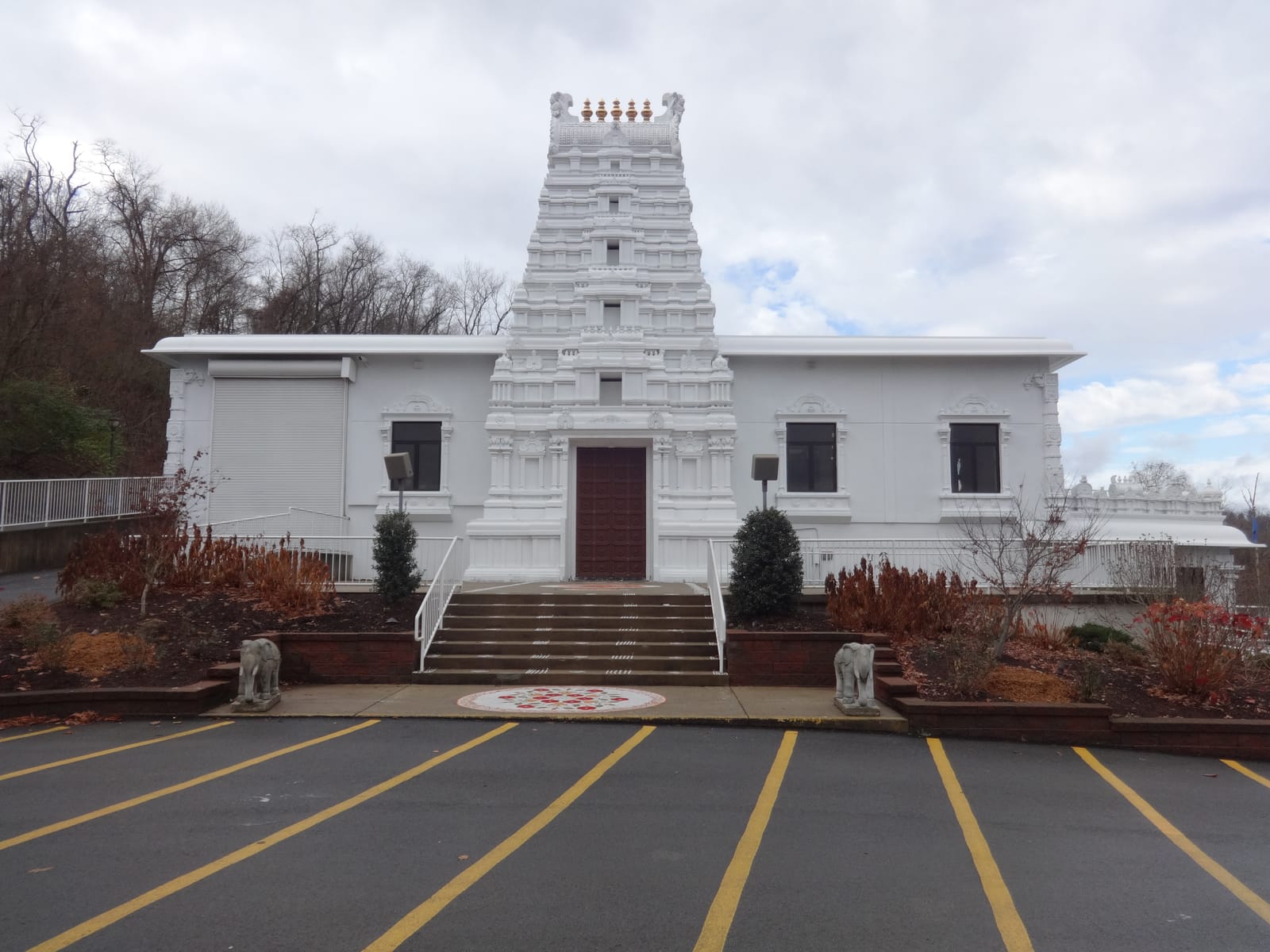
Sri Venkateswara Temple
A stunning replica of the Tirumala Venkateswara Temple in Tirupati, built on 10 acres in Penn Hills, Pittsburgh, and serving as among the most authentic South Indian temples in North…
Explore Temple

USA
Malibu Hindu Temple
A serene Hindu temple complex in the Santa Monica Mountains overlooking the Pacific Ocean, serving the Southern California Hindu community since 1981 with shrines dedicated to Shiva and Vishnu.
Explore Temple

USA
Shri Swaminarayan Mandir
A magnificent hand-carved stone and marble mandir in the Chicago suburbs, built by BAPS and serving as a spiritual and cultural hub for the Midwest's Hindu community.
Explore Temple
USA
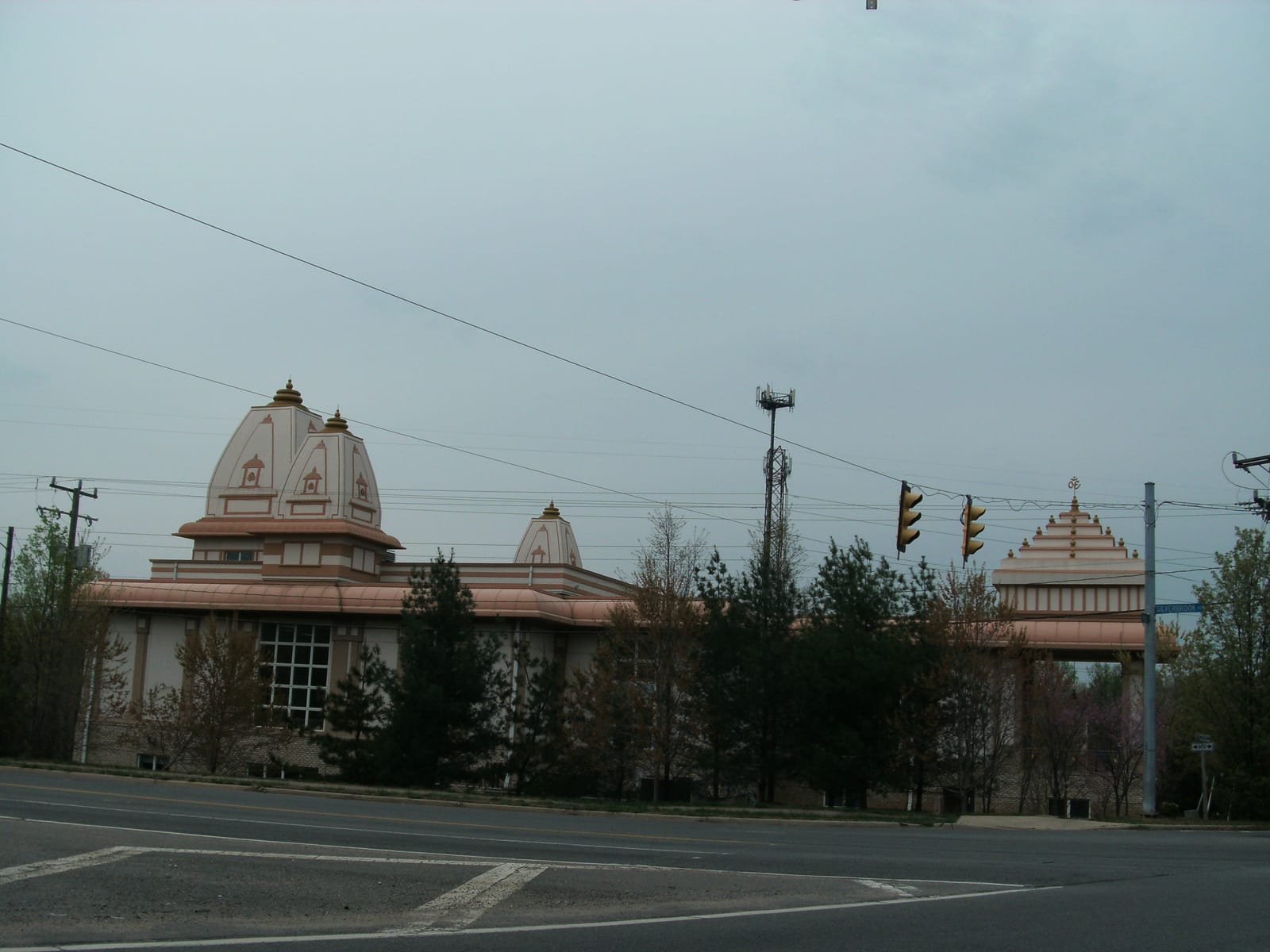
Vishnu Devi Mandir
A mandir in Sterling, Virginia serving the Washington D.C. metro area with authentic North Indian-style worship and a distinctive white shikhara.
Explore Temple
Documentation Methodology & Scope
Research & Selection Criteria
Temple selection prioritizes purpose-built, canonical structures with documented architectural significance, regular public worship schedules, and transparent trust governance. Campus dimensions distinguish the central stone sanctum footprint from wider institutional acreage.
Scope Boundaries & Limitations
Over 1,000 community centres, rented prayer halls, and domestic societies exist across the United States. This guide catalogues permanent, architecturally distinct stone mandirs open for public worship.
Travel Information
Most major temples occupy suburban sites with dedicated surface parking. BAPS Akshardham in Robbinsville is accessible via the New Jersey Turnpike (Exit 7A), roughly one hour from New York City and Philadelphia. The Pittsburgh temple is situated east of Pittsburgh International Airport. California temples (Malibu, Chino Hills) are accessible via state highways.
Best Time to Visit
Temples are open year-round with indoor heating and cooling. Major festivals—Diwali and Annakut (October–November), Janmashtami (August–September), and Maha Shivaratri (February–March)—draw significant attendance. Spring (April–May) and autumn (September–October) provide optimal weather for outdoor architectural viewing on East Coast sites.
Verified Sources & References
Documentation for the USA draws on official census statistics, heritage authorities, and registered temple trust archives.
- Pew Research Center — Religious Landscape Study: Hindus in Americaacademic
- BAPS Swaminarayan Sanstha — Robbinsville Mandir Construction Archives (2023)temple
- The Pluralism Project at Harvard University — Hindu Temple Directoryacademic
- Sri Venkateswara Temple, Pittsburgh — Golden Jubilee Documentation (1976–2026)temple
National Park Service
National Park Service — National Register of Historic Places
Official heritage designation, site management and visitor information for the monuments described on this page.
Open source (opens in a new tab)UNESCO World Heritage Centre
UNESCO World Heritage List — India
World Heritage inscription records for the internationally listed monuments named on this page.
Open source (opens in a new tab)INTACH
Indian National Trust for Art and Cultural Heritage
Architectural classification and conservation context for the temple traditions described on this page.
Open source (opens in a new tab)— every record linked above was re-requested for this release, so the link still resolves and the publisher still serves the document. It is a link check, not a re-verification of every sentence on this page.
Frequently Asked Questions
What is the largest Hindu temple in the USA?
BAPS Swaminarayan Akshardham in Robbinsville, New Jersey, consecrated in 2023, is the largest traditional stone Hindu temple in the United States and the Western Hemisphere, set on an 183-acre campus.
How many Hindu temples are there in the United States?
There is no single official government count of Hindu temples in the United States, as the federal government does not conduct religious censuses. Academic directories like the Harvard University Pluralism Project and ASARB surveys record an estimated 800 to 1,000+ Hindu worship centers, community mandirs, and cultural societies, including over 100 purpose-built traditional stone or Agamic temples.
Which is the oldest traditional Hindu temple in the USA?
The Sri Venkateswara Temple in Penn Hills (near Pittsburgh, Pennsylvania), consecrated in November 1976, is widely recognized as the earliest traditional stone-designed Hindu temple built from the ground up in the United States.