
USAShiva, Vishnu
Malibu Hindu Temple
A serene Hindu temple complex in the Santa Monica Mountains overlooking the Pacific Ocean, serving the Southern California Hindu community since 1981 with shrines dedicated to Shiva and Vishnu.
Malibu, California, USA Shiva, Vishnu Built: 1981
Share
Overview
The Malibu Hindu Temple is among the most notable Hindu temples in North America, located in the Santa Monica Mountains of Calabasas (near Malibu) overlooking the Pacific Ocean. The temple complex, dedicated jointly to Shiva and Vishnu, serves as a major spiritual and cultural center for the Hindu community of Southern California. Built in the traditional South Indian Dravidian style, the temple's white gopurams rise above the chaparral-covered hillsides, creating a distinct visual presence against the California landscape.
The temple was established in 1981 by the Hindu Temple Society of Southern California, which had been serving the growing Hindu population of Los Angeles County since the early 1970s. The temple was constructed on 14 acres of land donated by the community, and its location was chosen to provide a peaceful, contemplative environment removed from the urban sprawl of Los Angeles.
The site offers a sense of pilgrimage — visitors drive through winding mountain roads to reach the temple, arriving at a hilltop sanctuary that feels spiritually elevated from the city below.
The Malibu Hindu Temple is unique among diaspora temples for its dual dedication: the Shiva temple and the Vishnu temple stand as separate structures within a single complex, each with its own sanctum and complete ritual calendar. This arrangement allows devotees of both major Hindu traditions to worship in their preferred form while sharing a common spiritual campus. The temple attracts over 500,000 visitors annually from across Southern California and beyond.
Quick Facts
Deity
Shiva, Vishnu
Location
Malibu, California, USA
Built
1981
Built By
Hindu Temple Society of Southern California
Coordinates
34.11, -118.68
Timings
8:00 AM – 12:00 PM, 4:00 PM – 8:30 PM daily
Entry Fee
Free entry
History
The roots of the Malibu Hindu Temple trace back to 1970, when a group of Indian-American families in Los Angeles formed the Hindu Temple Society of Southern California. Initially, the community held worship services in rented spaces and converted buildings across the city. As the Hindu population grew rapidly in the 1970s, the need for a permanent, purpose-built temple became urgent.
In 1971, the society purchased land in Malibu, and construction began under the guidance of traditional sthapatis (temple architects) from India. The design was based on the temples of Tamil Nadu, particularly the Ekambareswarar Temple in Kanchipuram and the Vaikunta Perumal Temple. The temple was built by Indian-American community members volunteering their weekends alongside professional contractors from both India and the United States.
The temple was consecrated in two phases: the Shiva temple (the southern half of the complex) in July 1981, and the Vishnu temple (the northern half) in August 1981. The kumbhabhishekam ceremonies were led by priests brought from India specifically for the consecration. Since its opening, the temple has undergone several renovations, including the addition of a gopuram tower, a community hall, and extensive landscaping of the hillside grounds.
Architecture
The Malibu Hindu Temple complex consists of two main temples within a shared compound, both built in the Dravidian architectural style of South India. The Shiva temple features a large gopuram (gateway tower) rising 60 feet, adorned with stucco sculptures of deities, celestial dancers, and mythological scenes. The Vishnu temple has a slightly smaller gopuram but is distinguished by its more elaborate decorative program focused on Vaishnavite themes.
Both temples are constructed from concrete and stucco, finished with white paint that creates a striking visual effect against the brown and green of the California hills. The gopurams are built using traditional techniques adapted for the American building environment — the sculptures were created by artisans from Tamil Nadu who came to California to work on-site, using the same methods their ancestors used for centuries.
The interior of each temple follows the traditional plan of a South Indian temple. The Shiva shrine houses a black granite linga, while the Vishnu shrine features a standing murti of Vishnu. Subsidiary shrines within the complex honor Ganesha, Murugan, Hanuman, and the Navagraha (nine planets). The complex also includes a large community hall (mandapam) for events and festivals, a kitchen, and priests' quarters.
The grounds are landscaped with native California plants and traditional Indian flowers and herbs used in temple rituals.
Main Deity
Shiva, Vishnu
Religious Significance
The Malibu Hindu Temple holds a significant place in the history of Hinduism in the western United States. As the first major traditional Hindu temple on the West Coast, it served as a prototype for the dozens of temple projects that followed across California. Its success demonstrated that American zoning laws, building codes, and community expectations could accommodate authentic Hindu temple architecture, setting legal and architectural precedents for future temple construction.
The temple is as a vital center for cultural preservation among the Indian diaspora in Southern California. The temple's priests conduct classes in Vedic chanting, Sanskrit, and Hindu philosophy. The temple also hosts cultural programs including Bharatanatyam dance recitals, Carnatic music concerts, and lectures on Hindu spirituality. For younger generations of Indian-Americans, the temple provides a connection to their heritage that is both authentic and adapted to American life.
The temple's location in the Malibu/Calabasas area has made it a notable feature of Southern California's religious landscape, frequently visited by celebrities, politicians, and interfaith groups. The temple has hosted visits by spiritual leaders from India, including Shankaracharyas and swamis, and has been featured in documentaries about Hinduism in America. Its striking setting has also made it a popular location for interfaith events and community gatherings.
Temple Legends
A local tradition at the Malibu Hindu Temple involves a story about the selection of the site. According to temple history, when the community was searching for land for the temple, a devotee had a vivid dream of a linga emerging from the California hills. The next day, while driving through the Malibu canyons, they came upon the 14-acre property and felt an immediate sense of recognition.
The hilltop location, with its panoramic views of the ocean, was seen as divinely chosen.
Another legend tells of the temple's protection during the recurring wildfires that sweep through the Santa Monica Mountains. On several occasions, the temple grounds have remained untouched while surrounding areas were burned. In one incident in 2018, the Woolsey Fire came within 50 yards of the temple compound, yet not a single structure was damaged. Devotees believe this protection affirms the deity's presence and blessing over the site.
A third narrative involves the ocean view from the temple. According to tradition, the view of the Pacific from the temple is considered equivalent to the view of the ocean at Rameswaram, the sacred pilgrimage site at the tip of India. The similarity is seen as a sign that the temple fulfills a spiritual purpose by bringing the sacred geography of India to the American continent.
Festivals & Celebrations
The Malibu Hindu Temple celebrates a full calendar of Hindu festivals, drawing thousands of devotees from across Southern California. Maha Shivaratri is the most important festival at the Shiva temple, with all-night abhishekam ceremonies performed every three hours, continuous chanting of the Rudram, and cultural programs. Thousands of devotees queue for hours to offer bilva leaves and milk to the linga.
At the Vishnu temple, Vaikunta Ekadasi is the grandest celebration, with special decorations and the Vaikunta Dwaram ceremony allowing devotees to pass through the symbolic gates of heaven. The Brahmotsavam festival in the summer features processions of the utsava murtis around the temple grounds accompanied by nadaswaram (South Indian oboe) and thavil (drum).
The temple is also famous for its Holi celebration, one of the largest in Southern California, with thousands of participants dancing to devotional and Bollywood music amidst clouds of colored powder. Other major celebrations include Diwali (the temple lights up with thousands of lamps), Janmashtami, Ganesh Chaturthi, and Navaratri. The temple's annual bazaar supports its operations and is a major community event featuring Indian food, clothing, and cultural performances.
Visitor Information
Timings
8:00 AM – 12:00 PM, 4:00 PM – 8:30 PM daily
Entry Fee
Free entry
Dress Code
Modest clothing covering shoulders and knees; removal of footwear before entering temple buildings
Photography
Photography permitted in the temple complex; restrictions may apply inside sanctums during puja times
Best Time to Visit
The best time to visit the Malibu Hindu Temple is during the Southern California spring (March-May) or fall (October-November) when the weather is mild and the Santa Monica Mountains are green from rain. The temple is particularly beautiful at sunset, when the setting sun illuminates the white gopurams against the darkening sky and the ocean becomes visible in the distance.
Weekday mornings offer the most peaceful experience. Sundays are the busiest, with families attending regular worship and cultural events. Major festivals draw very large crowds, with parking extending to overflow lots and shuttle services. For a contemplative visit, arriving at the temple when it opens at 8:00 AM is recommended.
The temple's hilltop location means it can be 5-10 degrees cooler than the Los Angeles basin, and the ocean breeze is constant. Visitors should bring a light jacket even in summer. Rainy days (December-February) offer a unique atmosphere with mist rolling over the hills, but the temple's walkways can be slippery.
How to Reach
The Malibu Hindu Temple is located at 1600 Las Virgenes Canyon Road in Calabasas, approximately 30 miles west of downtown Los Angeles. The temple is accessible via the Ventura Freeway (US-101), taking the Las Virgenes Road exit and heading south toward the mountains. After approximately 3 miles, Las Virgenes Canyon Road leads to the temple entrance.
From Los Angeles International Airport (LAX), the temple is about 35 miles northwest, a 45-60 minute drive depending on traffic. From the San Fernando Valley, it is approximately 20 minutes. The temple provides ample free parking, though during festivals overflow parking is organized at nearby locations with shuttle service.
Public transit is limited; the closest Metro bus stops are on Las Virgenes Road at Mulholland Highway, approximately 1 mile from the temple. Ride-sharing services are the most practical option for visitors without cars. Many devotees from Orange County and the Inland Empire organize group carpools for festival days.
Nearby Attractions
The Malibu coast, with its famous beaches including Zuma Beach, Point Dume, and Surfrider Beach, is a 15-minute drive from the temple. The Getty Villa, a world-class museum of Greek and Roman antiquities housed in a recreation of the Villa dei Papiri in Herculaneum, is 10 miles south along the coast. The historic Malibu Pier offers dining and fishing.
The Santa Monica Mountains National Recreation Area surrounds the temple, offering hiking trails through pristine California chaparral with views of the ocean. Paramount Ranch, a historic Western film set within the recreation area, is nearby. The King Gillette Ranch, once owned by the razor magnate, is adjacent to the temple grounds and offers equestrian facilities and hiking trails.
For shopping and dining, the Malibu Country Mart and the Malibu Village shopping centers are 10 minutes away. The markets in nearby Agoura Hills and Westlake Village offer a variety of Indian grocery stores catering to the local South Asian community. The city of Malibu itself, with its celebrity-studded restaurants and boutiques, is a 20-minute drive through scenic canyon roads.
Interesting Facts
- The Malibu Hindu Temple sits on 14 acres in the Santa Monica Mountains and is one of the few temples in the world with dedicated shrines to both Shiva and Vishnu in a single complex.
- The gopurams were carved by traditional artisans from Tamil Nadu who traveled to California and lived on-site during the construction.
- The temple has survived multiple major wildfires that burned the surrounding mountains, including the 2018 Woolsey Fire that destroyed over 1,600 structures in the area.
- The temple's panoramic ocean view makes it among the most photographed Hindu temples in the United States, frequently appearing in films and television shows.
- Over 300 volunteers help operate the temple daily, from priests and administrators to kitchen workers and gardeners.
- The temple sustains an organic garden of herbs and flowers used in daily puja rituals, including tulsi (holy basil), marigolds, and jasmine cultivated in California soil.
Frequently Asked Questions
Is the Malibu Hindu Temple open to non-Hindus?
Yes, the temple welcomes visitors of all faiths and backgrounds. Photography is permitted in most areas, though respect the sanctity of worship areas.
What is the relationship between the Shiva and Vishnu temples?
They are separate shrines within a single complex, each with its own sanctum and daily worship schedule. Devotees can visit both temples, which represent the harmony of the two major traditions of Hinduism.
Can I host a private event at the temple?
Yes, the temple's community hall can be rented for weddings, receptions, and other events. The temple also conducts traditional Hindu wedding ceremonies following Vedic rituals.
Does the temple offer classes or educational programs?
Yes, the temple runs regular classes in Vedic chanting, Hindu philosophy, and Indian languages (Sanskrit, Hindi, Telugu, and Tamil) for both children and adults.
What is the nearest airport to the temple?
Los Angeles International Airport (LAX) is the closest major airport, approximately 35 miles southeast of the temple. Van Nuys Airport (VNY), a general aviation airport, is 15 miles north.
Sources & References
— every record linked above was re-requested for this release, so the link still resolves and the publisher still serves the document. It is a link check, not a re-verification of every sentence on this page.
More Temples in USA
Explore other Hindu temples in USA.
USA
BAPS Swaminarayan Akshardham
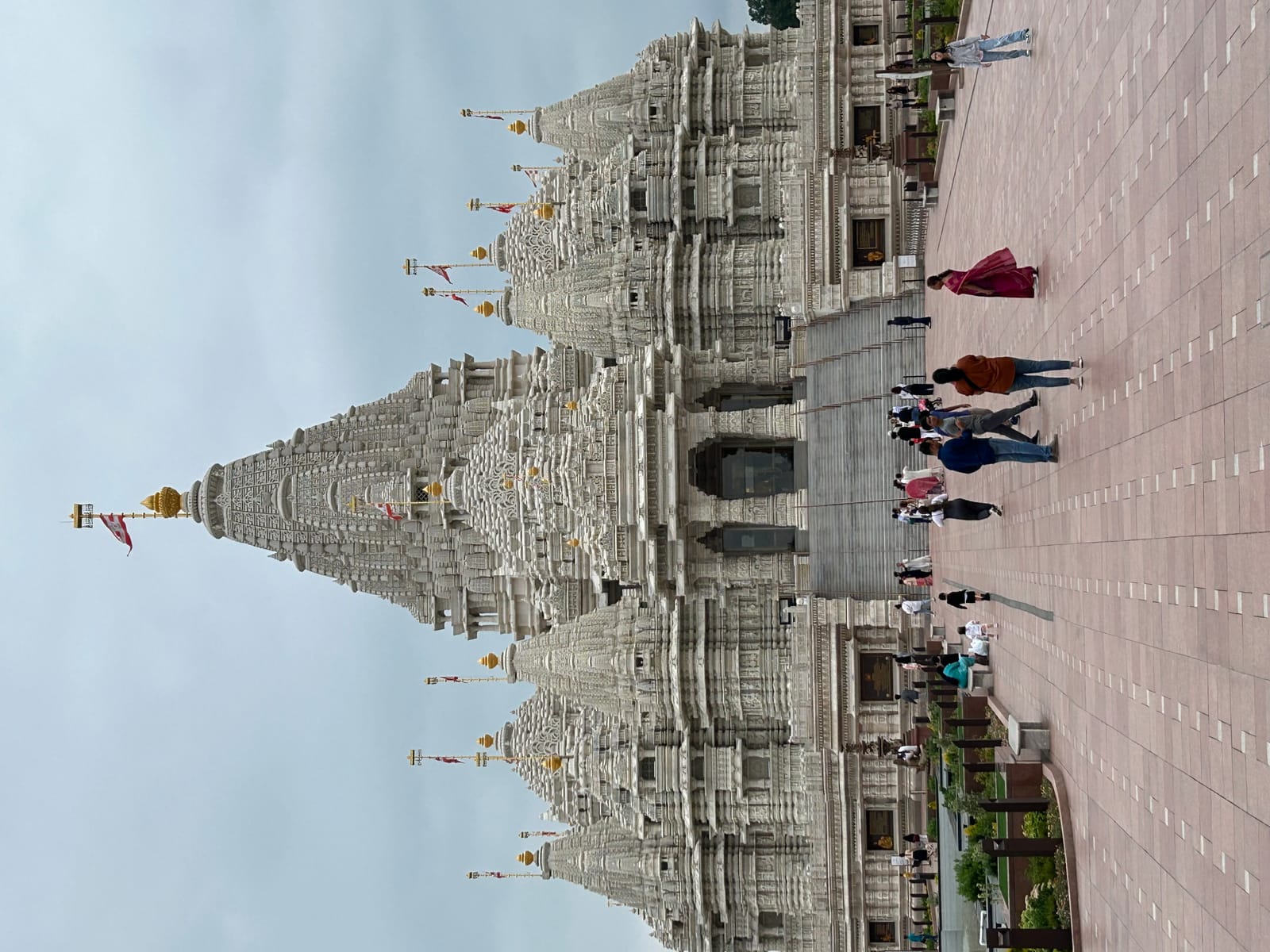
The largest Hindu temple in North America and the second-largest in the world, hand-carved from Italian marble and Indian pink sandstone on a 183-acre campus in central New Jersey.
Explore Temple
USA
Sri Venkateswara Temple
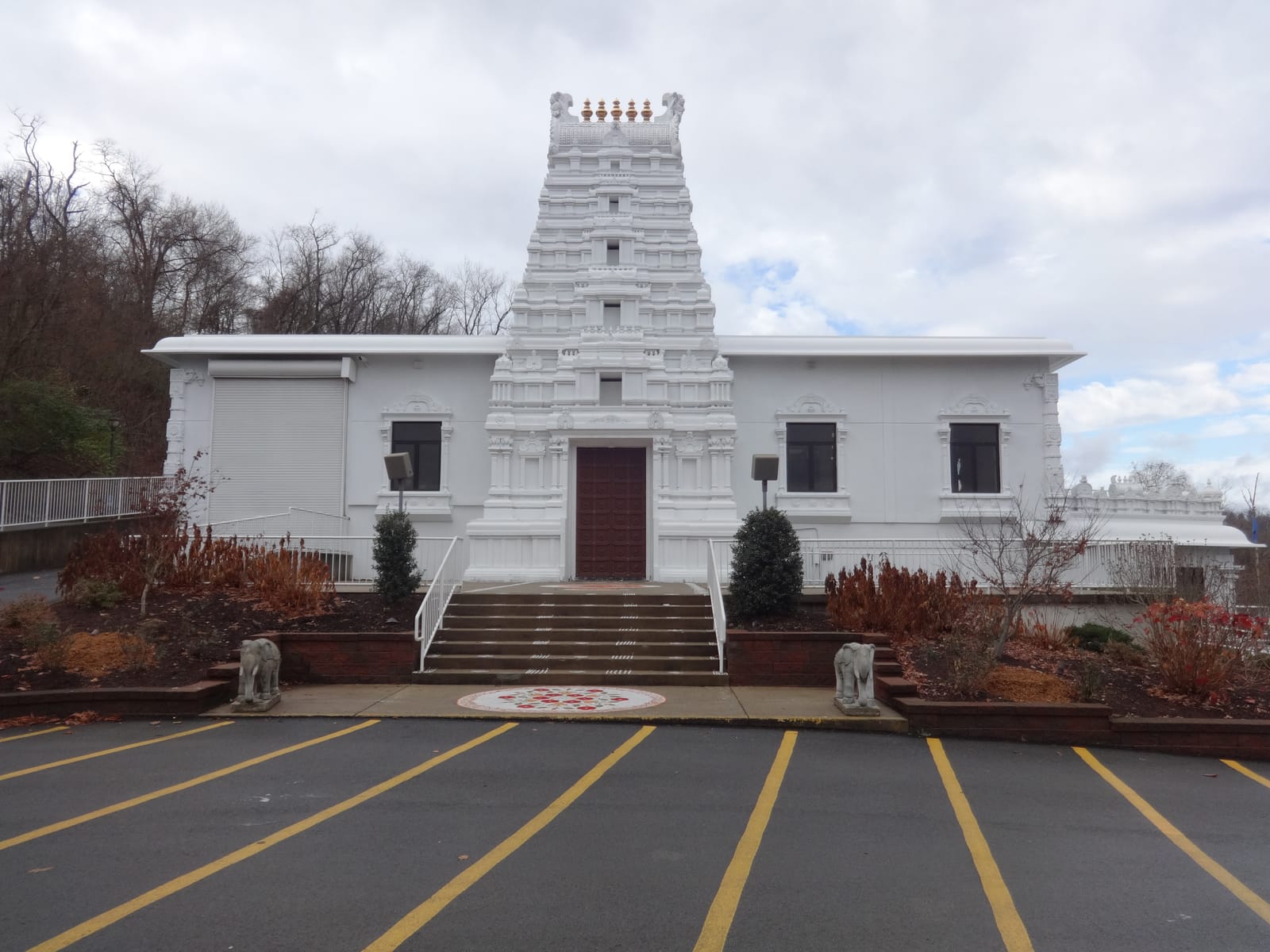
A stunning replica of the Tirumala Venkateswara Temple in Tirupati, built on 10 acres in Penn Hills, Pittsburgh, and serving as among the most authentic South Indian temples in North…
Explore Temple

USA
Shri Swaminarayan Mandir
A magnificent hand-carved stone and marble mandir in the Chicago suburbs, built by BAPS and serving as a spiritual and cultural hub for the Midwest's Hindu community.
Explore Temple