
USASwaminarayan
Shri Swaminarayan Mandir
A magnificent hand-carved stone and marble mandir in the Chicago suburbs, built by BAPS and serving as a spiritual and cultural hub for the Midwest's Hindu community.
Bartlett, Illinois (Greater Chicago), USA Swaminarayan Built: 2015
Share
Overview
The Shri Swaminarayan Mandir in Bartlett, Illinois, is one of the largest and most magnificent Hindu temples in the American Midwest, serving a community of over 100,000 Hindus across the greater Chicago metropolitan area. Consecrated in 2015, the mandir is built from hand-carved Italian Carrara marble and Turkish limestone, following the ancient Shikarbaddha architectural tradition. The temple rises 100 feet, spans 80 feet in width, and 150 feet in length, making it a landmark visible from the surrounding suburban landscape.
The mandir is the centerpiece of a 27-acre campus that includes a community center, a heritage museum, a meditation garden, and a large gathering hall. Like all BAPS mandirs, the temple was constructed without structural steel — the stones are held together by gravity and precision carving, using techniques that have been refined over millennia of Indian temple architecture. Over 8,000 carved pieces were assembled on-site, each numbered and fitted like a three-dimensional puzzle.
The temple serves not only the Gujarati and Swaminarayan communities but the entire Hindu population of the Midwest. Devotees travel from Illinois, Indiana, Wisconsin, Michigan, Iowa, and Missouri to participate in festivals, life ceremonies, and weekly satsangs. The temple has become an integral part of the cultural landscape of the Chicago region, hosting interfaith events, cultural programs, and community service initiatives.
Quick Facts
Deity
Swaminarayan
Location
Bartlett, Illinois (Greater Chicago), USA
Built
2015
Built By
BAPS Swaminarayan Sanstha
Coordinates
41.99, -88.22
Timings
9:00 AM – 7:00 PM daily (closed Mondays)
Entry Fee
Free entry
History
The BAPS organization began serving the Chicago Hindu community in the 1980s, initially holding prayer meetings in rented spaces and community centers. As the community grew, a small mandir was established in Bartlett in 2000. By the late 2000s, it became clear that a larger, permanent structure was needed to serve the rapidly expanding Hindu population of the Midwest.
Plans for the current mandir were announced in 2010, and construction began in 2012. The stone carving was done by 1,200 artisans in India over a period of four years, with the carved pieces shipped in 2,000 containers to the United States. The assembly on the Bartlett site took approximately three years, involving both skilled craftsmen who came from India and American construction workers who learned traditional Indian stonework techniques.
The mandir was consecrated through a series of Vedic ceremonies from July 9-12, 2015, led by Pramukh Swami Maharaj, the then-spiritual head of BAPS. The consecration included the installation of 70 murtis (sacred images) representing various Hindu deities and the Swaminarayan guru lineage. The temple opened to the public in August 2015 and was immediately embraced by the community, drawing over 10,000 visitors on its first weekend of public access.
Architecture
The mandir is built in the Shikarbaddha style of North Indian temple architecture, characterized by its tiered shikharas (spires) and deeply carved exterior surfaces. The main temple rises 100 feet, featuring three primary shikharas flanked by smaller subsidiary spires. The mandir is approached through a traditional stepwell-inspired entrance, with carved elephants flanking the stairway, leading to the main sanctum on the upper level.
The exterior is covered with over 8,000 carved stone pieces depicting deities, saints, celestial dancers (apsaras), and floral motifs. The central facade features a large carved panel showing the Swaminarayan lineage, while the side walls depict scenes from the Ramayana, Mahabharata, and Bhagavata Purana. The carvings also include American symbols — eagles, stars, and stripes — integrating the traditional Indian art with the temple's American context.
The interior is equally ornate, with 34 intricately carved pillars supporting the domed ceiling. The central sanctum houses the murti of Swaminarayan, flanked by Akshara-Purushottama as spiritual preceptors. Additional shrines are dedicated to Shiva-Parvati, Sita-Ram, Radha-Krishna, and Hanuman. The mandapas (halls) feature marble floors inlaid with geometric patterns, and the ceiling of the central dome is carved with a lotus motif symbolizing cosmic harmony.
Main Deity
Swaminarayan
Religious Significance
The Shri Swaminarayan Mandir of Chicago represents the permanent establishment of Hindu religious infrastructure in the American Midwest. For decades, Hindu communities in the region relied on converted suburban homes, strip mall spaces, and rented church basements for their worship. This mandir, with its monumental architecture and 27-acre campus, provides a permanent, dignified, and visually powerful presence for Hinduism in the heartland of America.
The temple's location in Bartlett, 35 miles west of downtown Chicago, was carefully chosen to serve the entire metropolitan region. Chicago has one of the largest and fastest-growing Indian-American populations in the United States, with significant communities of Gujaratis, Telugus, Tamils, Punjabis, and Bengalis. The mandir serves as a unifying center that brings together these diverse linguistic and cultural communities under the umbrella of shared Hindu faith.
For the BAPS Swaminarayan tradition, the Chicago mandir completes a network of major North American mandirs that also includes Robbinsville (New Jersey), Houston (Texas), Los Angeles (California), Toronto (Canada), and Atlanta (Georgia). The Chicago mandir is particularly significant as a bridge between the eastern and western United States, serving the vast central region of the continent.
Temple Legends
The Swaminarayan tradition's foundational narratives animate the Chicago Mandir. According to BAPS teachings, Bhagwan Swaminarayan (1781-1830) was the supreme manifestation of God who walked the earth to establish the path of dharma, bhakti, and vairagya. His life story includes a famous pilgrimage across India on foot, covering thousands of miles over seven years, during which he debated scholars, performed miracles, and gathered disciples.
A local legend specific to the Chicago mandir involves the selection of the site in Bartlett. According to temple tradition, when the BAPS leadership first visited the property, they noticed that the land had a gentle elevation that naturally mirrored the shape of a lotus. In Hindu symbolism, the lotus represents purity and spiritual awakening, and this was interpreted as a divine sign that the location was blessed for the mandir.
Another narrative recounts the consecration ceremony in July 2015. During the installation of the main murti, the temple priests reported that the marble image of Swaminarayan appeared to radiate a warm glow when the final consecration mantras were chanted. Devotees present at the ceremony describe a profound sense of peace descending upon the assembly, an experience that many interpret as the deity's blessing upon the new mandir and its community.
Festivals & Celebrations
The Shri Swaminarayan Mandir Chicago celebrates all major Hindu festivals throughout the year, drawing thousands of devotees from across the Midwest. Diwali is the largest and most spectacular celebration, with the temple illuminated by thousands of traditional clay lamps (diyas), electric lights, and rangoli designs. The temple hosts a Diwali cultural program featuring music, dance, and drama performances by community members.
Janmashtami (Krishna's birthday) is celebrated with a midnight aarti, the decoration of a cradle (jhula) for the baby Krishna, and a reenactment of Krishna's early life by children from the community. Maha Shivaratri features all-night abhishekam and mantra chanting. The Swaminarayan-specific festivals include the birth anniversaries of Bhagwan Swaminarayan and each of the gurus in the succession.
The temple also hosts weekly Sunday satsangs that include spiritual discourses (katha), devotional singing (kirtan), and community announcements. The Sunday school program (bal sanskar) teaches children Hindu values, Gujarati language, and religious stories. The temple's annual community picnic (pavilion day) is a major social event drawing thousands for a day of games, food, and fellowship.
Visitor Information
Timings
9:00 AM – 7:00 PM daily (closed Mondays)
Entry Fee
Free entry
Dress Code
Modest clothing covering shoulders and knees; removal of footwear before entering the temple
Photography
Photography permitted in exterior areas and ground floor; restricted in main sanctum and during ceremonies
Best Time to Visit
The best time to visit the Shri Swaminarayan Mandir is during the summer months (June-September) when Chicago's weather is most pleasant and the temple's meditation garden is in full bloom. The temple campus includes a traditional Indian garden with tulsi plants, lotus pond, and walking paths that are best enjoyed in warm weather.
Weekdays offer a peaceful, contemplative experience. Sundays are the busiest, with the satsang program drawing hundreds of families. Festival days, especially Diwali (October-November) and the temple's anniversary celebrations (July), offer the most vibrant experience but draw very large crowds.
Visiting during the hours of 9:00 AM – 11:00 AM allows one to witness the morning rituals and aarti. The temple is also beautiful at sunset when the white marble facade glows in the golden light. Illinois winters can be harsh (December-February), but the temple is fully heated and open year-round.
How to Reach
The Shri Swaminarayan Mandir is located at 1051 Nerge Road in Bartlett, Illinois, approximately 35 miles west of downtown Chicago. The temple is accessible via Interstate 90 (I-90) to Route 59 south, then west on Nerge Road. From O'Hare International Airport (ORD), the temple is about 20 miles southwest, a 30-minute drive. From Midway Airport (MDW), it is about 35 miles west, a 45-minute drive.
The temple provides extensive free parking on-site. The nearest Metra train station is Bartlett Station on the Milwaukee District West Line, approximately 2 miles from the temple. From the station, a short taxi or ride-share ride reaches the temple. Several Pace bus routes serve the Bartlett area, though service frequency is limited.
For out-of-town visitors, hotels in the nearby towns of Elgin, Schaumburg, and Hoffman Estates offer accommodation within a 15-minute drive. The temple is also accessible via the major interstate highways that converge in the Chicago suburbs.
Nearby Attractions
The Morton Arboretum, a 1,700-acre outdoor tree museum with hiking trails and seasonal events, is 10 miles from the temple. The LEGOLAND Discovery Center in Schaumburg is 8 miles east. Woodfield Mall, one of the largest shopping malls in the United States, is 8 miles southeast in Schaumburg.
Downtown Chicago's cultural attractions are 35 miles east, including the Art Institute of Chicago, the Field Museum of Natural History, the Shedd Aquarium, and the Museum of Science and Industry. The historic Chicago Loop, Millennium Park, and Navy Pier offer world-class dining and entertainment. The Bharatiya Vidya Bhavan in downtown Chicago is another center of Indian culture just 40 minutes away.
For nature lovers, the James O. Breen Community Park adjacent to the temple offers walking trails and sports facilities. The Fox River Valley, with its historic towns of Geneva, St. Charles, and Batavia, is 20 minutes west and offers scenic river walks, historic architecture, and boutique shopping.
Interesting Facts
- The mandir was built entirely without structural steel — the stones are held together solely by gravity and precision carving, using traditional Indian techniques adapted for the Illinois climate.
- Over 1,200 artisans in India worked for four years carving the temple's 8,000 stone pieces, which were then shipped to Chicago in 2,000 containers.
- The temple campus covers 27 acres, making it the largest Hindu religious campus in the American Midwest.
- The mandir's construction used Italian Carrara marble, Turkish limestone, and Indian sandstone — materials sourced from three continents.
- The temple's meditation garden features plants and herbs mentioned in the Vedas, including tulsi (holy basil), neem, and sandalwood, acclimatized to Illinois weather.
- The community center on campus has hosted interfaith dialogues with representatives of Christian, Jewish, Muslim, Sikh, and Buddhist communities from across the Midwest.
Frequently Asked Questions
Is the Shri Swaminarayan Mandir open to non-Hindus?
Yes, the mandir welcomes people of all faiths and backgrounds. Visitors are asked to dress modestly and remove footwear before entering the temple building.
How is this mandir different from the Akshardham in New Jersey?
Both are BAPS temples, but the Chicago mandir is smaller and serves primarily as a community mandir for daily worship and local gatherings. Akshardham Robbinsville is the larger pilgrimage destination.
Does the temple conduct weddings?
Yes, the temple has a dedicated wedding hall and conducts traditional Hindu wedding ceremonies. The temple's community center can host receptions of up to 1,000 guests.
Is there vegetarian food available at the mandir?
The temple has a community kitchen that serves prasad on weekends and festival days. There is also a small cafe on campus offering Indian snacks and refreshments.
Can I volunteer at the temple?
Yes, the temple relies on volunteers for its daily operations, festival arrangements, and community programs. Volunteer opportunities are available in the kitchen, garden, education programs, and event management.
Sources & References
— every record linked above was re-requested for this release, so the link still resolves and the publisher still serves the document. It is a link check, not a re-verification of every sentence on this page.
More Temples in USA
Explore other Hindu temples in USA.
USA
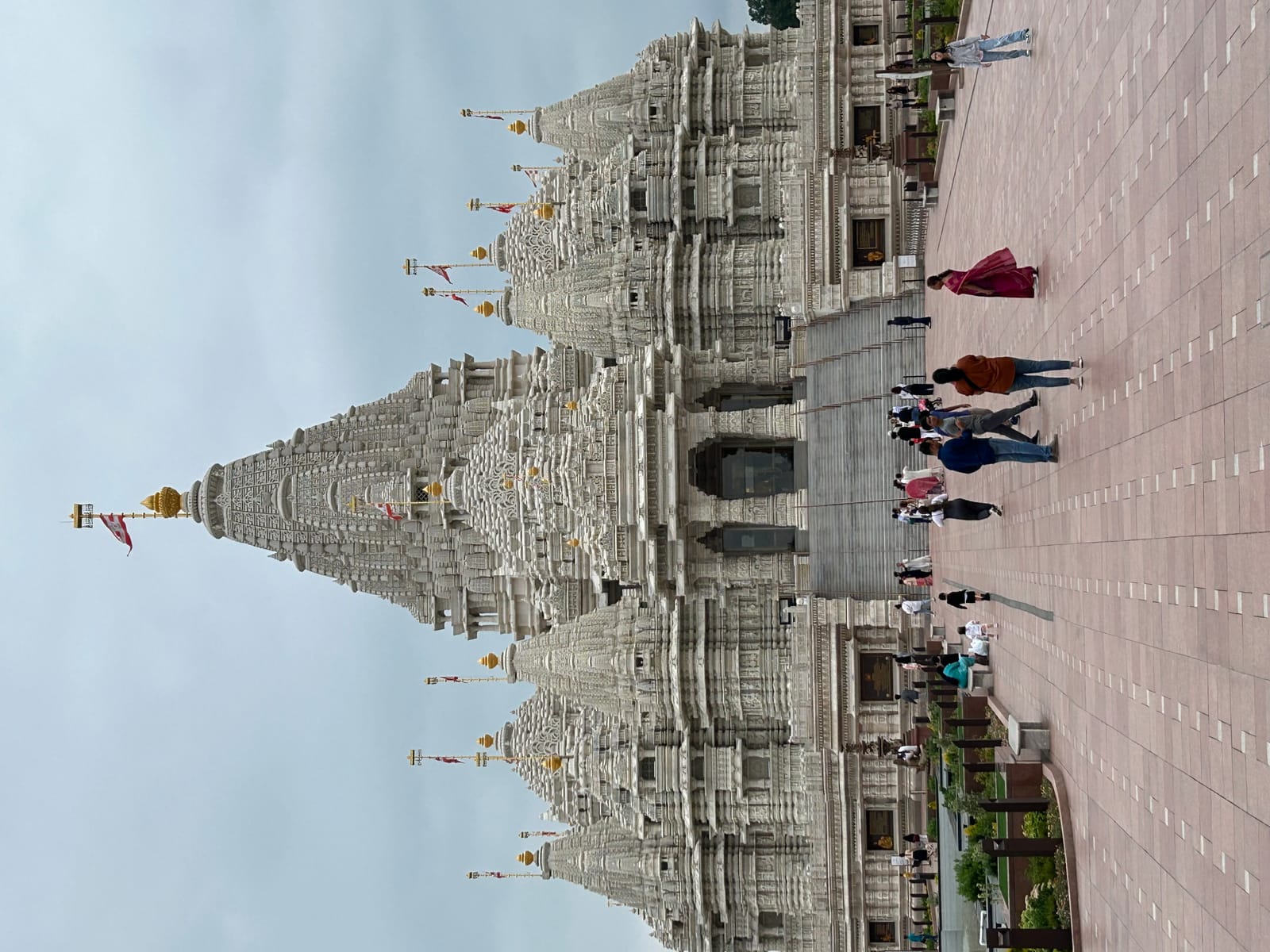
BAPS Swaminarayan Akshardham
The largest Hindu temple in North America and the second-largest in the world, hand-carved from Italian marble and Indian pink sandstone on a 183-acre campus in central New Jersey.
Explore Temple
USA
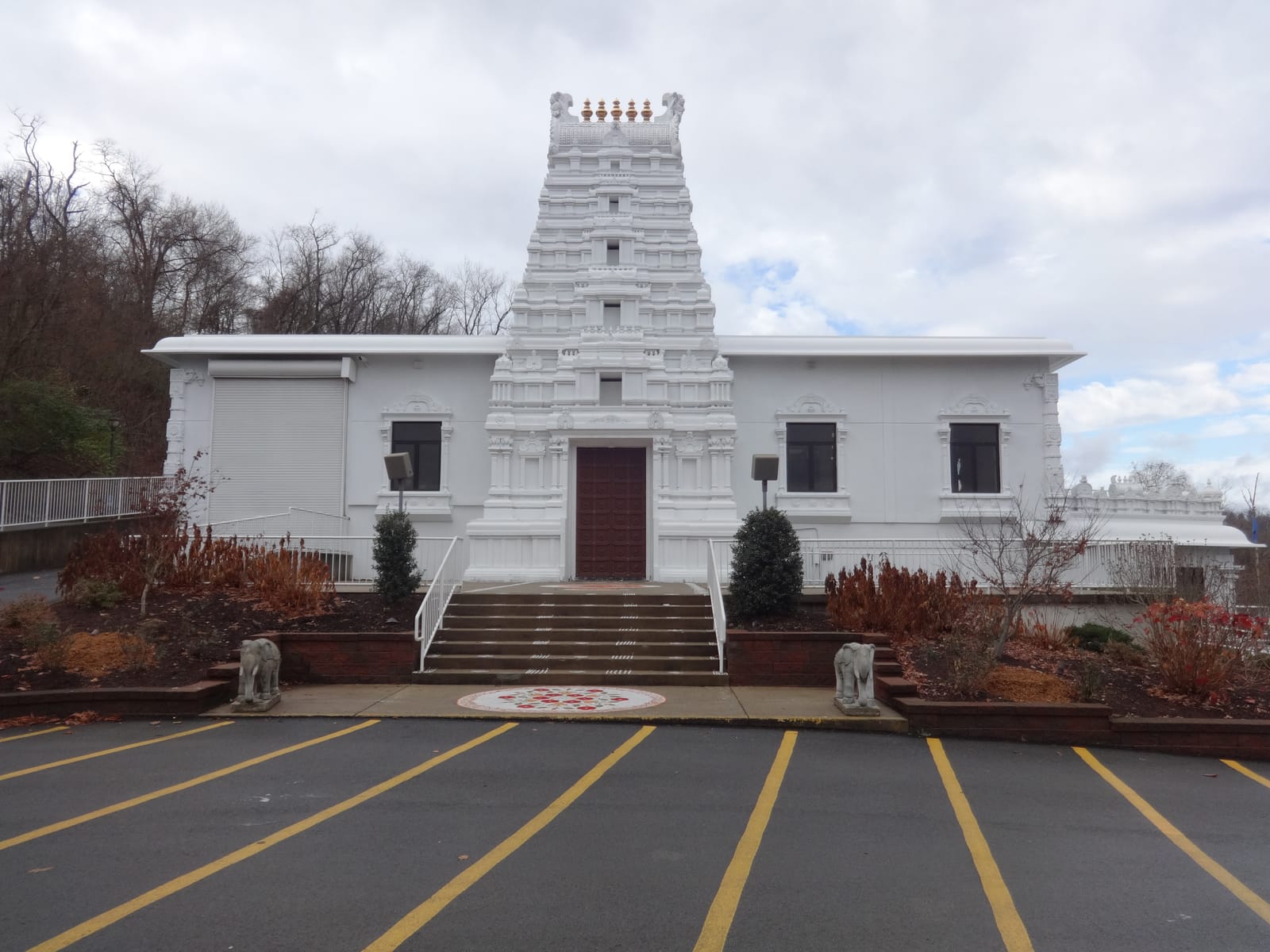
Sri Venkateswara Temple
A stunning replica of the Tirumala Venkateswara Temple in Tirupati, built on 10 acres in Penn Hills, Pittsburgh, and serving as among the most authentic South Indian temples in North…
Explore Temple

USA
Malibu Hindu Temple
A serene Hindu temple complex in the Santa Monica Mountains overlooking the Pacific Ocean, serving the Southern California Hindu community since 1981 with shrines dedicated to Shiva and Vishnu.
Explore Temple