Sacred Destinations
Meghalaya
3Sacred Sites
4Major Temples
Meghalaya, in the northeastern hills south of the Brahmaputra Valley, contains a unique concentration of Shakta temple sites established by the Jaintia and Khasi royal dynasties from the 15th century onward. The sacred landscape includes the Nartiang Durga Temple with its 16th-century stone monoliths, Shakti shrines at Pandynrum and Jowai, and the Presbyterian and Catholic churches established by 19th-century Welsh and Italian missionaries.
Quick Facts
Capital
Shillong
Population
3.21 million
Area
22,429 km²
Languages
Khasi, Jaintia, Garo, English
Best Time to Visit
November to February
Major Pilgrimage
Nartiang Durga Temple, Pandynrum Kali
Temple Style
Khasi indigenous (rock formation worship)
UNESCO Count
0
Major River
Myntdu, Umngot, Kynshi
Highest Peak
Shillong Peak (1,965 m)
Why Visit Meghalaya
Meghalaya's religious geography represents a three-layer historical sedimentation. The Nartiang Durga Temple was established in the 16th century by the Jaintia king U Kithing Niamtre as the official state temple and is one of the 51 Shakti Peethas where Sati's left thigh is believed to have fallen. The indigenous Khasi faith (Niam Khasi) maintains sacred groves (Law Kyntang) and megalithic stone platforms. The third layer comprises Christian missions established after 1841.
Nartiang Durga is one of the most significant Shakti Peethas in northeastern India, where the goddess is worshipped as a rock formation rather than an anthropomorphic idol. The temple compound contains the Nartiang Monoliths — 128 upright megalithic stones erected between 1500 and 1850 CE, forming one of the largest concentrations of standing stones in Asia.
Temple Categories
Featured Sacred Places
Meghalaya
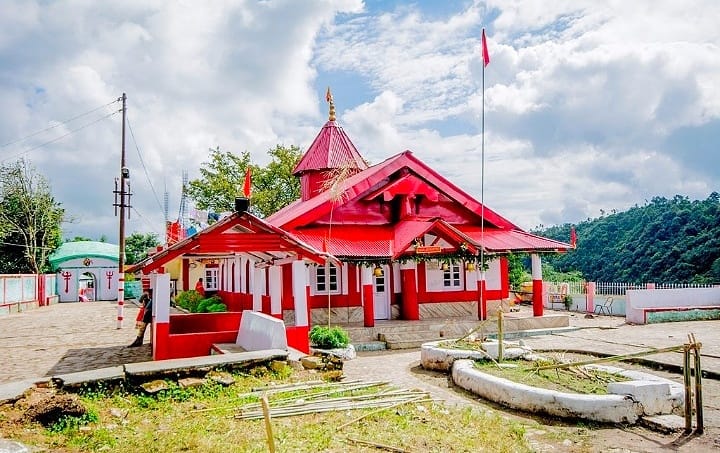
Nartiang Durga Temple
One of the 51 Shakti Peethas set in the scenic Jaintia Hills, representing a fascinating blend of Vedic and indigenous tribal traditions.
Explore Temple
Meghalaya
Mawjymbuin Shiva Temple
Famous for its massive natural stalagmite that resembles a Shiva Lingam, constantly bathed by water dripping from the cave roof.
Explore Temple
Meghalaya
Jagannath Temple
A serene temple in the heart of Shillong, serving as a spiritual center for the local community with traditional rituals.
Explore Temple
Pilgrimage Circuits
Jaintia Shakti Circuit
3 templesNartiang Durga-Pandynrum Kali-Jowai shrines, a 150-km triangle in the Jaintia Hills.
The Shakti Peetha circuit in Meghalaya connects Nartiang Durga, Pandynrum Kali, and Jowai divine shrines in a 150-km triangle. The indigenous Khasi pilgrimage to Law Kyntang sacred groves involves offerings of betel nut, rice, and a cock at stone altars beneath ancient trees.
Temple Architecture
The temple is a rectangular stone structure measuring 18 by 12 meters with a sloped corrugated iron roof reflecting Khasi construction techniques adapted to high rainfall. The sanctum houses a naturally occurring rock formation representing Durga, painted with vermilion and adorned with brass and silver ornaments. The Nartiang Monoliths consist of 55 menhirs and 73 flat memorial stones, with the tallest menhir measuring 8.2 meters.
Historical Timeline
1510-1540Jaintia
Nartiang Durga Temple constructed by Jaintia king U Kithing Niamtre.
1500-1850Jaintia
128 megalithic monoliths erected by successive Jaintia rulers.
1835British
Jaintia kingdom annexed by British; temple administration transferred to village council.
1860British
British abolish ritual sacrifices at Pandynrum Kali Temple.
1935British
Nartiang Temple renovated with new mandapa roof.
Temple Statistics
1
Shakti Peethas
Nartiang Durga (Sati's left thigh)
128
Megaliths
Second-largest in Asia
1510-1540
Oldest Temple
Nartiang Durga Temple
364
Sacred Groves
Law Kyntang across Khasi Hills
Festivals
Nartiang Durga Puja
September-OctoberNartiang Durga Temple
5 days
Rituals in Khasi and Sanskrit; goat sacrifice on Sasthi; organized with Jaintia Hills Autonomous Council.
Behdienkhlam
JulyJowai
3 days
Procession of decorated bamboo poles; ritual mud fight invoking Jaintia deities for harvest.
Pomblang
Agricultural cyclesNartiang Durga Temple
1 day
Goat sacrifice ceremony following Jaintia-specific protocols; single-color goat required.
The Nartiang Durga Puja (September-October) spans five days with rituals conducted in the Khasi language alongside Sanskrit mantras, including goat sacrifice on Sasthi. The Behdienkhlam festival (July) features a procession of decorated bamboo poles and a ritual mud fight at Jowai. The Pomblang goat sacrifice ceremony is performed during major agricultural cycles.
Travel Guide
Best Time
November to February (4-16°C)
Climate
Extreme rainfall 4,500 mm+
Nearest Airport
Shillong (ShU), Guwahati (GAU)
Railway
Guwahati (nearest major)
Road
NH-6 (Shillong-Jowai)
Local Transport
Jeep, taxi (4WD recommended)
Temple Etiquette
Remove footwear; modest dress
Suggested Duration
2-4 days for Shakti circuit
Nearby Attractions
Waterfall
Krang Suri Falls
30-meter waterfall into a turquoise pool, accessible by a 500-meter stone stair path built in 2015.
River
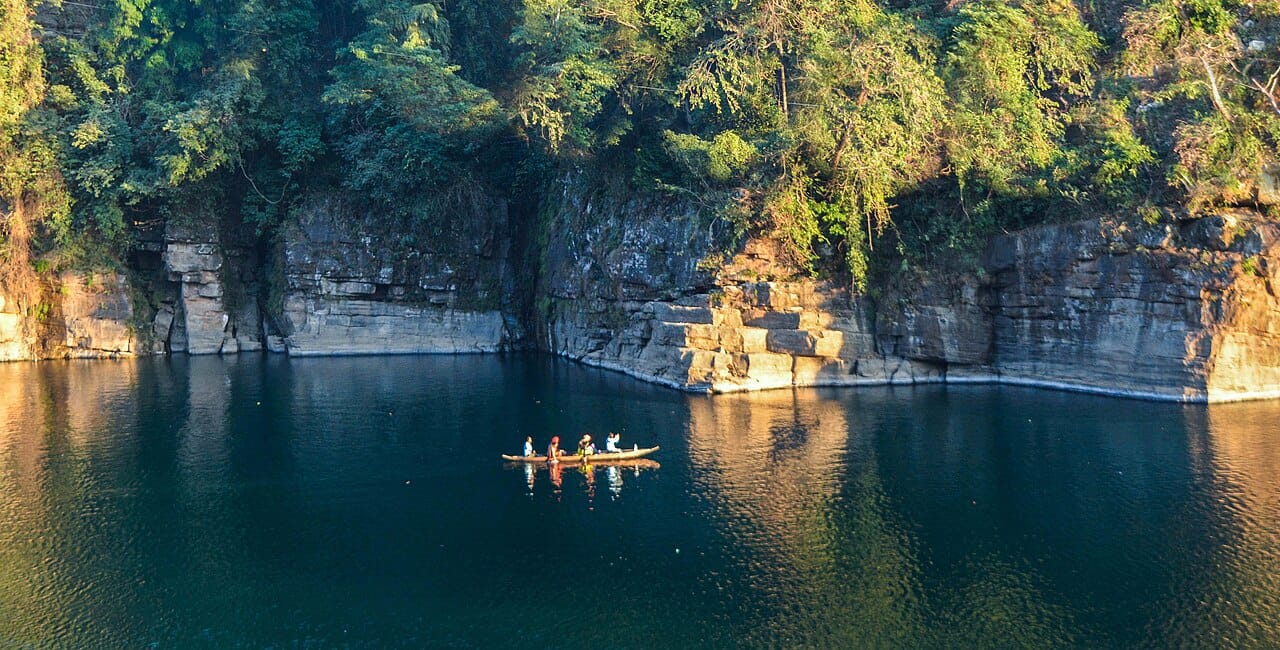
Dawki River
Crystal-clear Umngot River on the Bangladesh border with 5-meter visibility for boat rides.
Museum
Lalong Park Museum
Museum of Jaintia cultural artifacts including costumes, musical instruments, and a reconstructed palace section.
Interesting Facts
01
The 128 Nartiang Monoliths represent the second-largest megalithic complex in Asia after the Korean dolmens — each menhir commemorates a Jaintia ruler's reign.
02
The Nartiang Durga Temple has no idol — the goddess is manifested as a naturally occurring rock formation painted with vermilion, reflecting Khasi indigenous worship traditions.
03
The temple's priest (Doloi) is traditionally a Synteng Khasi rather than a Bengali Brahmin, performing prayers in both Khasi and Sanskrit — a unique dual-language ritual system.
Frequently Asked Questions
The 128 standing stones represent the largest megalithic complex in northeastern India and the second-largest in Asia. The central 8.2-meter stone was raised by King U Kithing Niamtre around 1530 CE.
Rituals combine Sanskritic Shakta traditions with indigenous Jaintia practices. Offerings include betel nut and rice beer alongside standard bhog. The priest is a Synteng Khasi performing prayers in both languages.
Many Khasi families simultaneously participate in Niamtre ancestor worship and visit Nartiang Durga Temple, treating the goddess as a manifestation of the Khasi mother deity Ka Blei Synshar.
Sources & References
These records back the history, architecture, temple listings and visitor guidance published on this Meghalaya page.
Archaeological Survey of India
Archaeological Survey of India — monument records and conservation reports
Protected-monument status, dating, architectural classification and conservation records for the temples and monuments named across this Meghalaya guide.
Primary archaeological record
Open source (opens in a new tab)Ministry of Tourism, Government of India
Ministry of Tourism — official destination information
Official Government of India visitor information, access routes and pilgrimage circuits for Meghalaya.
Government record
Open source (opens in a new tab)
— every record linked above was re-requested for this release, so the link still resolves and the publisher still serves the document. It is a link check, not a re-verification of every sentence on this page.
Missing something, or found an error? Send us a correction with the record that supports it, or read how we choose sources.