From ancient rock-cut marvels to towering imperial shrines, discover the architectural soul of Bharat through our verified digital archive.
Explore More Temples
Location
Nartiang
Presiding Deity
Goddess Jayanteshwari (Durga)
Architecture
Khasi-Jaintia Vernacular
Dynasty
Jaintia Kings
Timings
The temple is open from 6:00 AM to 6:00 PM. Visit during the morning hours to witness the daily rituals.
Entry Fee
Free
Best Time
The absolute best time to visit is during the autumn months of September to November, particularly to witness the unique, historical grandeur of the Durga Puja festival. Alternatively, visiting between March and May allows travelers to enjoy the lush greenery and highly pleasant, breezy weather of the Jaintia Hills.
One of the 51 Shakti Peethas set in the scenic Jaintia Hills, representing a fascinating blend of Vedic and indigenous tribal traditions.
The Nartiang Durga Temple is steeped in antiquity, believed to be over 600 years old, constructed during the zenith of the Jaintia kings' reign. According to the foundational Hindu legend of the Shakti Peethas, the left thigh of Goddess Sati fell at this exact geographical location when Lord Shiva wandered the universe carrying her charred body in a state of profound grief. Historically, the temple carries a dark but fascinating past: it was widely infamous for the practice of human sacrifice, which was ritually performed to appease the fierce form of the Goddess, Jayanteshwari. Victims were often volunteers or prisoners, beheaded in a secret underground passage connected to a nearby river. This grim practice was completely abolished by the British administration in the 19th century. Today, an intriguing and symbolic ritual involving the sacrifice of a goat adorned with a human mask has replaced the ancient tradition, keeping the historical memory alive without the violence.
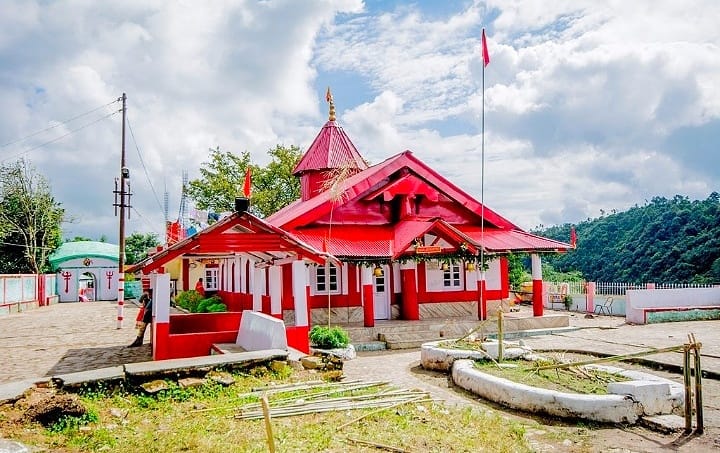
Unlike the towering, intricately carved classical stone temples of mainland India, the architecture of the Nartiang Durga Temple is uniquely and pragmatically adapted to the local mountainous environment, closely resembling a traditional Khasi-Jaintia house. Originally constructed with a thatched roof and stout wooden pillars, it has been practically renovated with modern materials, including protective tin roofs and concrete reinforcements over the years, to shield the sacred site from the notoriously heavy Meghalayan monsoons. The most striking architectural feature is that the main sanctum sanctorum is uniquely positioned underground. Devotees must carefully descend a small, narrow flight of stairs into a cave-like chamber to view and worship the sacred altar.
As an acknowledged Maha Shakti Peetha, the spiritual magnetism and occult significance of the Nartiang Durga Temple are considered immense among Shaktism practitioners. It represents the ultimate divine feminine power, specifically worshipped here as Goddess Jayanti or Jayanteshwari. The temple acts as a highly unique cultural bridge; the rituals performed here are a remarkably rare blend of traditional Hindu rites and indigenous Jaintia tribal customs. The head priest, locally known as the 'Bamon', historically belongs to a distinct lineage that was originally brought from Assam and specifically sanctioned by the Jaintia royalty, preserving a centuries-old socio-religious order.
The rituals at Nartiang are deeply traditional and highly specific to the region. Daily pujas are conducted meticulously by the descendants of the original priests. The rituals incorporate local flowers, fruits, and specific chanting that blends local dialects with Sanskrit. The most notable and famous ritual occurs during the annual Durga Puja. In a haunting reminder of the ancient practice of human sacrifice, a goat is specially prepared, adorned with a human mask, and ritually offered to the Goddess on the dark night of Ashtami, ensuring the tradition is symbolically maintained.
Durga Puja (September-October) is the grandest and most widely attended festival celebrated here. However, unlike the modern, flashy pandal celebrations seen in cities like Kolkata, the Puja at Nartiang is deeply esoteric, solemn, and strictly follows ancient royal Jaintia customs and tantric guidelines. The festival of Navaratri is also observed with intense devotion, attracting massive throngs of pilgrims who travel from neighboring states like Assam, Tripura, and West Bengal to seek the Goddess's blessings.
The temple is internationally famous for its exalted status as one of the 51 Maha Shakti Peethas. It is also highly renowned for its chilling historical association with human sacrifice, the modern symbolic goat-mask sacrifice, its unique underground sanctum, and its close proximity to the mystical, towering megalithic stone clusters of Nartiang.
The absolute best time to visit is during the autumn months of September to November, particularly to witness the unique, historical grandeur of the Durga Puja festival. Alternatively, visiting between March and May allows travelers to enjoy the lush greenery and highly pleasant, breezy weather of the Jaintia Hills.
The temple is open from 6:00 AM to 6:00 PM. Visit during the morning hours to witness the daily rituals.
A. According to the ancient Hindu texts mapping the Shakti Peethas, it is believed that the left thigh of Goddess Sati fell at this exact location, making it a site of immense divine feminine power.
A. Absolutely not. The practice of human sacrifice was strictly abolished by the British in the 19th century. Today, it is symbolically represented during Durga Puja by sacrificing a goat that is made to wear a human mask.
A. Nartiang is located about 65 kilometers from Shillong. The most convenient way to reach is by hiring a private taxi from Shillong, which takes roughly 2 to 2.5 hours driving through the scenic Jaintia Hills.
Kalighat Kali Temple
A major Shakti Peetha where the toes of Sati's right foot fell, serving as the spiritual heart of Kolkata.
Tarapith Temple Birbhum
A major center for Tantric worship dedicated to Goddess Tara, famous for the saint Bamakhyapa and its sacred cremation ground.
Bargabhima Temple Tamluk
An ancient 1,150-year-old temple where Sati's left ankle fell, blending Bengali 'at-chala' and Odia 'Kalinga' styles.
Vaishno Devi Temple
The Vaishno Devi Temple, a sacred cave shrine nestled in the Trikuta Mountains of Jammu and Kashmir, is one of India's most visited pilgrimage sites, where millions trek 12 km each year to seek blessings of Mata Vaishno Devi at the holy cave complex.
Dhari Devi Temple
A sacred Shakti temple on the banks of the Alaknanda River, considered the guardian deity of the Char Dham Yatra and famous for the idol that changes color three times daily.
Vishalakshi Temple
The Vishalakshi Temple, located in the narrow lanes of Mir Ghat near the Ganges in Varanasi, is one of the 51 Shakti Peethas where the earrings of Goddess Sati are believed to have fallen. Dedicated to the 'wide-eyed' goddess Vishalakshi, the temple is the first stop on the traditional Kashi Yatra pilgrimage circuit and is considered the consort shrine of the neighbouring Kashi Vishwanath Temple.
Dakshineshwar Kali Temple
A world-famous 19th-century temple complex on the Hooghly River, immortalized by its association with the saint Sri Ramakrishna Paramahamsa.
Kalighat Kali Temple
A major Shakti Peetha where the toes of Sati's right foot fell, serving as the spiritual heart of Kolkata.
Hangseshwari Temple Bansberia
A unique temple with 13 lotus-bud towers, representing the human body's anatomy according to Yoga and Tantra.
Vaishno Devi Temple
The Vaishno Devi Temple, a sacred cave shrine nestled in the Trikuta Mountains of Jammu and Kashmir, is one of India's most visited pilgrimage sites, where millions trek 12 km each year to seek blessings of Mata Vaishno Devi at the holy cave complex.
Dhari Devi Temple
A sacred Shakti temple on the banks of the Alaknanda River, considered the guardian deity of the Char Dham Yatra and famous for the idol that changes color three times daily.
Kalkaji Temple
An ancient temple dedicated to Kalka Devi, believed to date back to the Satya Yuga, and highly crowded during Navratri.
India's temples are living traditions — not museums. Every temple has its own customs. This guide helps first-time visitors prepare with confidence and respect.
Foreign visitor information is being researched
Please verify with the official temple authority before planning your visit.
Foreign Visitors
Verify Before VisitingVisitor Information
Entry policies vary between temples. Most temples welcome visitors, while some may restrict access to specific areas, rituals, or the inner sanctum. Always verify the latest entry guidelines with the official temple authorities before your visit.
Modest clothing is expected at every Indian temple — a sign of respect, not a restriction. Think of it as dressing for a formal ceremony.
A scarf is always useful — it covers shoulders, works as a head covering, and can double as a makeshift face cover if needed.
Outdoor photography is generally permitted. Indoor photography is often restricted. Always look for signage or ask a priest before taking photos inside.
The absolute best time to visit is during the autumn months of September to November, particularly to witness the unique, historical grandeur of the Durga Puja festival. Alternatively, visiting between March and May allows travelers to enjoy the lush greenery and highly pleasant, breezy weather of the Jaintia Hills.
April — June
July — September
English is widely understood at major tourist temples. In smaller local temples, Hindi and the regional language are more common. A smile and simple hand gestures go a long way. Learning a few words of the local language is always appreciated.
Cash (Indian Rupees) is the most reliable option, especially for temple offerings, small shops, and local transport.
UPI digital payments (Google Pay, PhonePe, Paytm) are widely accepted across India — even at roadside stalls. Download one before you arrive.
International credit/debit cards work at most ATMs, hotels, and larger establishments. Smaller vendors may only accept cash or UPI.
Carry small denominations (₹10, ₹20, ₹50, ₹100 notes) for offerings and temple donations. Large notes (₹500, ₹2000) can be hard to break at smaller counters.
Many historic temples have uneven stone floors, multiple steps, and narrow passages. Wheelchair access is limited at older sites — contact the temple in advance.
Basic restroom facilities and drinking water are available at most major temples. Some charge a small fee (₹5–₹10).
Stay hydrated — carry a reusable water bottle, especially in hot climates.
Keep valuables secure — use hotel lockers for passports and excess cash.
Wear comfortable, sturdy footwear — temple floors can be hot, wet, or uneven.
Beware of unofficial guides or touts near temple entrances. Only use authorised services.
Carry a photocopy of your passport and visa. Leave originals in your hotel safe.
Download offline maps — mobile networks can be unreliable near remote temple sites.
These short explanations help make sense of what you see and experience.
Darshan means 'seeing' — but in a temple it means being seen by the deity. It is a sacred moment of connection, not just a viewing.
Removing footwear is a sign of humility. It also keeps the temple floor clean, since devotees sit and pray on the ground.
Food offered to the deity and then distributed to devotees. It is considered blessed. Accept it with both hands and do not discard it.
The bell creates a focused acoustic atmosphere, wards off distractions, and announces your presence before entering the inner sanctum.
Circumambulation (pradakshina) is done clockwise, keeping the sanctum on your right — an auspicious direction aligned with the sun's path.
Flowers symbolise devotion, coconuts represent the ego being broken, incense purifies the air, and lamps represent the victory of light over darkness.
Sacred viewing of the deity; the central act of temple worship.
Clockwise circumambulation of the sanctum.
Blessed food offered to the deity and distributed to devotees.
The innermost sanctum where the main deity resides.
The towering spire above the sanctum, a defining feature of temple architecture.
A pillared hall or pavilion within the temple complex.
The Indian Rupee (?, INR) is the local currency. ATMs are widely available in cities and towns. For temple offerings, keep small notes (₹10, ₹20, ₹50). Most temples accept donations in cash only — digital payments are uncommon at the offering counter itself.
Offerings (dakshina) are given with the right hand. Place cash in the donation box (hundi) or give it directly to the priest. There is no fixed amount — give what feels appropriate. Some temples have fixed fees for special entry or puja participation.
Shoes and sandals are removed before entering the temple building. Most temples have a designated shoe counter (free or a small fee of ₹5–₹20). Socks are generally allowed. In monsoon, carry a plastic bag for wet shoes.
Darshan queues can take 30 minutes to 3 hours at popular temples. Many offer paid VIP darshan (₹100–₹500) for faster entry. Special queues for women, elderly, and disabled visitors exist at some temples. No line jumping.
Major festivals draw enormous crowds — sometimes hundreds of thousands. Book accommodation months in advance. Expect road closures, restricted vehicle access, and limited phone network. Arrive early (before dawn) to avoid the worst congestion.
Always look for signage before taking photos. When in doubt, ask a priest. Never take photos of devotees in prayer without permission. Selfie sticks are banned at most temples. Silently switch your phone to silent mode.
Police / Ambulance / Fire: 112 (National Emergency Number)
Tourist Helpline: 1800-111-363 (Multi-lingual, Ministry of Tourism)
Women's Helpline: 1091
Temple-specific visitor information is continuously researched and updated from official sources. Where specific data is unavailable, general India travel guidance is provided. Always verify current policies with the temple authority before your visit.
Information last verified July 2026. Temple-specific data coming soon.
Continue your journey through the spiritual and architectural wonders of India.

Famous for its massive natural stalagmite that resembles a Shiva Lingam, constantly bathed by water dripping from the cave roof.
A serene temple in the heart of Shillong, serving as a spiritual center for the local community with traditional rituals.

A major Shakti Peetha where the toes of Sati's right foot fell, serving as the spiritual heart of Kolkata.

A major center for Tantric worship dedicated to Goddess Tara, famous for the saint Bamakhyapa and its sacred cremation ground.
"India has over 40 UNESCO World Heritage Sites, ranging from ancient temples to natural wonders."