Diwali at India's Temples: How the Festival of Lights Is Celebrated Across Sacred India
What the festival actually looks like in sacred places — the Rama tradition and the Deepotsav at Ayodhya, a documented temple asthanam at Tirumala, why the Naraka Chaturdashi observance leads in parts of the South, and why Varanasi's Dev Deepawali should not be confused with Diwali at all — set beside the festival's five-day structure, the Lakshmi-Ganesha puja of its main night, and the regional and inter-faith observances that official records name.
Format
Research & Guide
Reading time
20 min read
Evidence base
Incredible India, PIB, UNESCO, TTD
Review status
Reviewed against authoritative sources
What this guide establishes
- Diwali is one festival period with several different leading days, narratives and institutions behind it — the differences are structural, not cosmetic.
- Ayodhya shows the Rama tradition expressed as a civic Deepotsav; the Government of India lists that event for 6 November 2026, two days before Diwali itself.
- Tirumala shows the same tithi absorbed into a temple's own ritual calendar: the Deepavali Asthanam, with its processional deities, its fixed sequence and its seva changes.
- Dev Deepawali is not Diwali. It falls on Kartik Purnima — 24 November 2026, fifteen days after Diwali — and belongs to Varanasi's riverfront tradition.
- The festival period spans five days in official accounts and carries Jain, Sikh and regional observances alongside the Rama and Lakshmi traditions — one date, several religious calendars.
What Diwali is: the name, the night and the five days
Start with the word. The Ministry of Tourism's Utsav portal gives the derivation plainly: Deepa means lamp or light, Vali means string or row, so Deepavali means rows of lights. The same page places the festival on Amavasya, the no-moon day, usually in October or November. That is the stable core: the lamps are what the name promises. The stories told beside them, the day that leads, and the deity the night is given to are what move from region to region.
The Government of India's festival backgrounder states the date the same way — Deepavali "is celebrated on Kartik Amaavasya, which typically falls in October or November" — and describes residences, thoroughfares and temples illuminated with numerous oil lamps standing for light overcoming darkness. The 2026 dates this guide uses are listed in the dates section below, all taken from official listings rather than calculated here.
The festival is also now a documented item of international heritage. On 10 December 2025, at its twentieth session in New Delhi, UNESCO's Intergovernmental Committee inscribed Deepavali on the Representative List of the Intangible Cultural Heritage of Humanity — decision 20.COM 7.b.24, India's sixteenth element on that list, recorded in the domain of "social practices, rituals and festive events". The element description places it at the last harvest of the year and the start of a new year and season, based on the lunar calendar, falling on the new moon in October or November and lasting several days, and names temples and schools among the places that transmit it. The inscription covers a living practice, not a monument — a distinction that matters on a site about temples.
Official descriptions structure the period as five days. The sequence below is the Ministry of Culture's own breakdown, with the source named for each row instead of left to the reader's assumption.
| Day | Observance | What it marks | Source |
|---|---|---|---|
| Day 1 | Dhanteras | Cleaning the house and buying metalware or other essentials that stand for prosperity | PIB backgrounder, Ministry of Culture; Incredible India |
| Day 2 | Naraka Chaturdashi | The morning after: rituals and lamps to dispel negativity — in parts of the South this is the leading day of the whole period | PIB backgrounder; Incredible India |
| Day 3 | Lakshmi-Ganesha puja on the new-moon night | The main Diwali night: the sacred puja, rangoli, lamps, sweets | PIB backgrounder; Incredible India |
| Day 4 | Visiting and gift exchange — Govardhan Puja or Annakut in some regions | Families and friends visit one another; where Govardhan Puja is kept, the day turns to Krishna and the Govardhan Hill | PIB backgrounder (both the visiting day and Govardhan/Annakut are listed there) |
| Day 5 | Bhai Dooj | The close of the span: the bond between brothers and sisters, marked with prayers and blessings | PIB backgrounder; Incredible India |
Five-day structure, Dhanteras, the third-day Lakshmi-Ganesha puja, the fourth day of visiting and Bhai Dooj: PIB backgrounder, Ministry of Culture (10 December 2025). Day-by-day wording for diyas, rangoli and Lakshmi puja: Incredible India, Diwali. Govardhan/Annakut is recorded there as an observance of "some regions" rather than as a fixed fourth day, and the table keeps that distinction rather than merging the two.
Lakshmi and Ganesha: who the main night is given to
If one night carries the festival, it is the third — the new-moon night itself. The Ministry of Culture calls it "the highlight of Deepavali — the sacred Lakshmi-Ganesha Puja", and describes what surrounds it: rangoli at the doorstep, sweets, and the glow of lamps. The Ministry of Tourism's festival listing gives the same day as the sacred tradition of Lakshmi puja, when families come together seeking blessings for wealth and success in the coming year.
Both deities are named for a reason, and the official material separates their portfolios. Incredible India describes Lakshmi as the embodiment of prosperity, grace and fortune, and Ganesha as the elephant-headed god of wisdom and the remover of obstacles, whose blessings are sought alongside hers. The pairing is the substance of the night: the festival asks both for flourishing and for the removal of what stands in the way of it, so the worship of the evening is addressed to the pair rather than to either deity alone.
A belief is attached to the lamps as well. The Ministry of Culture records that Goddess Lakshmi "is believed to visit illuminated homes on Deepavali night" — which is why the illumination is devotional rather than decorative, and why the same backgrounder lists residences, thoroughfares and temples together among the places lit with oil lamps.
This is also where the household and the temple part company, and it is worth stating precisely how. At home, the observance is a family puja: the altar cleaned and decorated, rangoli laid, lamps lit, sweets prepared, gifts exchanged — the sequence both government sources describe. A temple does not stage a household puja at scale; it receives the same date through its own ritual calendar, its own worship on the day and its own schedule of sevas, as the Tirumala section of this guide documents in one recorded, worked case. And in Bengal, Odisha and Assam the night is not given to Lakshmi at all — it is kept as Kali Puja, which the table in the next section sets out.
Third-day Lakshmi-Ganesha puja, the belief about illuminated homes, the illumination of temples: PIB backgrounder, Ministry of Culture. Deity descriptions and the day-three Lakshmi puja: Incredible India, Diwali. The household-versus-temple distinction is this guide's reading of those records against the documented Tirumala asthanam — no individual temple's unpublished rites are described anywhere on this page.
Why Diwali has different traditions across India
Deepavali means a row of lamps, and the phrase is the most stable thing about the festival. Everything around it — which day leads, which story is told, who organises the observance — changes from one sacred landscape to the next.
The clearest evidence for this is the Government of India's own Diwali listing. One page opens with the return of Lord Rama after his fourteen-year exile and his victory over Ravana, then a few paragraphs later directs visitors south to traditions "linked to Naraka Chaturdasi" that honour Lord Krishna's victory over the demon Narakasura, and then west to a tradition built around Vishnu and the demon king Bali. The same official page names different venues for the same festival: Ayodhya, Dashashwamedh Ghat in Varanasi, and the Meenakshi Temple at Madurai among them.
So the useful question is not whether one region has the "correct" Diwali. It is which episode a community keeps, which day of the festival period it weights most heavily, and which institution is doing the celebrating — a household, a temple administration, or a government organising a public event. Those three answers produce three visibly different celebrations, and they are all occurring inside the same stretch of the Kartik calendar.
One mechanical detail explains part of the variation: tithis are lunar days and do not align with the civil calendar, so a single tithi can touch two civil dates, and the locally published almanac decides which date a community keeps. This is why festival dates in different sources occasionally differ by a day without either source being wrong.
The 2026 dates this article uses
Three dates appear in this guide, and all three come from official listings rather than from an almanac we calculated ourselves. They are shown together because the whole point of the article is that these are separate observances.
| Observance | 2026 date | Listed by |
|---|---|---|
| Diwali / Deepavali (Kartik Amavasya) | Sunday, 8 November 2026 | Incredible India festival listing, Ministry of Tourism |
| Ayodhya Deepotsav | 6 November 2026 | Incredible India event listing, source credited to UP Tourism |
| Dev Deepawali, Varanasi (Kartik Purnima) | 24 November 2026 | Incredible India event listing, source credited to UP Tourism |
Dates move every year with the lunisolar calendar. Year-specific timings are re-verified each season on the Diwali dates and temple timings page; this article is written to remain useful whatever those dates turn out to be.
Diwali and the sacred city of Ayodhya
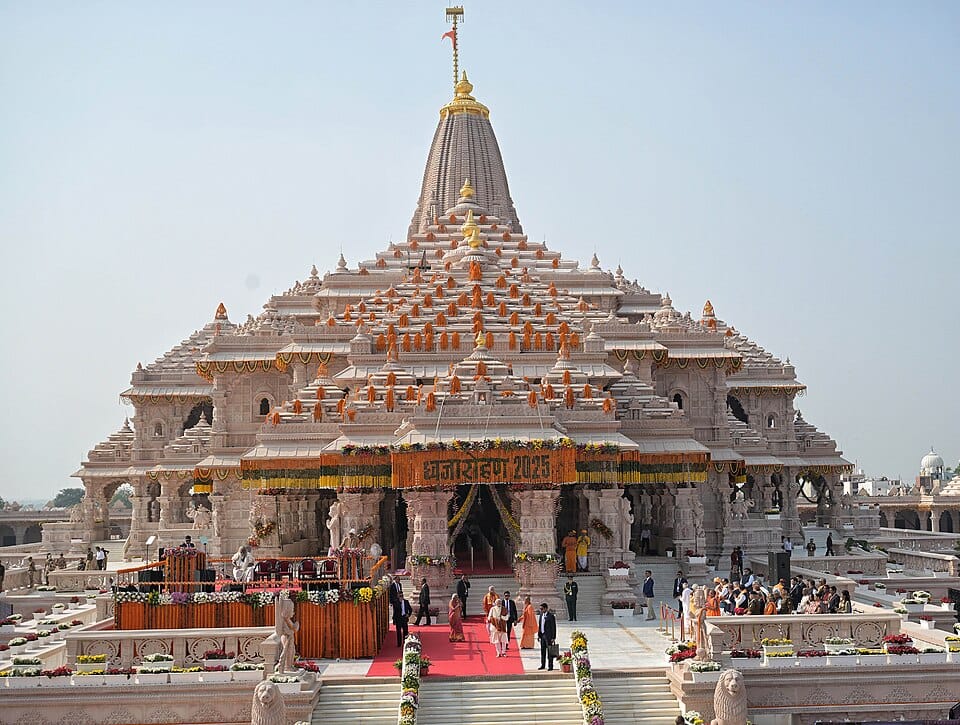
Ayodhya is where the Rama tradition and the festival meet most visibly. The official Deepotsav listing states the connection plainly: the celebration commemorates the return of Lord Shri Ram to Ayodhya after fourteen years of exile, and the lamps symbolise the victory of light over darkness and good over evil. The narrative and the ritual are not two things here — the lighting of the city is the telling of the story.
The Saryucarries the setting. The same listing places the lamps along the ghats of the Saryu, on the temples and in the streets, and describes reflections of the diyas on the water. In the Ramayana the river is part of the city's geography of return; in the modern celebration it is the surface the light is arranged against. A festival tied to a riverfront reads differently from one tied to a market street, and that is a sacred-geography fact, not a decorative one.
Deepotsav as it is now is a public, organised celebration. The official description lists grand cultural performances, devotional ceremonies, processions and multimedia shows alongside the lamp lighting. For 2026 the event is listed for 6 November, while Diwali itself falls on 8 November — a useful reminder that the civic event has its own schedule inside the festival period rather than being identical to the amavasya.
It is worth separating the two layers honestly. The traditional layer is the narrative, the temple worship and the lamps kept at homes and shrines through the festival. The contemporary layer is the lamp display, the staged riverfront programme and the technical production the listing describes — cultural performances, devotional ceremonies, processions, multimedia shows, laser and projection shows and drone displays of scenes from the Ramayana. The official listing is explicit about that second layer; nothing in this guide pretends the mass illumination is an unchanged ancient rite, and nothing suggests the tradition behind it is recent.
Diwali inside a temple: the example of Tirumala
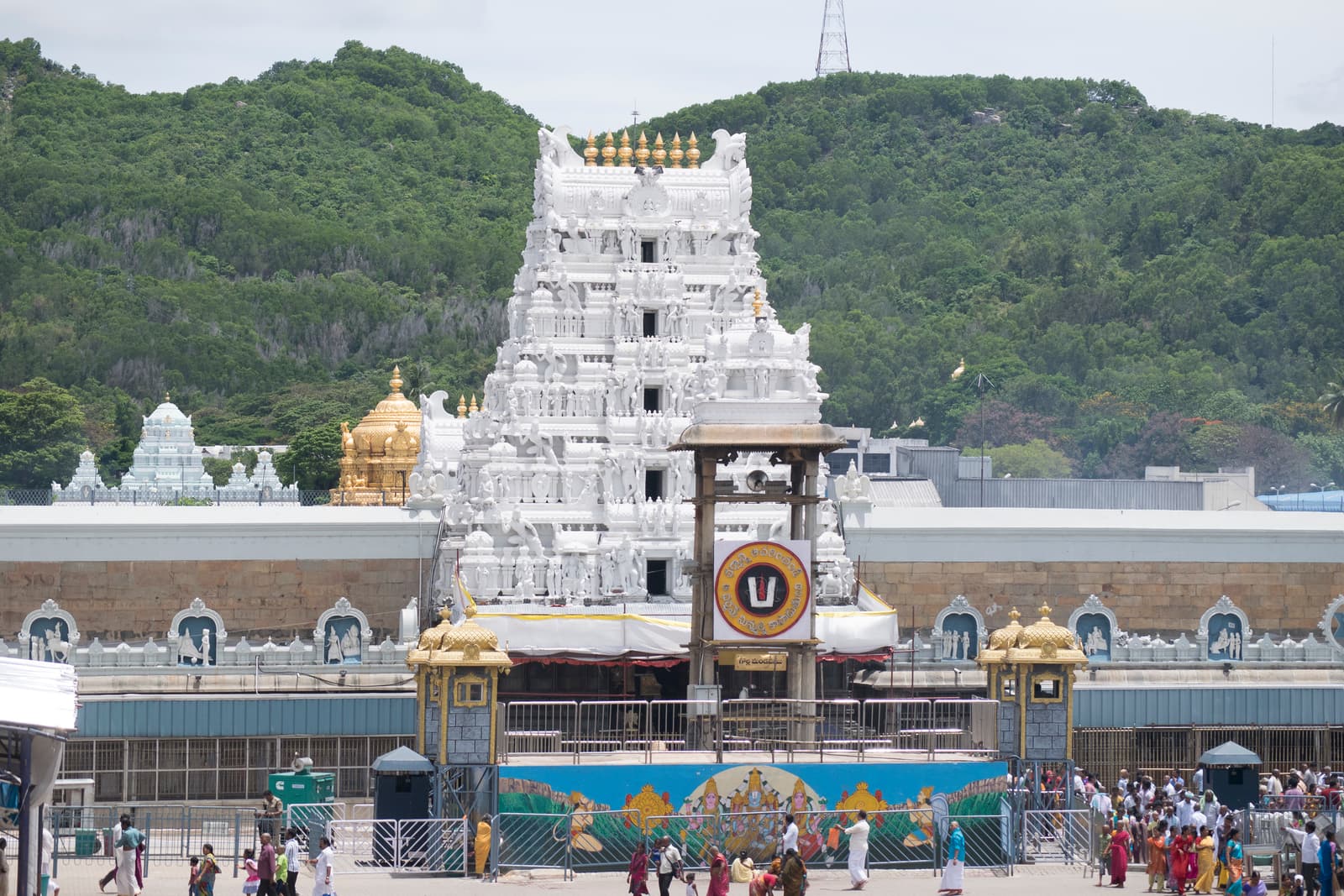
Most writing about Diwali describes households. Temples run a different programme, and Tirumala is the clearest documented example of what that means. Tirumala Tirupati Devasthanams observes a Deepavali Asthanam — an asthanam being a formal assembly held in the temple for the deity, the ritual equivalent of a court being in session rather than a private act of worship.
The observance turns on the processional deities (utsava murtis). The fixed icon stays in the sanctum; the festival is celebrated with the processional form — at Tirumala, Lord Malayappa Swamy with His consorts — who is brought out, seated on a vahanam and formally received. In the form reported for 2025, the asthanam ran from 7 a.m. to 9 a.m. at Bangaru Vakili with the deities atop the Sarva Bhoopala vahanam, followed in the evening by a procession around the mada streets.
The festival also rewrites the temple's day. TTD suspended the scheduled Kalyanotsavam, Unjal Seva and Arjitha Brahmotsavam for the festival date — evidence that a temple does not simply add Diwali to its routine, it reorganises the routine around the festival. That is what incorporation into a ritual calendar looks like: the day is re-sequenced by the observance, not decorated by it.
What is documented, and what is not:the asthanam itself is a standing, repeatedly announced feature of the Tirumala calendar, and the description above comes from TTD announcements as reported in 2025. No 2026 timetable for the asthanam is asserted here, because TTD has not published one on the pages checked. A historical record of a ritual is not evidence for this year's schedule.
Why Naraka Chaturdashi matters in parts of South India
The chaturdashi before the new moon carries its own story: Krishna's victory over the demon Narakasura. Incredible India makes the regional weighting explicit, telling visitors to the south that those traditions are linked to Naraka Chaturdasi and honour that victory — on the same page that presents the festival elsewhere through Rama's return. One festival, two episodes, both official.
Where that episode leads, the shape of the day changes. The observance begins before sunrise: the ritual oil bath, new clothes, worship and only then the rest of the festival, which makes the chaturdashi — not the amavasya that follows it — the day the household organises itself around. That ordering is the difference a reader will actually notice on the ground.
Two cautions keep this accurate. First, this is an emphasis inside a shared festival period, not a separate festival and not a boundary line down the map — communities within the same region vary, and so do individual temples. Second, the same tithi is observed with different customs elsewhere, so the correct comparison is always between specific practices on specific days, never between two halves of a country. "North India believes one thing and South India believes another" is the kind of summary that flattens exactly the variation this guide is about.
Diwali in Varanasi — and why it is not Dev Deepawali
Varanasi is the place where the two festivals are most often merged by readers, and the government's own material refuses to merge them. The Diwali listing invites visitors to Varanasi for the Diwali celebrations and then to "stay back" for Dev Deepavali, which it describes as the festival of the gods celebrated around fifteen days after Diwali. Two events, two dates, one instruction to attend both.
The reason for the separation is the lunar occasion. Diwali falls on Kartik Amavasya — the new moon, 8 November in 2026. Dev Deepawali falls on Kartik Purnima — the full moon, 24 November in 2026 — and belongs to Varanasi's riverfront tradition, where the belief recounted by Incredible India is that the gods descend to Earth to bathe in the Ganga and bless the city. The lamps are offered along the ghats and into the river; the aarti faces the water.
Read in terms of sacred geography, the distinction becomes obvious. Diwali in Varanasi is a city-wide festival period touching temples, homes and ghats. Dev Deepawali is a specific Ganga observance: the setting is the ghat line, the act is deep daan — lamps given to the river — and the accompanying shrine traditions are those of Kashi, above all Kashi Vishwanath. Different tithi, different narrative, different stretch of riverbank.
| Festival | Lunar occasion | Main association | Sacred-place connection |
|---|---|---|---|
| Diwali / Deepavali | Kartik Amavasya | Multiple regional religious traditions — Rama's return, Lakshmi, Naraka Chaturdashi | Homes, temples and communities across India |
| Ayodhya Deepotsav | During the Diwali period (6 November in 2026) | The return of Rama after exile, staged as a public celebration | Ayodhya — the Saryu ghats, temples and streets of the city |
| Dev Deepawali | Kartik Purnima (24 November in 2026) | The gods descending to bathe in the Ganga; lamps offered to the river | Varanasi — the Ganga ghats and the shrines of Kashi |
For the temples and ghats involved, see the Kashi Vishwanath temple and the temples associated with Diwali directory.
Diwali across India's sacred traditions
Put the four cases in this article side by side and the point is not that India celebrates "many festivals". It is that one festival period is handled by three different kinds of institution, each with its own logic.
Ayodhya handles it as a city: a narrative made public at civic scale, organised by a government, staged along a river. Tirumala handles it as a temple: an agamic assembly with seated processional deities and a re-sequenced seva schedule. Madurai appears in the official Diwali listing as a regional venue — which is exactly the strength of the record; the listing supports naming the Meenakshi Temple as a place where Deepavali is marked, and does not support inventing a particular Madurai rite for the sake of a fuller table. Varanasi handles it as a sacred landscape, with one festival on the ghats and another, larger river observance a fortnight later.
None of these is a variation on a single template. They are parallel responses to the same date in the calendar, and the honest comparison is between the institutions and the evidence each leaves behind — not between the amount of light anyone produces.
The same night, seven observances
Every row below comes from an official festival record — the Ministry of Culture's backgrounder or the Ministry of Tourism's Incredible India listings — and every row names its source. Where a record asserts participation without specifying a rite, the table says so rather than supplying one.
| Scope | What is observed | Why it matters here | Source |
|---|---|---|---|
| North India | Rama-return traditions; lamps marking the return to Ayodhya | The Ramayana framing the Government of India leads with, and the Ayodhya Deepotsav built on it | Incredible India; PIB |
| South India | Naraka Chaturdashi, honouring Krishna's victory over Narakasura | A pre-dawn emphasis: the chaturdashi carries the main observance for many households | Incredible India; PIB |
| Western India | The Vishnu-and-Bali tradition; in Maharashtra, King Bali's return | The same festival period weighted towards a different episode of the Vishnu cycle | Incredible India; PIB |
| Eastern India | Kali Puja, coinciding with Deepavali in Bengal, Odisha and Assam | The new-moon night given to the goddess Kali rather than to Lakshmi | PIB, Ministry of Culture |
| Jain tradition | Mahavira's nirvana at Pavapuri, kept as Nirvana Day | The festival read as the passing of the twenty-fourth Tirthankara | PIB; Incredible India |
| Sikh tradition | Bandi Chhor Divas, the release of Guru Har Gobind Ji | A historical deliverance remembered on the same night, in gurdwara observance | Incredible India |
| Buddhist participation | Recorded in official material as taking part in the festival's spirit | No distinct rite is specified in the sources checked, and this guide does not invent one | Incredible India |
Kali Puja in Bengal, Odisha and Assam; Govardhan/Annakut in "some regions"; Mahavira's nirvana at Pavapuri, kept as Nirvana Day; King Bali's return in Maharashtra: PIB backgrounder, Ministry of Culture. The South's Naraka Chaturdashi emphasis, the West's Vishnu-and-Bali framing, Bandi Chhor Divas with Guru Har Gobind Ji's liberation at Amritsar, and the Jain, Sikh and Buddhist summary: Incredible India, Diwali. Kali Puja falling on the Kartik new moon, with Kalighat and Dakshineswar temples named as venues: Incredible India, Kali Puja.
Diwali temple traditions — what each sacred place contributes
A row is included only where an official listing or a temple administration record supports the connection named. Where the record supports a region but not a specific rite, the table says so instead of filling the cell.
| Sacred place | Region | Diwali connection | What this explains | Source |
|---|---|---|---|---|
| Ayodhya | Uttar Pradesh | Rama-return tradition and the organised Deepotsav on the Saryu | How a religious narrative becomes a city-scale public event | Incredible India event listing (source: UP Tourism) |
| Tirumala | Andhra Pradesh | The Deepavali Asthanam recorded by TTD | What Diwali looks like inside a temple's own ritual calendar | TTD announcements, as reported by The Hindu (2025) |
| Madurai (Meenakshi Temple) | Tamil Nadu | Named in the Government of India's Diwali listing as a southern venue | Regional Deepavali context — no temple-specific rite is asserted here | Incredible India festival listing, Ministry of Tourism |
| Varanasi | Uttar Pradesh | Diwali on the ghats, followed fifteen days later by Dev Deepawali | Why two separate festivals must not be merged | Incredible India listings for Diwali and Dev Deepawali |
| Kolkata (Kalighat) | West Bengal | Kali Puja falls on the same new-moon night Bengal keeps as Deepavali, and Incredible India's Kali Puja listing names this temple as one of its venues | Why the same new-moon night is given to a different deity in the east | Incredible India, Kali Puja listing; PIB backgrounder |
What changes from region to region
| Dimension | What varies | Example in this guide |
|---|---|---|
| Figure or deity | Rama, Krishna, Lakshmi and local forms of the goddess are each central somewhere | Ayodhya centres Rama; the southern traditions described by Incredible India centre Krishna's victory over Narakasura |
| Narrative | The return from exile, the slaying of a demon, the welcoming of prosperity | Deepotsav is explicitly framed as Rama's return; the Deepavali Asthanam is a temple assembly, not a retelling |
| Leading day | The chaturdashi before the new moon, or the new moon itself | The pre-dawn observance leads in parts of the South; the amavasya night leads where Lakshmi puja is the main event |
| Ritual register | Household custom, agamic temple liturgy, or civic programming | A lamp lit at a doorstep, an asthanam at Bangaru Vakili, and a staged riverfront illumination are three different kinds of act |
| Institution | Family, temple administration, or a government organiser | TTD issues the asthanam announcement; UP Tourism is credited on the Deepotsav listing |
| Evidence trail | Almanac entry, temple press release, or official event page | Each claim in this guide is attached to the kind of record that could actually support it |
What remains common
Continuities are real too — they are simply narrower than the slogan "one festival, one way" suggests.
Light
Deepa, deepam, diya — the lamp is the shared vocabulary of the whole period, whether it is one lamp at a shrine or a counted display along a river.
Devotion
Darshan and worship remain the point of the temple side of the festival: the deities are decorated, honoured and, at Tirumala, formally received in assembly.
Renewal
The period is treated as a threshold — new clothes, new beginnings, a cleaned and re-lit house and a re-opened ledger of obligations.
Community
From a ghat aarti to a Deepotsav riverfront, the festival is staged in public and shared rather than kept behind a single door.
Sacred space
Temples, ghats, riverfronts and streets are the places that receive the light, which is why the geography matters as much as the date.
Visiting a temple during the festival: what to verify
This guide does not print timings, routes or ticketing — those belong to the temple administration and to the festival pages, and inventing them here would be the fastest way to send someone to the wrong gate on the wrong day. What can be said honestly is which four things are worth verifying before you go, and what the record shows about each of them.
The date. Festival tithis are lunar, and a single tithi can touch two civil dates; the locally published almanac decides which one a community keeps, which is why printed dates in different sources occasionally differ by a day without either being wrong. Check the date the temple itself announces for its observance, not only the date on a general calendar.
The programme. On a festival day a temple may re-sequence its day. The documented example in this guide is Tirumala's Deepavali Asthanam: processional deities seated for the occasion and sevas suspended or rescheduled for that date. Darshan and seva assumptions that hold on an ordinary day do not automatically hold on such a one.
The venue, if it is an organised event.The Ayodhya Deepotsav is a government-organised programme with a published listing naming the venue, the organiser and the date — for 2026, 6 November 2026 at Ayodhya, two days before Diwali itself. That is a different thing from a temple's own festival day, and the two should not be assumed to run to the same schedule.
The conduct and camera rules. Dress, footwear, photography and filming rules are set temple by temple: a household shrine, a municipal temple and a major institution such as Tirumala or Kalighat do not operate the same code. The site-wide norms are set out in the temple etiquette guide, and on the day the temple's own notice is what applies.
Tithi and almanac variation: covered in the dates section above. The Tirumala asthanam and its seva changes: TTD announcements as reported by The Hindu. Ayodhya Deepotsav venue, date and organiser: Incredible India event listing (source: Uttar Pradesh Tourism).
Common misunderstandings about Diwali
| Term | What it actually denotes |
|---|---|
| Diwali | The festival of lights observed on Kartik Amavasya, carrying several regional religious traditions at once. The broad, everyday name used across much of India. |
| Deepavali | The same festival under another widely used name, common in several Indian languages and regions — particularly in the south. Same observance, different word, not a second festival. |
| Ayodhya Deepotsav | The large organised celebration held in Ayodhya during the Diwali period. A specific event in a specific city, listed for 6 November in 2026 — not a synonym for Diwali. |
| Dev Deepawali | A separate observance on Kartik Purnima, strongly associated with Varanasi's ghats. Fifteen days after Diwali; in 2026 that is 24 November. |
Diwali is one uniform observance across India.
The festival period is shared; the leading day, the central narrative and the leading ritual are not. The Government of India's own Diwali page moves between Rama's return, the southern Naraka Chaturdashi tradition and the western Bali tradition within a single listing.
Dev Deepawali is another name for Diwali.
They sit on opposite ends of the lunar month. Diwali is the new moon, Dev Deepawali the full moon fifteen days later, and the tourism ministry publishes them as separate entries with separate dates.
The Ayodhya Deepotsav is an unchanged ancient rite.
The narrative it restates is ancient; the counted lamp displays, staged performances, processions and multimedia shows described in the official listing are features of a modern organised celebration. Both layers are real, and this guide names which is which.
Temples celebrate Diwali exactly as households do.
A temple keeps the festival through its own agamic programme and its administration's schedule. At Tirumala that means an asthanam with seated processional deities and suspended sevas — a form of observance no household custom reproduces.
Diwali is a Hindu festival only.
The Government of India's own festival material lists Jain and Sikh observances on the same night — Mahavira's nirvana at Pavapuri and Bandi Chhor Divas — and includes Buddhist participation. The date is shared; the religious meaning is not one thing.
The dates in this article are permanent.
The festival moves each year with the lunisolar calendar. The 2026 dates above are a seasonal snapshot taken from official listings and will be re-checked for the next season; the structure of the argument does not depend on them.
What this guide deliberately does not claim
1. No invented temple timetable. The Tirumala section describes a documented asthanam and stops there. It does not project a 2026 date, time or ticketing detail that TTD has not published, because a past announcement is evidence of a tradition, not of this year's schedule.
2. No uniformity, and no civilisational split. This guide neither claims every temple observes Diwali identically nor divides the country into two neat halves. It reports regional emphases inside one festival period, as the official sources describe them.
3. No travel logistics. Hotels, routes, parking and viewing spots are outside this page's competence and are left to the practical festival pages; the visiting section above therefore lists what to verify and on whose authority, rather than what to expect. What belongs here is the record: what is observed, where, by whom, and on what evidence.
Questions this guide answers
Why is Diwali celebrated at temples?
Because a temple keeps the festival on its own terms rather than on household terms. The tithi enters the temple's ritual calendar, and the temple responds with what its agama and its administration provide: special alankaram (decoration) of the deities, additional offerings and abhishekam, extended darshan, and — where the tradition calls for it — an assembly or a procession of the processional deities.
The Government of India's own Diwali listing treats temples as Diwali venues, naming the Meenakshi Temple at Madurai among the places where the festival is marked. What does not follow is that the temple programme is the same everywhere; it varies with the deity, the region and the temple's own recorded custom.
Do all Indian temples celebrate Diwali in the same way?
No, and the differences are structural rather than cosmetic. Temples differ in which day they weight most heavily — the pre-dawn Naraka Chaturdashi observance or the Kartik Amavasya night; in which narrative sits behind the day — Rama's return, Krishna's victory over Narakasura, the worship of Lakshmi, of Kali on the same night in Bengal, or Vishnu and Bali in the west; and in how much of a formal occasion it is.
At Tirumala the festival is marked by a documented asthanam with its own seating of the processional deities and its own seva schedule; in many smaller shrines it is an ordinary working day with a festival alankaram. Reading one temple's observance as India's would be a mistake.
Why is Ayodhya associated so strongly with Diwali?
Because the city's religious identity is built on the episode the festival is read through there. The Government of India's Deepotsav listing frames the celebration as commemorating the return of Lord Rama to Ayodhya after fourteen years of exile and his victory over Ravana, and describes lamps lighting the ghats of the Saryu, the temples and the streets.
The Saryu is not incidental scenery: it is the river of that narrative, and the lamp-lit riverfront is where the story is staged in public each year. The result is a city where the Diwali period is inseparable from the Ramayana, and where the organised Deepotsav has become the largest public expression of it.
What is Deepavali Asthanam at Tirumala?
An asthanam is a formal assembly held in the temple for the deity, and Deepavali is one of the occasions on which Tirumala Tirupati Devasthanams observes one. m. m. at Bangaru Vakili, with the processional form Lord Malayappa Swamy and His consorts seated atop the Sarva Bhoopala vahanam; the evening carried a procession of the deities around the mada streets, and the regular Kalyanotsavam, Unjal Seva and Arjitha Brahmotsavam scheduled for that day were suspended.
TTD publishes this as a recurring entry in the ritual calendar, but the specific 2026 timetable is only evidence once TTD issues it.
Is Dev Deepawali the same as Diwali?
They are different observances on different lunar days, and the Government of India's own pages keep them apart. Diwali falls on Kartik Amavasya — 8 November 2026 — while Dev Deepawali falls on Kartik Purnima, which in 2026 is 24 November, and Incredible India describes it as celebrated fifteen days after Diwali. Diwali carries multiple regional religious traditions across homes, temples and communities; Dev Deepawali is a distinct riverfront tradition concentrated on Varanasi's ghats.
Treating them as two names for one event merges a new-moon festival with a full-moon one.
Why is Dev Deepawali associated with Varanasi?
Because the Kartik Purnima observance in Kashi is a ghat-and-river event. Incredible India's Varanasi listing describes the gods descending to Earth on that night to bathe in the Ganga and bless the city, and places the celebration along the ghats, where lamps are offered to the river and the great aarti is performed.
The setting binds the festival to the sacred geography of the Ganga waterfront and to Kashi Vishwanath and the other shrines of the city, which is why the celebration reads as Varanasi's rather than as a generic Diwali in a different location.
Why does Naraka Chaturdashi have special importance in parts of South India?
Because different regions of the same festival period weight different episodes. Incredible India's Diwali page tells visitors to the south that those traditions are linked to Naraka Chaturdashi and honour Lord Krishna's victory over the demon Narakasura, while the same site presents the festival elsewhere through Rama's return. In practice that emphasis shapes the leading observance: an early-morning oil bath, new clothes and worship before sunrise, with the household's main celebration occurring on the chaturdashi rather than on the amavasya.
It is a difference of emphasis inside one festival period, not two separate festivals, and it should not be flattened into a claim that all of North India or all of South India does one thing.
What is the difference between a temple ritual and a public Diwali celebration?
They are run by different institutions for different kinds of participants. A temple ritual follows the temple's agamic sequence — fixed liturgy, priests, offerings, seating or procession of the processional deities, a schedule issued by the temple administration — and the participant's role is darshan. A public celebration such as Ayodhya's Deepotsav is organised at civic scale by a government or a trust, with lamp displays, performances, processions and lighting across a city, and the participant's role is attendance.
The evidence trail differs too: temple observances are documented by the temple board or the priests' records, public events by the organising authority's own event listing.
When is Diwali in 2026?
Incredible India's festival listing gives the main night — Kartik Amavasya — as Sunday, 8 November 2026. Two other dates in the same season belong to different observances and are listed separately in this guide: the Ayodhya Deepotsav on 6 November 2026, from the government event listing, and Dev Deepawali in Varanasi on Kartik Purnima, 24 November 2026.
Because tithis are lunar days that can touch two civil dates, almanacs occasionally differ by a day without either being wrong; the temple's own announcement settles the date it keeps.
What do Lakshmi and Ganesha have to do with Diwali?
They are the deities of the main night itself. The Ministry of Culture's backgrounder calls the third day 'the highlight of Deepavali — the sacred Lakshmi-Ganesha Puja', and Incredible India's festival page describes Lakshmi as the embodiment of prosperity, grace and fortune and Ganesha as the god of wisdom and the remover of obstacles, whose blessings are sought alongside hers.
The same source records the belief that Goddess Lakshmi visits illuminated homes on Deepavali night, which is why the lamps are a devotional act rather than decoration. The pairing is specific to the festival's central evening: the worship asks for prosperity and for the removal of obstacles to it.
Is Govardhan Puja part of Diwali?
In some regions, yes — but the official record is careful about it. The Ministry of Culture lists Govardhan/Annakut as an observance of 'some regions', where the festival period commemorates Krishna lifting the Govardhan Hill as a reminder of humility and gratitude. It is listed alongside, not inside, the five-day sequence: the government's five-day breakdown gives the fourth day to visiting and gift exchange between families and friends, and the fifth to Bhai Dooj.
So Govardhan Puja belongs to the same season for many communities, while the record does not present it as a fixed stage of Diwali everywhere.
What is Bhai Dooj and when is it observed?
It is the day that closes the five-day span, marking the bond between brothers and sisters. The Ministry of Culture's backgrounder describes the celebrations concluding with Bhai Dooj, 'a heartfelt tribute to the bond between brothers and sisters, observed with prayers, blessings, and meaningful rituals', and Incredible India's day-by-day listing gives the fifth day the same content.
It is part of the festival's own sequence rather than a separate festival, which is why this guide counts five days rather than three.
Is Diwali a Hindu festival only?
No, and the government's own material says so. Incredible India's Diwali page states that while the festival is deeply rooted in Hindu traditions it transcends religious boundaries: Jainism commemorates Lord Mahavira's nirvana — the Ministry of Culture adds that Mahavira, the twenty-fourth Tirthankar, attained nirvana at Pavapuri on Deepavali, kept by Jain devotees as Nirvana Day — Sikhism honours Guru Har Gobind Ji's liberation as Bandi Chhor Divas, observed at Amritsar, and Buddhists are recorded as embracing the festival's essence.
The date is shared across these traditions; the religious meaning of the day is not one thing.
Why is Diwali kept as Kali Puja in Bengal, Odisha and Assam?
Because the same new-moon night is given to a different deity in the east. The Ministry of Culture records that in Bengal, Odisha and Assam, Deepavali coincides with the worship of Goddess Kali for protection and inner strength.
The Ministry of Tourism's Kali Puja listing dates that observance to the new-moon day of Ashwayuja or Kartika — the same Kartik Amavasya as Diwali — notes that it shines brightest in Kolkata, and names Kalighat and Dakshineswar temples in Kolkata as venues. So the calendar is shared and the deity differs, which is a difference of tradition inside one festival period, not a different date.
What did UNESCO inscribe, and when?
24, as India's sixteenth element on that list. The element is recorded in the domain of social practices, rituals and festive events, and its description places the festival at the last harvest of the year and the start of a new year and season, falling on the new moon in October or November and lasting several days, transmitted within families as well as by temples and schools.
The inscription recognises the living practice — it is not a listing of temples or monuments.
Every date and ritual described above is attached to the body that published it: the Ministry of Culture's PIB backgrounder of 10 December 2025 for the five-day structure, the Lakshmi-Ganesha puja and the regional and inter-faith observances; UNESCO's intangible-cultural-heritage record for the 2025 inscription and decision 20.COM 7.b.24; the Ministry of Tourism's Utsav portal for the name and the new-moon date; Incredible India festival and event listings for Diwali, Kali Puja, the Ayodhya Deepotsav and Dev Deepawali; and Tirumala Tirupati Devasthanams announcements, as reported in the press, for the Deepavali Asthanam. The full citations — with what each one supports — are listed immediately below this article.
Where a claim could not be checked against a primary record, it has been left out rather than softened. Corrections carrying a record are handled through the corrections policy, and the method behind the source selection is set out on the sources and methodology page.
Keep reading
Diwali 2026: dates, temple timings & pilgrimage guide
The season-specific companion to this article: confirmed dates and which temple announcements are still unconfirmed.
Check the dates DirectoryTemples associated with Diwali
The Rama, Lakshmi and Krishna temples of the festival, collected by sacred place rather than by region.
Browse the temples Research & GuidesBack to all research
Archaeology, architecture and heritage guides, each tied to a named record.
All guidesReviewed against PIB, UNESCO, Incredible India, Utsav, TTD and UP Tourism records.