Sacred Destinations
Ladakh
5Sacred Sites
5Major Temples
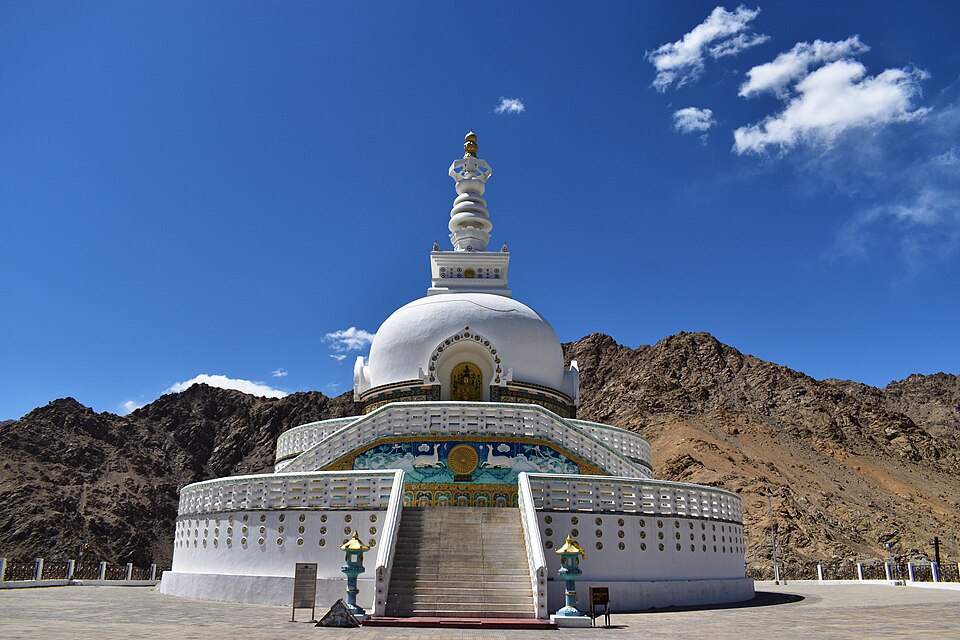
Ladakh, the highest Union Territory in India, preserves an unbroken Vajrayana Buddhist tradition in its remote Himalayan monasteries. Hemis, Thiksey, Spituk, and Diskit — ancient gompas clinging to cliff faces — archive centuries-old thangkas and manuscripts. The region is also a Sikh pilgrimage destination at Gurudwara Pathar Sahib (12,000 ft), where Guru Nanak's imprint remains on a massive boulder. Shanti Stupa overlooks Leh, and sacred lakes Tsomgo, Pangong Tso, and Tso Moriri are revered by both Buddhists and Hindus.
Quick Facts
Capital
Leh
Population
274,289
Area
59,146 km²
Languages
Ladakhi, Tibetan, Hindi, Urdu
Best Time to Visit
June to September
Major Pilgrimage
Buddhist Gompas Circuit, Gurudwara Pathar Sahib
Temple Style
Tibetan Buddhist (Dzong)
Highest Peak
K2 (8,611 m, disputed) / Saltoro Kangri (7,742 m)
Major River
Indus, Zanskar, Shyok
Why Visit Ladakh
Ladakh, the high-altitude cold desert of the Himalayas, is a spiritually charged region. Often referred to as 'Little Tibet', it is a bastion of Vajrayana Buddhism. The landscape is dotted with ancient Gompas (monasteries) that cling seemingly impossibly to sheer cliff faces, whitewashed chortens (stupas), and fluttering prayer flags that carry mantras to the heavens on the harsh winds. But Buddhism is not the only spiritual force here. The revered Gurudwara Pathar Sahib marks the journey of Guru Nanak Dev Ji through these formidable mountains. The spiritual experience in Ladakh is inextricably linked to its harsh, stark geography—the silence of the altitude and the stark beauty of the mountains compel introspection and a deep sense of reverence.
Ladakh's spiritual importance lies in its role as a preserver of ancient Tibetan Buddhist traditions, texts, and art forms that have remained largely undisturbed for centuries. Monasteries like Hemis, Thiksey, and Diskit are not mere relics; they are thriving centers of learning and practice for monks. The region is a living museum of Mahayana and Vajrayana Buddhism. Additionally, the presence of Gurudwara Pathar Sahib highlights the historical cross-cultural pilgrimage routes that traversed the Himalayas, demonstrating the region's historical importance as a spiritual crossroads between India, Tibet, and Central Asia.
Temple Categories
Featured Sacred Places
Ladakh
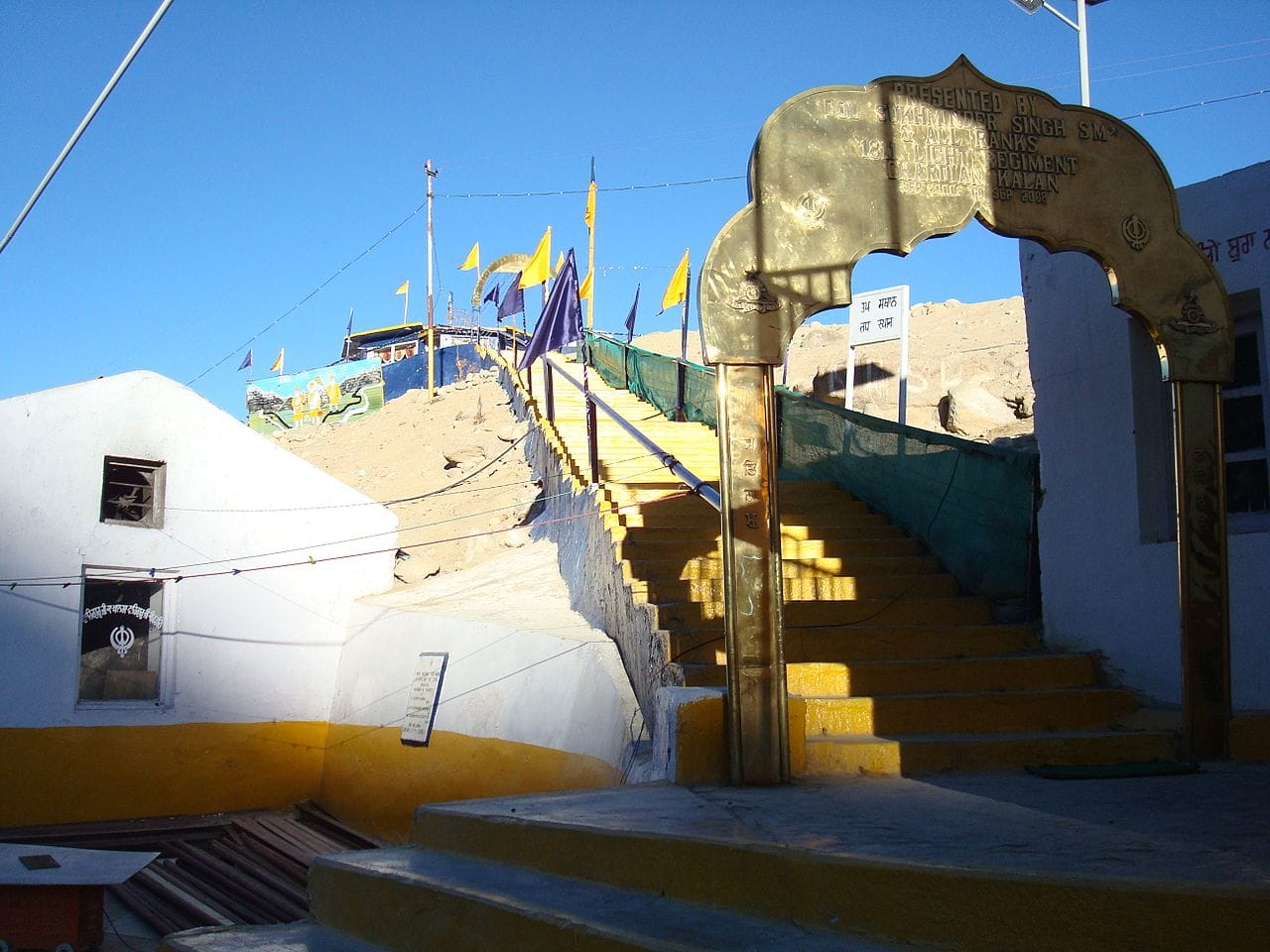
Gurudwara Pathar Sahib
A highly revered Sikh shrine maintained by the Indian Army, housing a massive boulder bearing the miraculous imprint of Guru Nanak Dev Ji.
Explore Temple
Ladakh
Shanti Stupa
A magnificent white-domed Buddhist stupa offering panoramic views of Leh city and the surrounding snow-capped peaks, built to promote world peace.
Explore Temple
Ladakh
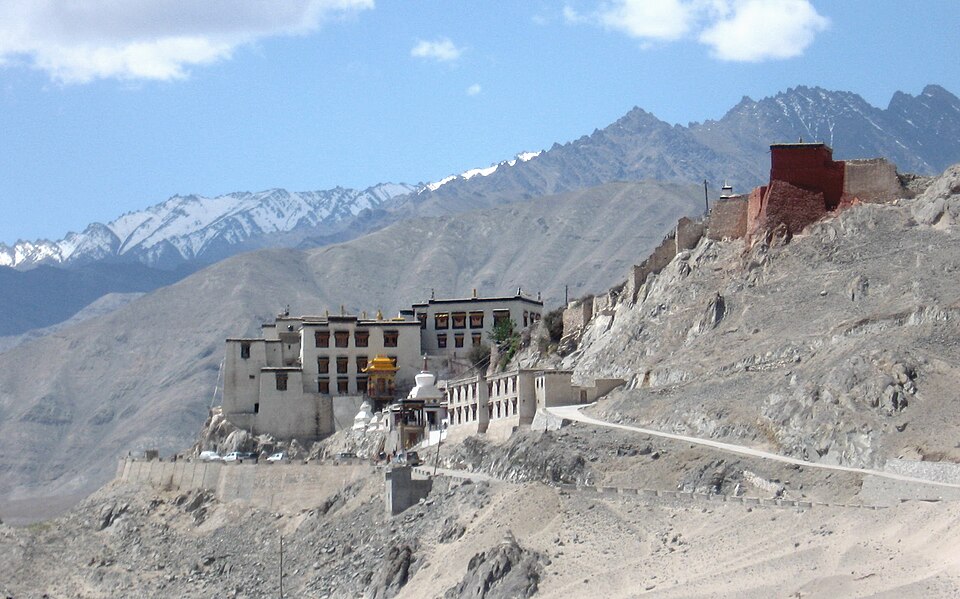
Spituk Monastery
An impressive 11th-century Gompa overlooking the Indus River, known for its giant statue of Kali and stunning views of the Leh airport.
Explore Temple
Ladakh
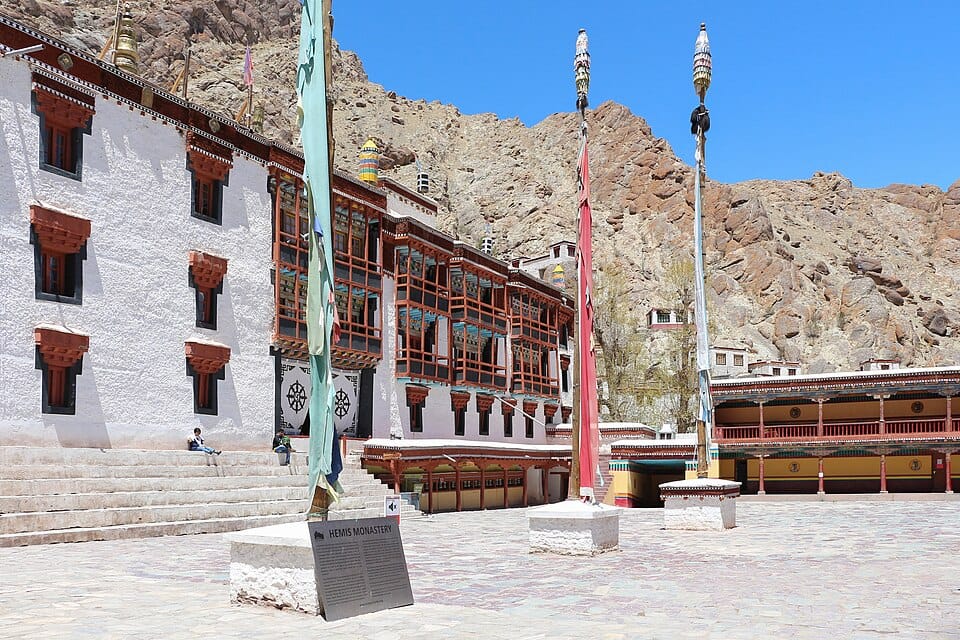
Hemis Monastery
The largest and wealthiest monastery in Ladakh, with a collection of ancient artifacts and the annual Hemis Festival.
Explore Temple
Ladakh
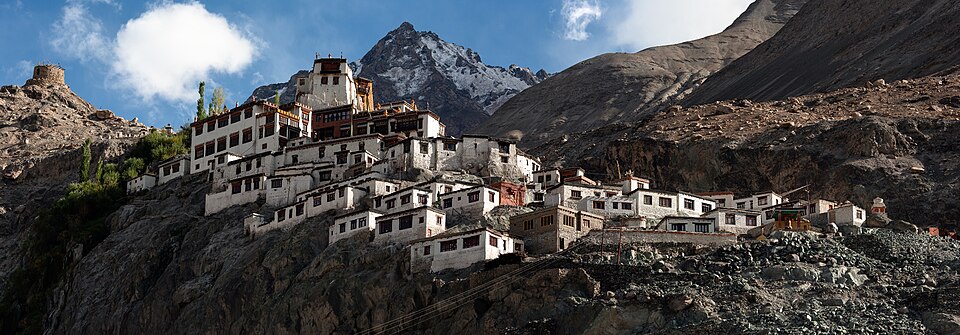
Diskit Monastery
The oldest and largest monastery in the Nubra Valley, featuring a towering 106-foot statue of Maitreya Buddha overlooking the Shyok River.
Explore Temple
Pilgrimage Circuits
Indus Valley Gompas
3 templesThe classic Leh circuit covering Shey Palace, Thiksey, and Hemis monasteries along the Indus River.
Nubra Valley Circuit
3 templesMonasteries in the Shyok river valley accessed via the Khardung La pass, including Diskit and Samstanling.
Zanskar Valley
5 templesRemote monasteries in the Zanskar range including Karsha, Phugtal, and Stongdey.
A typical spiritual circuit in Ladakh starts from Leh, radiating outward. Visitors cover the Indus Valley monasteries (Shey, Thiksey, Hemis), the revered Gurudwara Pathar Sahib on the Leh-Kargil highway, and the Shanti Stupa in Leh itself. More arduous pilgrimages involve traveling over high passes like Khardung La to reach the Diskit Monastery in the Nubra Valley, or the remote Lamayuru Monastery in Zanskar. Parikrama (circumambulation) of Mount Kailash (in Tibet, historically accessed via Ladakh) and local sacred lakes like Pangong Tso also hold immense significance.
Temple Architecture
Ladakh's monasteries follow the Tibetan Buddhist architectural tradition, characterized by fortress-like dzong structures built on elevated terrain. Key features include whitewashed tapering walls, red and ochre trim, flat roofs with prayer flags, and ornate golden finials. The Dukhang (assembly hall) typically contains rows of seated cushions for monks, elaborate murals depicting Buddhas and bodhisattvas, and silk thangkas suspended from pillars. The Hemis Monastery's courtyard is surrounded by verandas and houses one of the largest collections of Buddhist art in the Himalayas.
Historical Timeline
2nd c. BCEMaurya
Buddhism introduced to Ladakh during the reign of the Mauryan emperor Ashoka.
7th-8th c. CETibetan Empire
Tibetan Buddhism takes root under the Tibetan empire; construction of early monasteries begins.
11th c.Early Ladakhi
Spituk Monastery founded by Od-de; the great translator Rinchen Zangpo visits and prophesies its greatness.
15th c.Gelugpa
Gelugpa (Yellow Hat) sect established; Spituk converts from Nyingma to Gelugpa.
1517Sikh History
Guru Nanak Dev Ji travels through Ladakh; the Pathar Sahib miracle takes place.
1672Namgyal
Hemis Monastery re-established by King Sengge Namgyal; becomes the wealthiest monastery in Ladakh.
1983-1991Modern
Shanti Stupa built by Japanese Buddhist Bhikshu Gyomyo Nakamura; inaugurated by the 14th Dalai Lama.
2019Republic of India
Ladakh becomes a separate Union Territory, carved out from the state of Jammu and Kashmir.
Temple Statistics
15+
Monasteries
Major Gompas across Leh, Nubra, and Zanskar
11th c.
Oldest Monastery
Spituk Monastery (founded c. 1000 CE)
Hemis
Largest Monastery
Richest monastery by treasury and artifact collection
12,000 ft
Highest Gurudwara
Gurudwara Pathar Sahib
6
Major Festivals
Hemis, Thiksey, Spituk, Losar, Dosmochey, Buddha Purnima
3
High Passes
Khardung La (5,359 m), Chang La (5,360 m), Zoji La (3,528 m)
Festivals
Hemis Tsechu
June-JulyHemis Monastery
2 days
Masked Cham dances honoring Guru Padmasambhava; giant thangka unfurling every 12 years (next 2028).
Thiksey Gustor
October-NovemberThiksey Monastery
2 days
Sacred Cham dances, ceremonial destruction of a ritual cake (torma) to ward off evil.
Spituk Gustor
JanuarySpituk Monastery
2 days
Annual unveiling of the veiled Kali (Mahakala) statue; specific variant of Cham dances.
Losar
December-JanuaryAll Ladakh
15 days
Tibetan New Year; families offer prayers at monasteries, prepare special dishes, and perform dances.
Dosmochey
FebruaryDiskit & Leh
2 days
Festival of the Scapegoat; ritual destruction of effigies to remove negative energy for the coming year.
Ladakh's monastic festivals (Tsechus) are world-renowned, vibrant affairs. The Hemis Festival, celebrating the birth of Guru Padsamabhava, is the most famous, featuring the mesmerizing Cham (masked) dances performed by monks. Other significant festivals include the Thiksey Gustor, Losar (Tibetan New Year), and the Dosmochey festival. These events are characterized by deep spiritual significance, colorful costumes, the booming of traditional instruments like the dungchen (long horns), and the unfurling of massive thangkas (religious scrolls).
Travel Guide
Best Time
June to September (15-30°C)
Climate
Cold desert; summer 15-30°C, winter -20°C to -30°C
Nearest Airport
Kushok Bakula Rimpochee Airport (Leh)
Railway
Nearest station: Jammu Tawi (700 km road journey)
Road
Srinagar-Leh Hwy (May-Nov), Manali-Leh Hwy (June-Oct)
Local Transport
Taxis, shared jeeps, private cabs with permits
Temple Etiquette
Circumambulate clockwise; remove shoes; no photography inside Dukhang
Suggested Duration
7-10 days for main circuits
Nearby Attractions
Lake
Pangong Tso Lake
Saltwater lake at 4,350 m, 134 km long, straddling the India-China border.
Hill station
Nubra Valley
Tri-armed valley with Bactrian camels, sand dunes, and Shyok River at 10,000 ft.
Lake
Tso Moriri
High-altitude lake at 4,522 m; Ramsar wetland and wildlife sanctuary.
Natural phenomenon
Magnetic Hill
Optical illusion hill where vehicles appear to roll uphill; located on Leh-Kargil road.
Mountain
Khardung La Pass
One of the highest motorable passes in the world at 5,359 m; gateway to Nubra Valley.
Interesting Facts
01
Ladakh is the highest Union Territory in India, with most inhabited areas above 3,000 meters elevation.
02
The Hemis Monastery's 12-year thangka measures 70 meters across and is studded with pearls and precious stones.
03
Spituk Monastery's Mahakala (Kali) statue has its face veiled 364 days a year, unveiled only during the annual Gustor festival.
04
Gurudwara Pathar Sahib, at 12,000 feet, is one of the highest-altitude Sikh shrines in the world and is maintained by the Indian Army.
05
The Diskit Monastery's 32-meter Maitreya Buddha statue, consecrated by the Dalai Lama in 2010, faces towards Pakistan as a gesture of peace.
06
Ladakh's monasteries archive some of the oldest surviving manuscripts in the Tibetan Buddhist canon, many predating similar collections in Tibet.
Frequently Asked Questions
Yes, Acute Mountain Sickness (AMS) is a real risk. It is crucial to spend at least 48 hours acclimatizing in Leh before traveling to higher monasteries like Hemis (11,000 ft) or Diskit (10,500 ft).
Every 12 years, the Hemis Monastery unveils a massive 70-meter thangka (religious scroll) of Guru Padmasambhava worth crores of rupees, studded with pearls and precious stones. The next unveiling is scheduled for 2028.
Spituk Monastery houses a fearsome Mahakala (Kali) statue whose face remains veiled throughout the year. It is unveiled only during the annual Gustor festival in January, accompanied by sacred Cham dances performed by monks.
Yes, Nubra Valley is a protected area near the Chinese border. Indian tourists need an Inner Line Permit (ILP), and foreign nationals require a Protected Area Permit (PAP), obtainable in Leh.
Yes, all major monasteries in Ladakh welcome visitors of all faiths. However, certain inner sanctums and meditation caves may be restricted. Visitors should remove shoes, cover heads, and maintain silence within prayer halls.
Given its size and the museum, allocate at least 2 to 3 hours for a comprehensive visit. The monastery houses one of the largest collections of Buddhist artifacts in the Himalayas.
Sources & References
These records back the history, architecture, temple listings and visitor guidance published on this Ladakh page.
Archaeological Survey of India
Archaeological Survey of India — monument records and conservation reports
Protected-monument status, dating, architectural classification and conservation records for the temples and monuments named across this Ladakh guide.
Primary archaeological record
Open source (opens in a new tab)Ministry of Tourism, Government of India
Ministry of Tourism — official destination information
Official Government of India visitor information, access routes and pilgrimage circuits for Ladakh.
Government record
Open source (opens in a new tab)
— every record linked above was re-requested for this release, so the link still resolves and the publisher still serves the document. It is a link check, not a re-verification of every sentence on this page.
Missing something, or found an error? Send us a correction with the record that supports it, or read how we choose sources.