ho
Theme Collection
Hoysala Temples
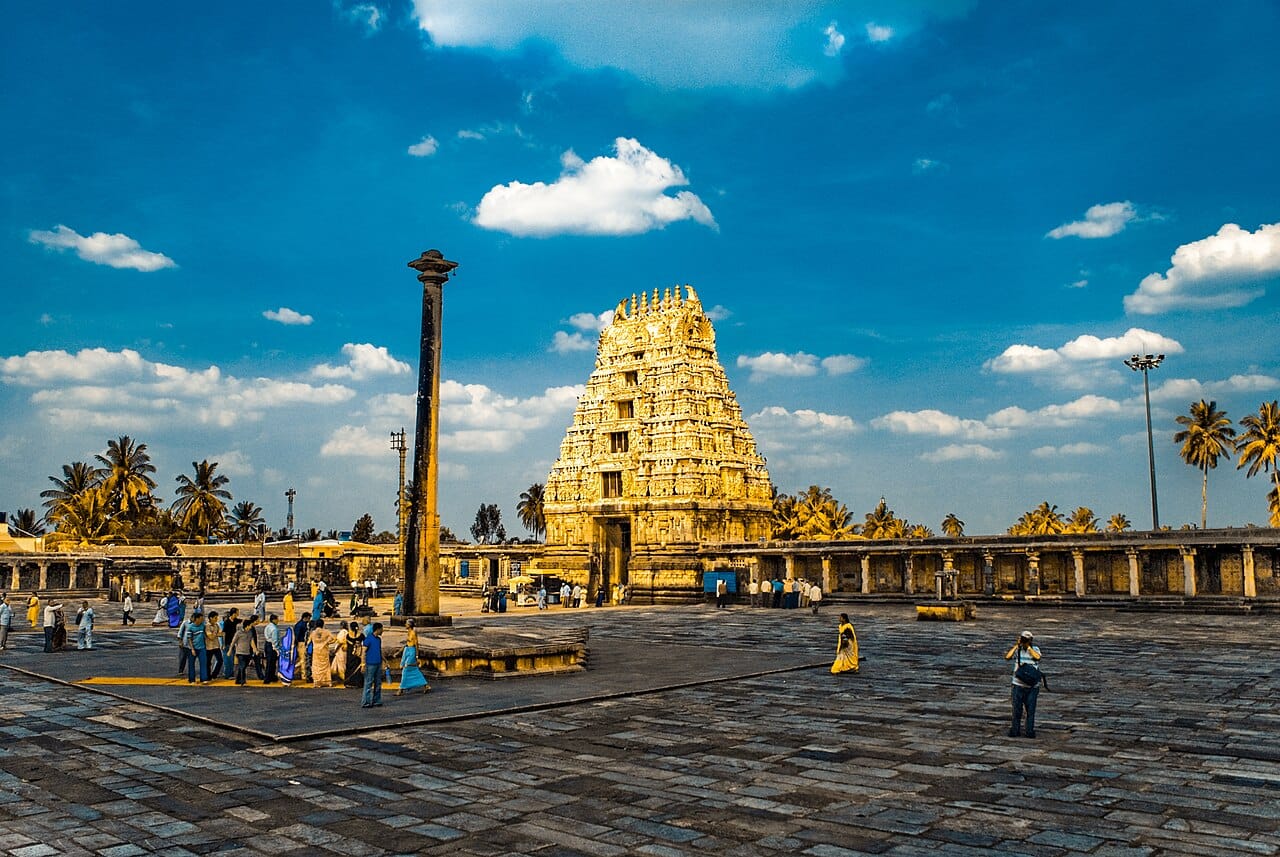
Marvel at the soapstone masterpieces of the Hoysala dynasty, known for their unique star-shaped plans and detailed carvings.
The Collection
Featured Shrines
Explore our curated selection of hoysala temples that define this architectural and spiritual category.
10 Sites Identified
Tamil Nadu
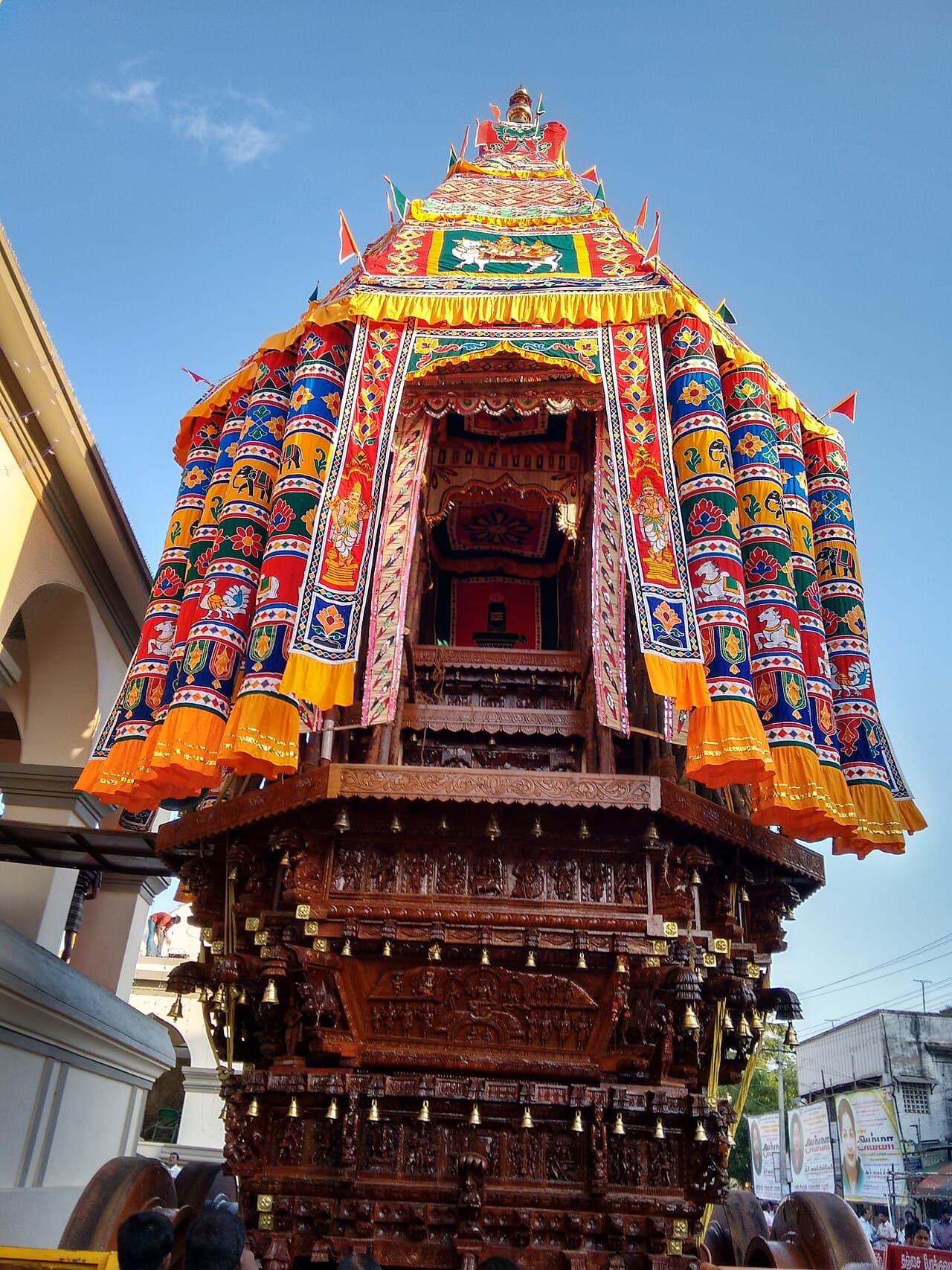
Arunachaleswarar Temple
Arunachaleswarar Temple at the foot of Arunachala Hill in Tiruvannamalai is one of the largest Shiva temples in the world, covering 25 acres.
Explore Temple
Tamil Nadu
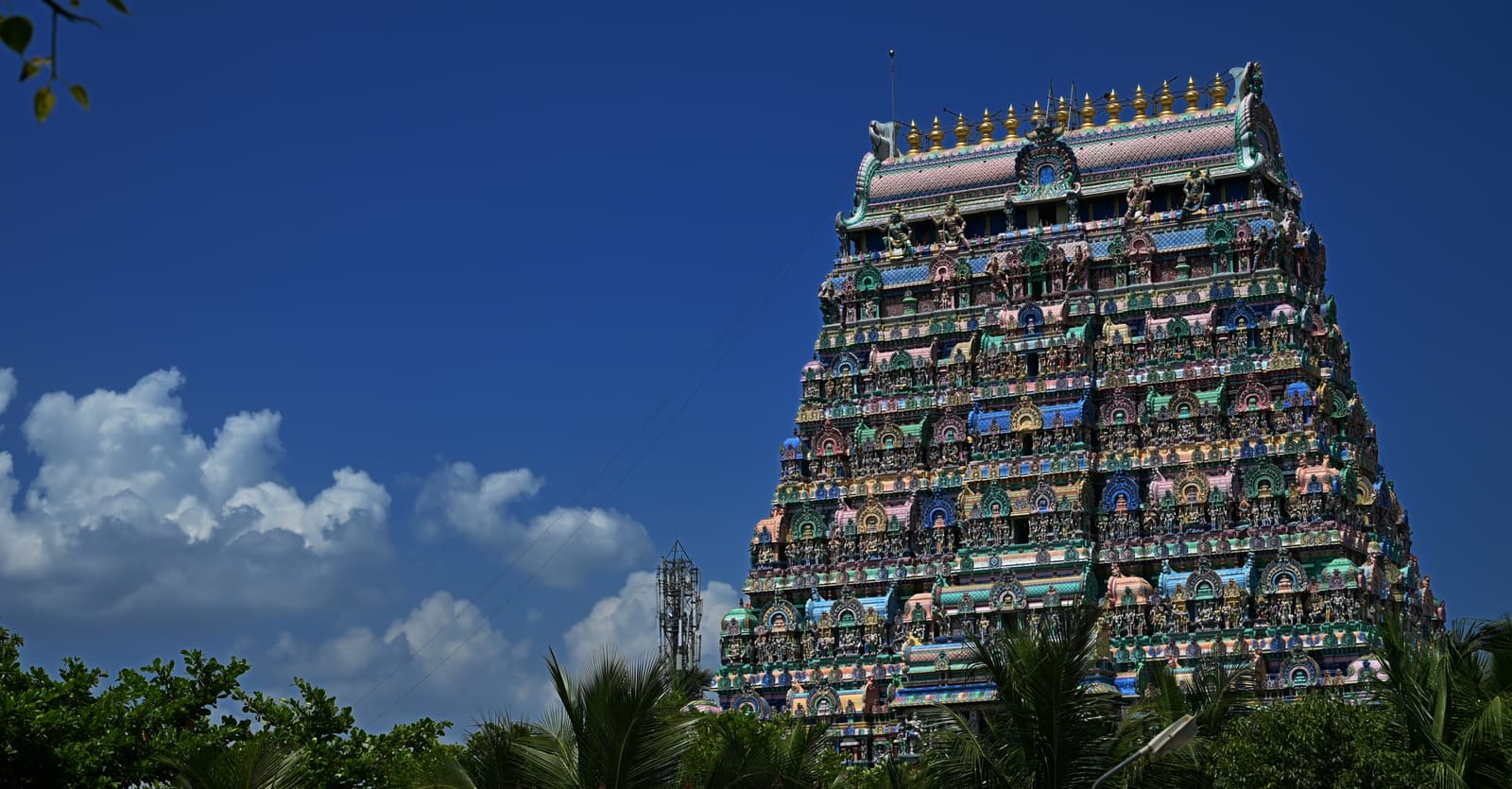
Jambukeswarar Temple
Jambukeswarar Temple in Thiruvanaikaval represents the water element (Apas) of the Pancha Bhoota Sthalas.
Explore Temple
Tamil Nadu
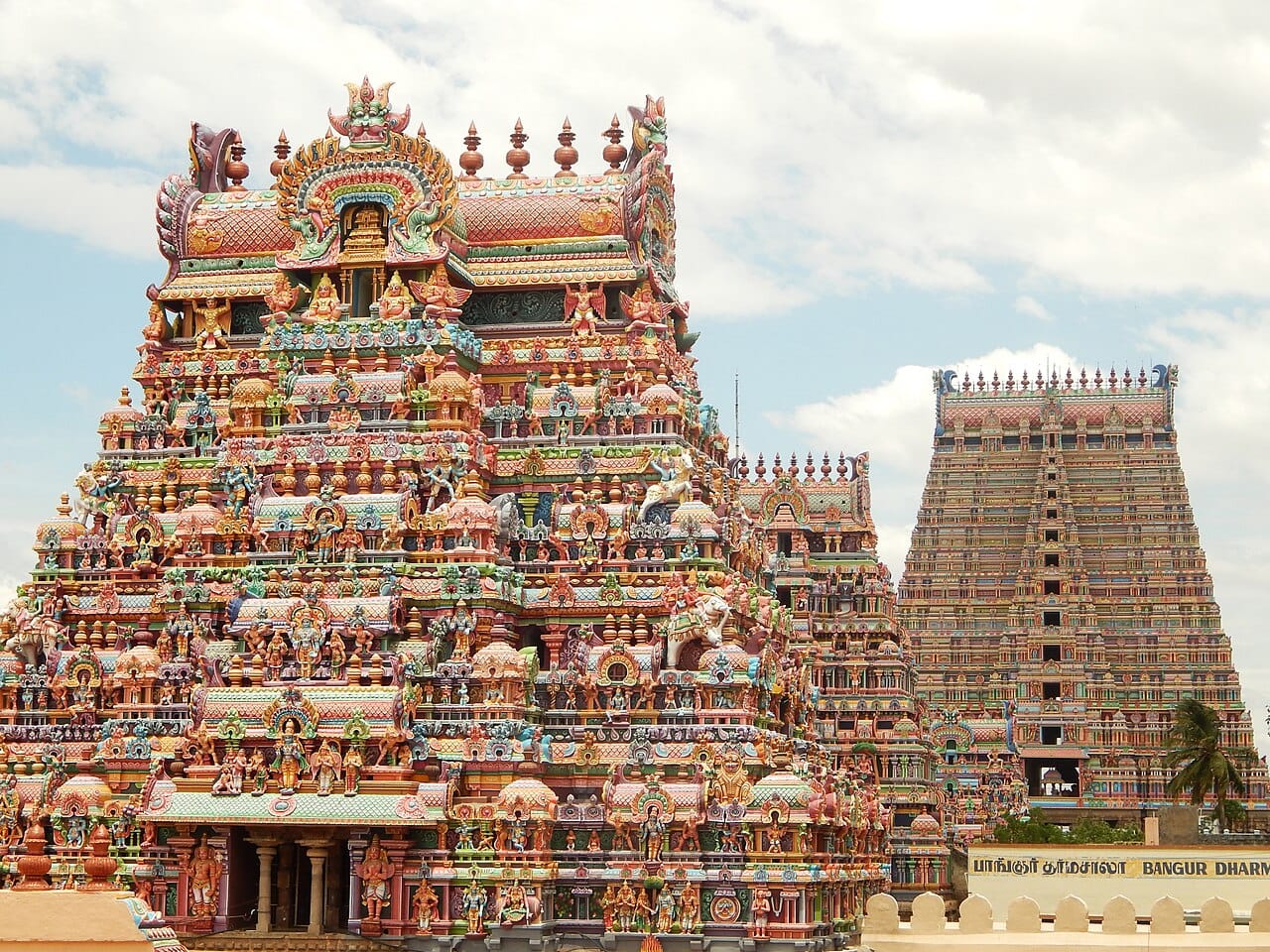
Sri Ranganathaswamy Temple
The largest functioning Hindu temple in the world, a temple-city spanning 156 acres with seven concentric walls, 21 gopurams, and the foremost of the 108 Divya Desams.
Explore Temple
Karnataka
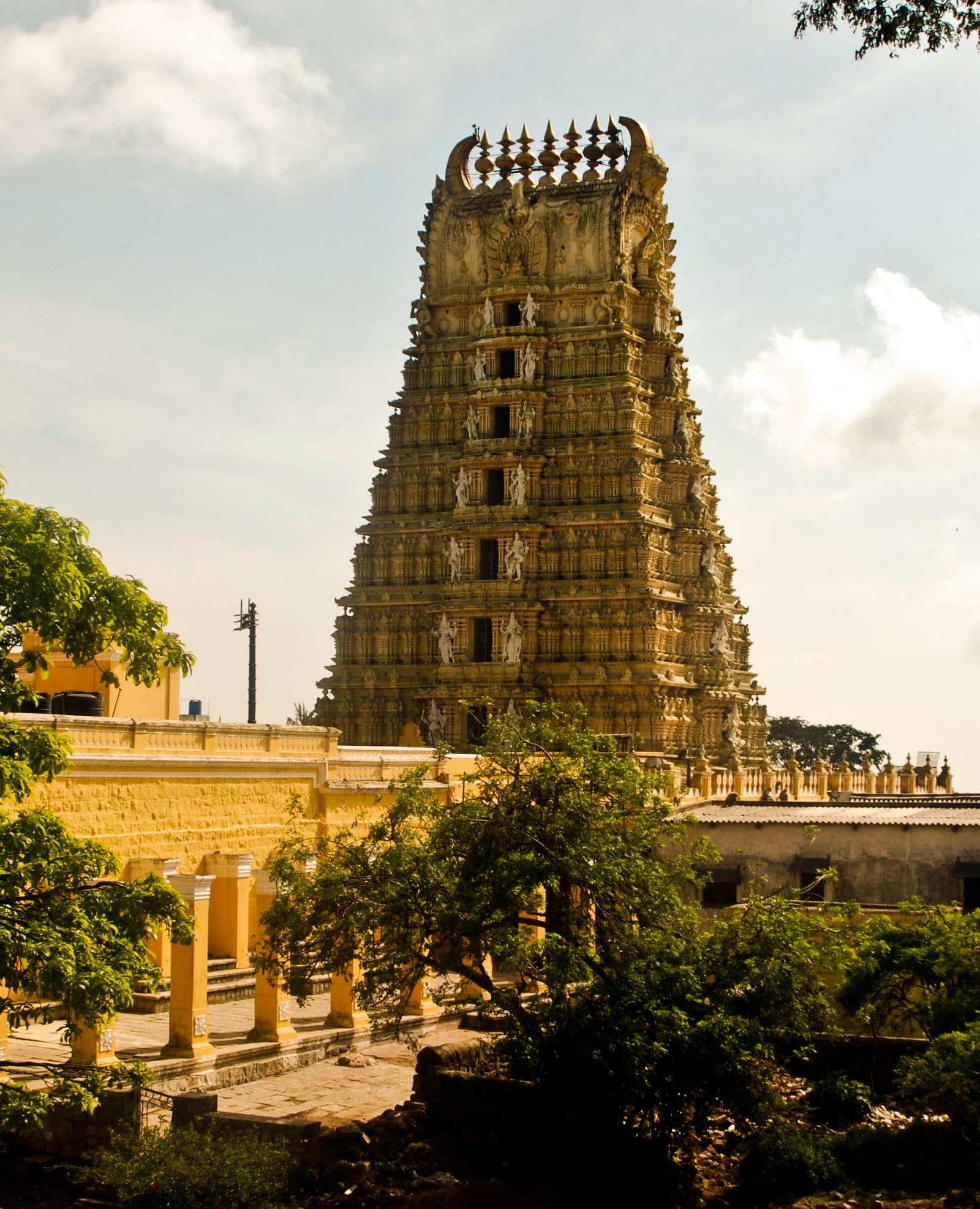
Chamundeshwari Temple
Perched atop Chamundi Hills at 3,489 feet, the Chamundeshwari Temple is the tutelary shrine of the Wodeyar dynasty of Mysore.
Explore Temple

Karnataka
Hoysaleswara Temple
The Hoysaleswara Temple in Halebidu, built circa 1121-1160 CE, is the largest Shiva temple built by the Hoysalas.
Explore Temple

Karnataka
Kedareshwara Temple
The Kedareshwara Temple at Halebidu, built in 1319 CE by the Hoysala king Veera Ballala III, is a Hoysala-era temple dedicated to Lord Shiva.
Explore Temple

Karnataka
Keshava Temple
The Keshava Temple at Somanathapura, built in 1268 CE by Somanatha Dandanayaka, a general of the Hoysala king Narasimha III, is one of the finest surviving examples of Hoysala architecture.
Explore Temple
Karnataka
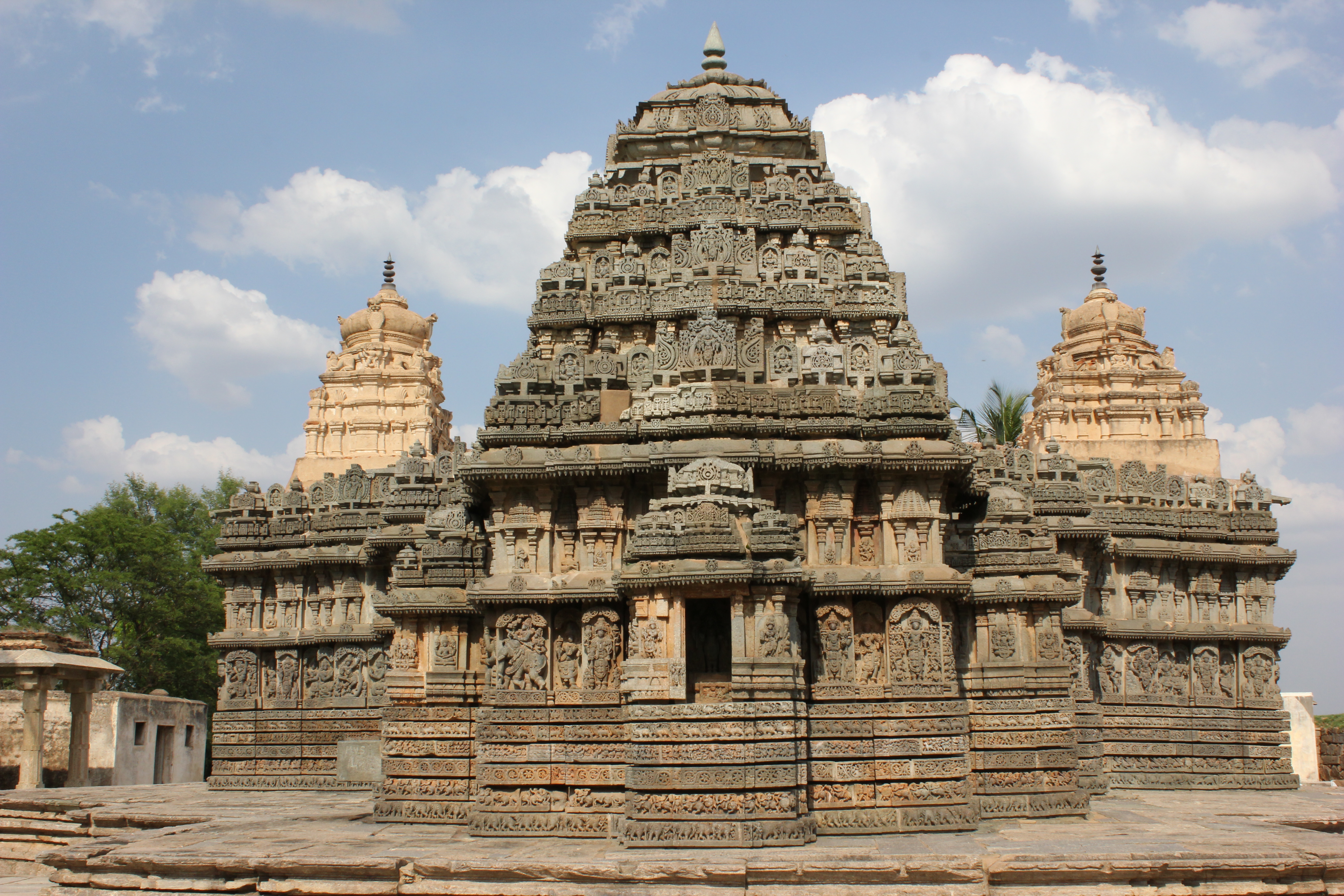
Lakshminarasimha Temple
The Lakshminarasimha Temple at Nuggehalli, built in 1246 CE by the Hoysala king Vira Someshwara, is a well-preserved example of Hoysala architecture dedicated to Lord Narasimha (the half-man half-lion avatar…
Explore Temple
Karnataka
Chennakesava Temple
The Chennakesava Temple in Belur, Karnataka, is the finest example of Hoysala architecture, dedicated to Lord Vishnu as Chennakesava, built in the 12th century.
Explore Temple
UNESCO 2023Cultural Heritage
Karnataka
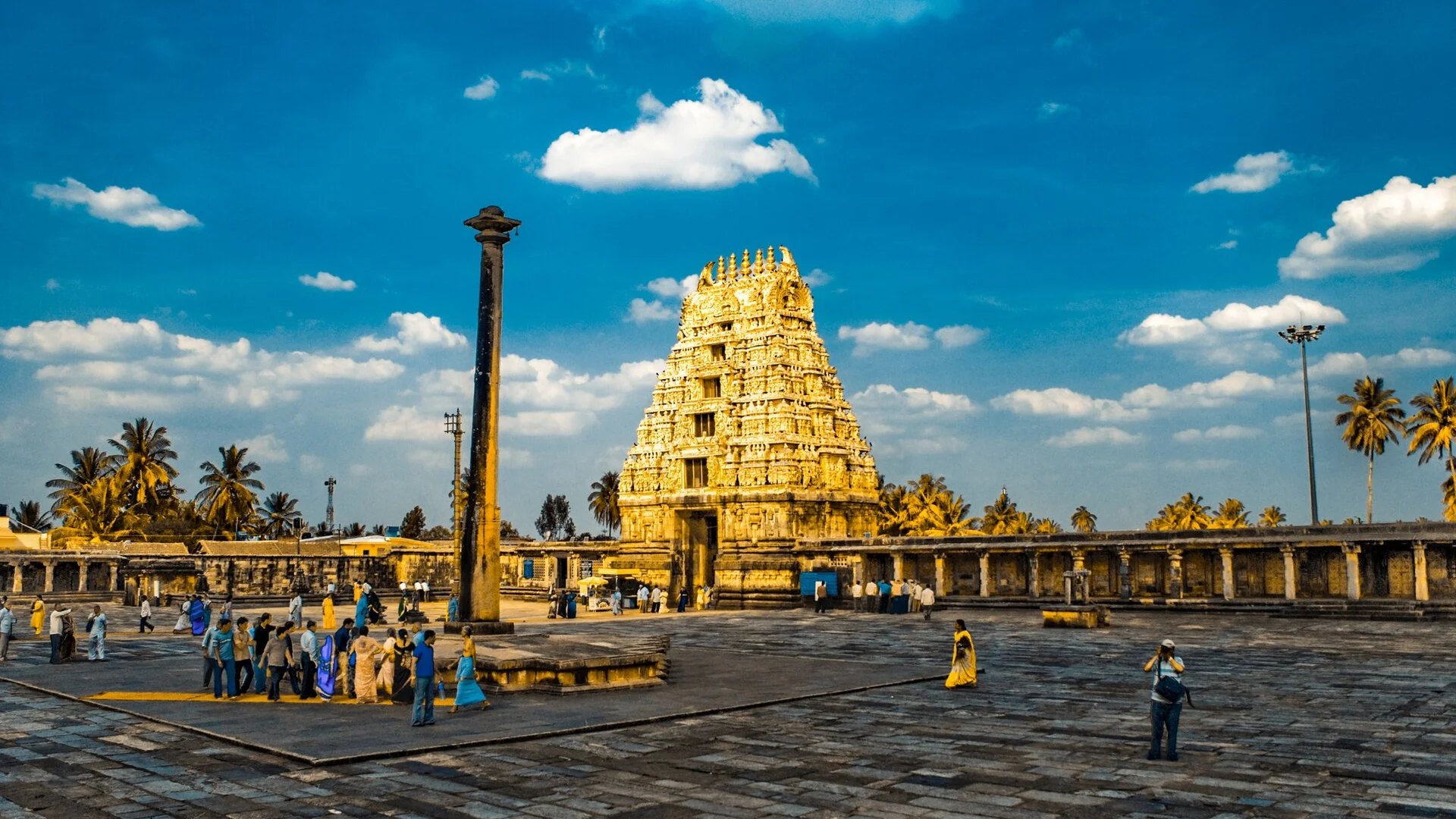
Sacred Ensembles of the Hoysalas — Chennakeshava Temple
A UNESCO World Heritage ensemble of three Hoysala temples known for their star-shaped platforms and hyper-real soapstone carvings.
Explore Temple
In-Depth Guide
Hoysala Temples Legacy
The Hoysala temples of Karnataka represent a distinctive and artistically accomplished tradition in Indian temple architecture. Built primarily between the 11th and 14th centuries CE under the patronage of the Hoysala dynasty, these temples are renowned for their star-shaped (stellate) ground plans, intricate chloritic schist (soapstone) carvings, and richly detailed narrative friezes. The Hoysala style evolved as a regional variation of the Vesara architectural tradition, blending elements from both Nagara and Dravida idioms. In 2023, the Sacred Ensembles of the Hoysalas—comprising the Chennakeshava Temple at Belur, Hoysaleswara Temple at Halebidu, and Keshava Temple at Somanathapura—were inscribed as a UNESCO World Heritage Site.
Distinctive Architectural Features
Hoysala temples are distinguished by several unique characteristics. The ground plan is star-shaped (stellate) with multiple projecting angles that create a rhythmic interplay of light and shadow on the exterior walls. The temples are built on a raised platform (jagati) that serves as a circumambulatory path. The walls are covered with horizontal bands of sculpted friezes depicting elephants, lions, horsemen, floral scrolls, and scenes from the Puranas. Above these bands rise the wall proper, framed by pilasters and topped with a heavy cornice. The superstructure (shikhara) is relatively low and horizontal compared to the towering vimanas of Chola temples, following the Vesara tradition.
Soapstone Carving Technique
The hallmark of Hoysala architecture is the use of chloritic schist, a soft stone that hardens upon exposure to air. This allowed sculptors to achieve an extraordinary level of detail impossible in harder stones like granite. The lathe-turned and sculpted pillars in the temple mandapas display remarkable precision, with some featuring intricate geometric patterns and figures carved from single stone pieces. The wall panels depict deities in multiple postures, dancers in complex poses, and narrative scenes from the Ramayana, Mahabharata, and the Puranas. The Chennakeshava Temple at Belur contains over 800 such carved panels.
Major Hoysala Temples
The most significant Hoysala temples are the three UNESCO-inscribed sites. The Chennakeshava Temple at Belur (1117 CE), built by King Vishnuvardhana to commemorate his conversion from Jainism to Vaishnavism, is the most ornate, with its famous bracket figures (madanikas) depicting women in dance poses. The Hoysaleswara Temple at Halebidu (1121 CE), a double-shrined Shiva temple commissioned by Queen Shantala, is the largest and most elaborately carved, though never completed. The Keshava Temple at Somanathapura (1268 CE) is the most perfectly preserved, built under King Narasimha III. Other important Hoysala sites include the Amruteshwara Temple at Amruthapura, the Lakshmi Narasimha Temple at Javagal, and the Ishvara Temple at Arsikere.
Religious Patronage
The Hoysala rulers patronized both Vaishnavism and Shaivism, reflected in the dedication of their major temples. Vishnuvardhana's conversion to Vaishnavism under the influence of Ramanuja led to the construction of the Chennakeshava Temple. However, the dynasty continued to build Shaivite temples like the Hoysaleswara at Halebidu. Jainism also received royal patronage, as seen in the Jain basadis at Shravanabelagola and Kambadahalli. This religious pluralism is evident in the iconographic programs of Hoysala temples, which often include deities from multiple traditions within a single complex.
Decline and Legacy
Hoysala temple construction declined sharply after the invasions of the Delhi Sultanate under Malik Kafur in 1311 CE and Muhammad bin Tughluq in 1327 CE. The capital at Halebidu (Dwarasamudra) was sacked, and the dynasty was absorbed into the expanding Vijayanagara Empire. However, Hoysala architectural traditions influenced subsequent Vijayanagara temple construction. The star-shaped platforms, ornate pillars, and elaborate frieze work of Vijayanagara temples at Hampi show clear Hoysala influence. In the modern period, the Hoysala temples were protected by the Archaeological Survey of India and recognized globally through the UNESCO inscription.
Hoysala Temples at a Glance
| Temple | Location | State | Presiding Deity | Primary Significance |
|---|---|---|---|---|
| Arunachaleswarar Temple | Tiruvannamalai | Tamil Nadu | Lord Shiva (Arunachaleswarar / Annamalaiyar) | Arunachaleswarar Temple at the foot of Arunachala Hill in Tiruvannamalai is one of the largest Shiva temples in the world, covering 25 acres. |
| Jambukeswarar Temple | Tiruchirappalli (Thiruvanaikaval) | Tamil Nadu | Lord Shiva (Jambukeswarar) | Jambukeswarar Temple in Thiruvanaikaval represents the water element (Apas) of the Pancha Bhoota Sthalas. |
| Sri Ranganathaswamy Temple | Srirangam | Tamil Nadu | Lord Ranganatha (Vishnu reclining on Adisesha) | The largest functioning Hindu temple in the world, a temple-city spanning 156 acres with seven concentric walls, 21 gopurams, and the foremost of the 108 Divya Desams. |
| Chamundeshwari Temple | Mysore | Karnataka | Goddess Chamundeshwari | Perched atop Chamundi Hills at 3,489 feet, the Chamundeshwari Temple is the tutelary shrine of the Wodeyar dynasty of Mysore. |
| Hoysaleswara Temple | Halebidu | Karnataka | Lord Shiva (Hoysaleswara) | The Hoysaleswara Temple in Halebidu, built circa 1121-1160 CE, is the largest Shiva temple built by the Hoysalas. |
| Kedareshwara Temple | Halebidu | Karnataka | Lord Shiva (Kedareshwara) | The Kedareshwara Temple at Halebidu, built in 1319 CE by the Hoysala king Veera Ballala III, is a Hoysala-era temple dedicated to Lord Shiva. |
| Keshava Temple | Somanathapura | Karnataka | Lord Krishna (Keshava) | The Keshava Temple at Somanathapura, built in 1268 CE by Somanatha Dandanayaka, a general of the Hoysala king Narasimha III, is one of the finest surviving examples of Hoysala architecture. |
| Lakshminarasimha Temple | Nuggehalli | Karnataka | Lord Narasimha (Lakshminarasimha) | The Lakshminarasimha Temple at Nuggehalli, built in 1246 CE by the Hoysala king Vira Someshwara, is a well-preserved example of Hoysala architecture dedicated to Lord Narasimha (the half-man half-lion avatar of Vishnu) with his consort Lakshmi. |
| Chennakesava Temple | Belur | Karnataka | Lord Vishnu | The Chennakesava Temple in Belur, Karnataka, is the finest example of Hoysala architecture, dedicated to Lord Vishnu as Chennakesava, built in the 12th century. |
| Sacred Ensembles of the Hoysalas — Chennakeshava Temple | Belur | Karnataka | Lord Chennakeshava (Vishnu) | A UNESCO World Heritage ensemble of three Hoysala temples known for their star-shaped platforms and hyper-real soapstone carvings. |
Frequently Asked Questions
Q.What makes Hoysala architecture different from other Indian temple styles?
Hoysala temples are distinguished by their star-shaped (stellate) ground plans, use of chloritic schist (soft soapstone) for intricate carving, and elaborate horizontal frieze bands depicting elephants, lions, horsemen, and Puranic scenes. Unlike the towering gopurams of Dravida style, Hoysala superstructures are relatively low and horizontal.
Q.Which are the three UNESCO-inscribed Hoysala temples?
The Chennakeshava Temple at Belur (1117 CE), the Hoysaleswara Temple at Halebidu (1121 CE), and the Keshava Temple at Somanathapura (1268 CE) were collectively inscribed as the Sacred Ensembles of the Hoysalas on the UNESCO World Heritage List in 2023.
Q.Why are Hoysala temples carved from soapstone?
Chloritic schist (soapstone) was used because it is soft when quarried, allowing sculptors to carve intricate details, and it hardens upon prolonged exposure to air. This enabled the extraordinarily detailed friezes and figures that characterize the Hoysala style.
Q.Who built the Hoysala temples?
The Hoysala temples were built by rulers of the Hoysala dynasty, most notably King Vishnuvardhana (1108–1152 CE) who built the Chennakeshava Temple at Belur, and King Narasimha III (1254–1292 CE) who built the Keshava Temple at Somanathapura.
Q.What is a madanika in Hoysala architecture?
A madanika (or salabhanjika) is a carved bracket figure of a woman in a dance pose, often shown interacting with a tree or mirror. The most famous examples adorn the Chennakeshava Temple at Belur. These figures represent the pinnacle of Hoysala sculptural artistry.
Q.Are Hoysala temples still used for worship?
Yes. Although under the care of the Archaeological Survey of India, most Hoysala temples remain active places of worship. The Chennakeshava Temple at Belur continues to hold daily rituals and annual festivals, preserving its living tradition alongside its heritage status.
Sources & References
These records back the dating, architectural classification and visitor guidance published on this Hoysala Temples page.
Archaeological Survey of India
Archaeological Survey of India — monument records and conservation reports
Protection status, dating, architectural classification and published conservation records for the monuments named on this page.
Primary archaeological record
Open source (opens in a new tab)Ministry of Tourism, Government of India
Ministry of Tourism — official destination information
Official Government of India destination information — access, visitor circuits and travel guidance referenced on this page.
Government record
Open source (opens in a new tab)UNESCO World Heritage Centre
UNESCO World Heritage List — India
World Heritage inscription criteria, Outstanding Universal Value statements and the year of listing for the sites named on this page.
World Heritage documentation
Open source (opens in a new tab)INTACH
Indian National Trust for Art and Cultural Heritage
Documentation of Indian architectural heritage and conservation practice behind the style descriptions on this page.
Reference source
Open source (opens in a new tab)
— every record linked above was re-requested for this release, so the link still resolves and the publisher still serves the document. It is a link check, not a re-verification of every sentence on this page.
Missing something, or found an error? Send us a correction with the record that supports it, or read how we choose sources.