Imperial Empire
Gupta Empire
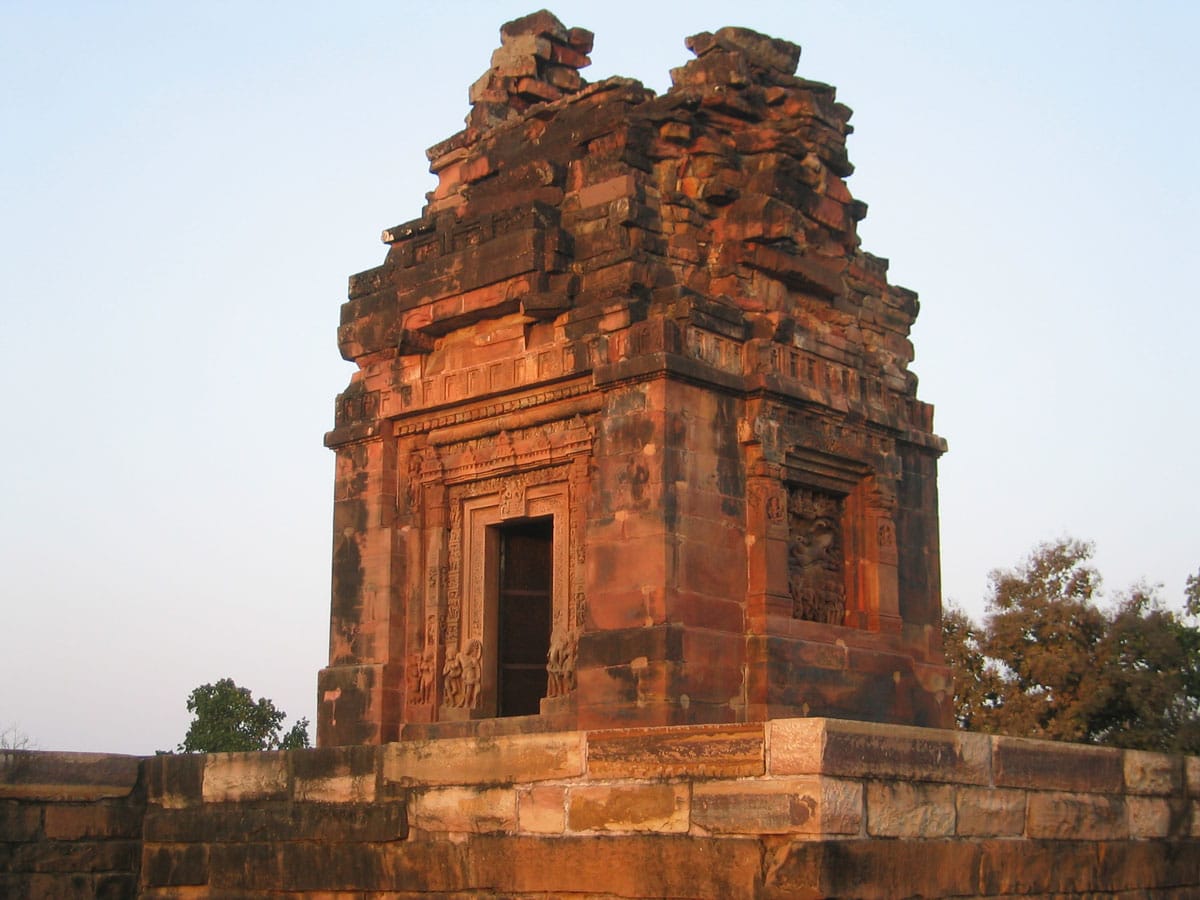
The Gupta Empire (circa 320–550 CE) established classical northern India's pre-eminent political and cultural order, centered across the fertile middle Ganga valley and Malwa. D. 319–20), the empire expanded across the subcontinent through the military campaigns of Samudragupta and the diplomatic and territorial consolidation of Chandragupta II Vikramaditya. Renowned for pure gold dinaras, the Allahabad Pillar Prashasti, classical Sanskrit literature by Kalidasa, and mathematical breakthroughs by Aryabhata, the Guptas pioneered structural stone temple architecture with early shikharas at Deogarh.
Following 5th-century Huna invasions and the rise of autonomous samantas, imperial authority fragmented into regional successor kingdoms by the mid-6th century.
Pataliputra, Ujjain
circa 320–550 CE
6 Temples
Contents: Gupta Dynasty Guide
Quick Reference & Verified Facts
Imperial CapitalsPataliputra (primary imperial seat); Ujjain (second capital under Chandragupta II)
Chronological Spancirca 320 to 550 CE (Gupta era epoch commences A.D. 319–20)
Imperial InsigniaGaruda emblem (Garudadhvaja, attested on official copper-plate charters and gold coinage)
Imperial CurrencyGold dinaras (early issues renowned for metal purity; debased from late 5th century)
Key Epigraphic RecordsPrayaga Prashasti (Allahabad), Sanchi Year 93, Junagadh rock (yrs 136–138), Bhitari pillar
Administrative DivisionsProvinces (bhukti under uparika), districts (vishaya under vishayapati), sub-districts (vithi)
Polity StructureSovereign core with tributary samanta network; land-grant charters (agrahara) under Garuda seal
Pioneering ArchitectureDashavatara Temple at Deogarh (early shikhara); Bhitargaon brick shrine; Sanchi 5th-c. shrines
Scientific LandmarksAryabhatiya of Aryabhata (499 CE: pi calculation, planetary rotation); Varahamihira (6th c.)
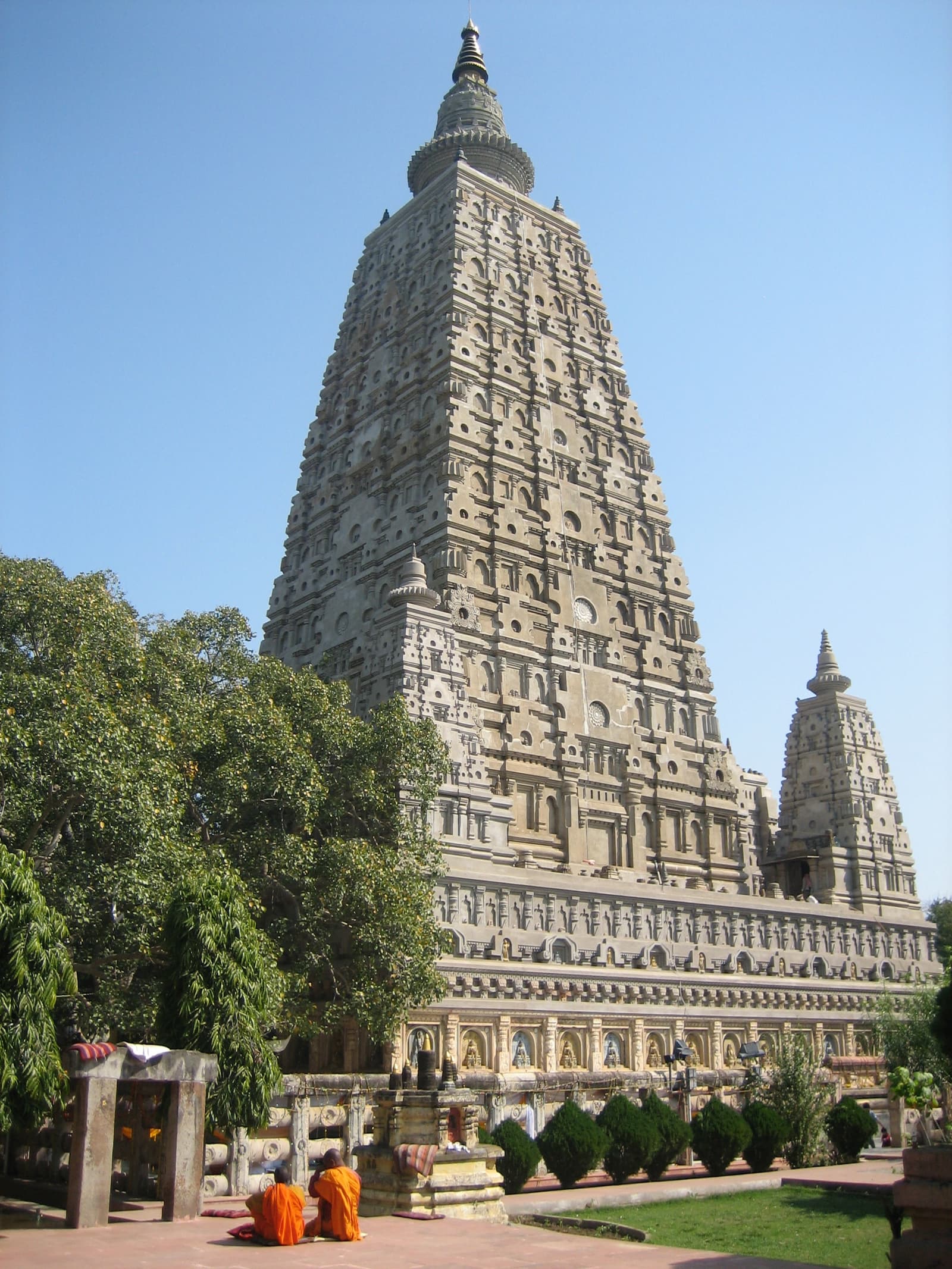
UNESCO World CorrelatesSanchi Buddhist Monuments (524), Nalanda Mahavihara (1502), Mahabodhi Temple core (1056)
Origins, Political Consolidation & the Gupta Era
The rise of the imperial Guptas in the early 4th century CE marked the reintegration of northern India following centuries of regional fragmentation after the decline of the Kushan and Satavahana realms. Emerging in the fertile agrarian corridor of eastern Uttar Pradesh and Bihar (Magadha), the dynasty transformed from modest local chieftains into an imperial power under Chandragupta I (c. 319/320–335 CE).
Chandragupta I consolidated his political standing through a prestigious matrimonial alliance with the ancient and influential Lichchhavi clan, marrying Princess Kumaradevi. This union was commemorated on special gold coins featuring the king and queen alongside the legend 'Lichchhavayah'. Assuming the elevated sovereign title 'Maharajadhiraja' (King of Kings) in place of the subordinate title 'Maharaja', Chandragupta I established the Gupta era.
In epigraphic studies, J.F. Fleet established the epoch of the Gupta era as starting in A.D. 319–20. Current NCERT textbooks date the beginning of Gupta rule to 'c. 320 CE', while older editions specify 'A.D. 319–20' as the accession of Chandragupta I. NCERT notes that historians reconstruct early Gupta chronology from coins, inscriptions, and Puranic accounts, recognizing that textbook regnal years represent scholarly consensus rather than absolute epigraphic certainty.
Chronological Milestones of the Empire
Dates follow NCERT and Corpus Inscriptionum Indicarum; qualifications reflect scholarly consensus and epigraphic debate.
| Date | Event |
|---|---|
| c. 319–320 CE | Commencement of the Gupta era under Chandragupta I (Epoch computed epigraphically as A.D. 319–20 by Fleet; new NCERT cites c. 320 CE) |
| c. 335–375 CE | Reign of Samudragupta and composition of the Prayaga Prashasti (Older NCERT dates reign A.D. 335–380; court poet Harishena records continental conquests) |
| c. 370 CE | King Meghavarman of Sri Lanka sends diplomatic embassy to Samudragupta (Recorded in Chinese sources; permission granted to establish a Buddhist monastery at Bodh Gaya) |
| c. 375–415 CE | Reign of Chandragupta II Vikramaditya; annexation of western Saka territories (Older NCERT gives A.D. 380–412; established Ujjain as second capital; matrimonial alliance with Vakatakas) |
| 412–413 CE | Sanchi Buddhist inscription dated Gupta Year 93 (Royal officer Amrakardava grants land and money to the Buddhist vihara of Kakanadabode) |
| c. 415–455 CE | Reign of Kumaragupta I; foundation of Nalanda Mahavihara (Prolific issuance of diverse gold coinage; established Buddhist intellectual center in Magadha) |
| 455–458 CE | Skandagupta's Junagadh rock inscription records Sudarshana lake restoration (Embankment burst in Year 136, rebuilt in Year 137 by Chakrapalita, Vishnu temple erected Year 138) |
| c. 455–467 CE | Skandagupta repulses early Huna incursions; Bhitari pillar inscribed (Bhitari Sanskrit text confirms conflict with the Hunas; Skandagupta's reign ends c. 467 CE) |
| 460–461 CE | Kahaun stone pillar inscription dated Gupta Year 141 (Records peaceful provincial administration and installation of five Jain Tirthankara images) |
| 473 CE | Guild of silk weavers migrates from Lata (Gujarat) to Mandasor (Malwa) (Recorded on Mandasor stone inscription; reflects shifting trade networks in late 5th century) |
| 499 CE | Aryabhata completes the foundational mathematical treatise Aryabhatiya (Composed at age 23; computes value of pi, planetary periods, and diurnal Earth rotation) |
| c. 532 CE | Mandasor pillar inscription of King Yasodharman of Malwa (Celebrates victory over Huna ruler Mihirakula and claims territories beyond Gupta imperial sway) |
| c. 550 CE | Final dissolution of imperial Gupta control in northern India (Power passes to regional dynasties: Maukharis of Kanauj, Later Guptas of Magadha, and Gaudas) |
Imperial Rulers of the Gupta Dynasty
Regnal spans reflect standard NCERT ranges; evidential sources are cited for each reign.
| Ruler | Reign | Why this ruler matters | How we know |
|---|---|---|---|
| Chandragupta I | c. 319/320–335 CE | Founded imperial stature through Lichchhavi marital alliance; assumed title Maharajadhiraja; established Gupta era calendar. | Kumaradevi gold coin issues; later dynastic genealogies in Bhitari and Allahabad epigraphs. |
| Samudragupta | c. 335–375 CE (old NCERT: A.D. 335–380) | Continental military campaigns; direct annexation of Aryavarta and tributary submission of Dakshinapatha; revived Vedic Ashvamedha sacrifice. | Prayaga Prashasti on Allahabad pillar; Ashvamedha gold coins; Bhitari pillar inscription. |
| Chandragupta II Vikramaditya | c. 375–415 CE (old NCERT: A.D. 380–412) | Overthrew Western Saka satraps; established commercial access to Arabian Sea ports; Ujjain cultural court; Vakataka dynastic alliance. | Sanchi Year 93 inscription; silver Saka-type coins; Prabhavati Gupta copper plate charters. |
| Kumaragupta I (Mahendraditya) | c. 415–455 CE | Long and peaceful reign; patronized Nalanda Mahavihara; issued extensive variety of gold dinaras depicting peacock and Kartikeya. | Mankuwar, Bilsad, and Mathura inscriptions; stratified architectural remains at Nalanda; coin hoards. |
| Skandagupta (Kramaditya) | c. 455–467 CE | Successfully countered initial Huna incursions; restored public hydraulic infrastructure at Sudarshana lake in Saurashtra. | Junagadh rock inscription (Years 136–138); Bhitari stone pillar; Kahaun pillar (Year 141). |
| Later Guptas (Succession Phase) | c. 467–550 CE | Rulers including Purugupta, Narasimhagupta, Buddhagupta, and Vishnugupta struggled against repeated Huna pressure and rising samantas. | Debased gold dinaras; Mandasor columns of Yasodharman; seals from Nalanda and Bhita. |
Samudragupta & the Prayaga Prashasti: Epigraphy vs Eulogy
The central document for reconstructing 4th-century political geography is the Prayaga Prashasti, also known as the Allahabad Pillar Inscription. Inscribed on a monumental polished sandstone column that also carries the earlier edicts of Mauryan Emperor Ashoka, the text was composed in classical ornate Sanskrit by Samudragupta's court poet and high official, Harishena.
NCERT textbooks explicitly caution students against reading court prashastis as unvarnished historical accounts. The text was treasured by contemporaries as an elevated work of kavya (court poetry) celebrating an idealized monarch. Harishena describes Samudragupta as a deity dwelling on earth, equal to the guardian gods Kubera, Varuna, Indra, and Yama, who 'wiped off the fame of other kings with the soles of his feet.'
S. Sharma organized Harishena's conquest verses into five geographical and political categories: 1. Rulers of Aryavarta: Nine monarchs of the upper Ganga-Yamuna plain (including Rudradeva, Matila, and Nagadatta) whose territories were violently uprooted (prasabhoddharana) and directly annexed into the Gupta heartland. 2.
Rulers of Dakshinapatha: Twelve southern kings (including Vishnugopa of Kanchi, Hastivarman of Vengi, and Ugrasena of Palakka) who were defeated, captured, liberated (graha-moksha-anugraha), and reinstated as tributary sovereigns. 3. *Forest Kingdoms (Atavika Rajyas):* Tribal chieftains of the dense central Indian Vindhya forests who were reduced to imperial servitude. 4.
*Frontier States (Pratyanta Nripatis): Border kingdoms of Samatata (eastern Bengal), Davaka, Kamarupa (Assam), Nepal, and Kartripura, along with tribal republics such as the Malavas, Arjunayanas, and Yaudheyas, who paid regular tribute and obeyed royal commands. 5. Distant Monarchs:* The Shakas, Kushans (Daivaputras, Shahis, Shahanushahis), and the rulers of Simhala (Sri Lanka) and maritime islands, who acknowledged imperial prestige through diplomatic tribute and petitions for royal Garuda charters.
Epigraphist J.F. Fleet noted that the exact political relationship with frontier rulers hinges on the interpretation of 'pratyanta-nripatis'—whether Samudragupta's empire incorporated these territories directly or was merely bounded by their frontiers. Furthermore, while popular exam guides frequently repeat the modern label 'Napoleon of India', NCERT clarifies that this phrasing originated with British historian Vincent Smith and remains a modern editorial analogy rather than an ancient title.
Chandragupta II, the Vakataka Alliance & Classical Culture
Under Chandragupta II (c. 375–415 CE), who assumed the celebrated title Vikramaditya, the Gupta state reached its political and commercial zenith. The crowning military achievement of his reign was the annexation of western Malwa and Saurashtra (Gujarat), extinguishing more than three centuries of rule by the Western Kshatrapas (Sakas). This victory gave the Guptas direct control over flourishing Arabian Sea ports like Bharuch (Barygaza), funneling maritime wealth into northern India.
To secure his southern flank prior to the western campaign, Chandragupta II negotiated a critical marriage alliance with the powerful Vakataka dynasty of the Deccan. He gave his daughter, Prabhavati Gupta, in marriage to the Vakataka monarch Rudrasena II. Following Rudrasena's premature death, Prabhavati served as regent for her young sons for over two decades, administering the Vakataka realm in close coordination with imperial counselors sent from Pataliputra.
Current NCERT textbooks highlight Prabhavati Gupta's copper-plate inscriptions as remarkable socio-legal evidence. While classical Sanskrit Dharmashastras stipulated that women should not hold independent property rights over land, Prabhavati's charters document her directly granting village lands to religious recipients. NCERT presents two historical explanations: either her exceptional status as an imperial queen exempted her from customary restrictions, or legal codes were applied far less rigidly across regional societies than theoretical texts suggest.
Chandragupta II established Ujjain as his secondary capital, transforming it into an intellectual and artistic hub. Traditional memory credits his court with the 'Navaratna' (Nine Gems), including India's greatest Sanskrit poet and dramatist, Kalidasa, and the lexicographer Amarasimha. However, historians note that the formalized nine-gems list appears in much later traditions and is not attested in contemporary Gupta epigraphy.
Material evidence confirms Chandragupta II's religious patronage across traditions. At Sanchi, an inscription dated Gupta Year 93 (412–413 CE) records an endowment by his military officer Amrakardava to the Buddhist vihara of Kakanadabode. During this reign, the Chinese Buddhist pilgrim Faxian (Fa-hsien) traveled through northern India (399–414 CE), reporting secure travel, mild governance, absence of capital punishment, and thriving Buddhist communities.
Administration, the Samanta System & Economic Debates
The Gupta administrative machinery balanced centralized bureaucratic oversight in the core provinces with loose tributary suzerainty over outlying territories. Unlike the highly centralized Mauryan state, imperial Gupta administration relied on decentralized regional hierarchies and local corporate bodies.
The imperial domain was structured into hierarchical tiers: - Bhukti: Major provinces, such as Tirabhukti (north Bihar) and Pundravardhanabhukti (north Bengal), governed by high-ranking royal officials known as uparikas. - Vishaya: Administrative districts within provinces, administered by vishayapatis, often working alongside representative municipal councils comprising chief merchants (nagarashreshthi), caravan leaders (sarthavaha), and head artisans. - Vithi: Smaller territorial subdivisions in eastern India overseeing clusters of villages.
- Village Administration: Rural administration was supervised by village headmen (gramika) and village elders (mahattaras), whose consent was legally required for rural land transactions.
A pivotal theme in Gupta political history is the evolution of the samanta system. Older NCERT textbooks (authored by R.S. Sharma) interpreted this as an early phase of 'Indian feudalism', characterized by the emergence of feudal vassals and the breakdown of royal bureaucracy through hereditary offices. High offices like the kumaramatya (cadre of elite imperial administrators) and mahadandanayaka (chief military commander) often became hereditary and were held simultaneously by the same individual.
Current NCERT syllabi offer a more nuanced perspective, defining samantas as regional leaders who maintained themselves through local resources and land control. Powerful samantas rendered armed levies and tribute to strong emperors, but when imperial authority weakened, ambitious samantas declared independence or subjugated rival chieftains.
A major economic debate surrounds the trajectory of Gupta currency. The early Guptas issued the purest and most artistically refined gold coins (dinaras) in ancient India, facilitating long-distance commerce. From the late 5th century onwards, finds of gold coins taper off noticeably, and their gold purity decreases.
Current NCERT explains that historians remain divided: some attribute this to the decline of long-distance trade following the fall of the Western Roman Empire, while others argue that coins remained in active commercial circulation rather than being buried in hoards.
Temple Architecture, Buddhist Centers & Scientific Discoveries
The Gupta era established foundational structural paradigms for classical Indian art and temple architecture, transitioning from rock-cut shrines to freestanding stone and brick temples. The Dashavatara Temple at Deogarh (near Jhansi, Uttar Pradesh), dating to the early 6th century CE, represents a monumental breakthrough. Dedicated to Vishnu, it features one of northern India's earliest surviving curvilinear towers (shikharas) rising above a square sanctum set upon a broad terraced plinth (jagati).
The exterior walls of the Deogarh sanctum showcase three celebrated sculpted panels: Sheshashayi Vishnu (reclining upon the cosmic serpent Ananta), Gajendra Moksha (liberation of the elephant), and Nara-Narayana Tapasya. The elaborately carved doorway exhibits river goddesses Ganga and Yamuna flanking the entrance jambs—a decorative hallmark that became standard across northern Nagara temples.
Brick engineering reached high technical sophistication at the Bhitargaon Temple in Kanpur district, Uttar Pradesh. Featuring terracotta ornamentation and an early true arch technique, Bhitargaon demonstrates that structural temple building utilized durable fired brick alongside carved sandstone.
Gupta-era patronage also shaped premier Buddhist complexes. At Sanchi, UNESCO World Heritage records confirm that the final structural additions to the Great Stupa occurred in the 5th century CE under the Guptas, who constructed four classical shrines at the cardinal entrances. In Magadha, Kumaragupta I patronized the foundation of Nalanda Mahavihara, which evolved into the ancient world's foremost residential university.
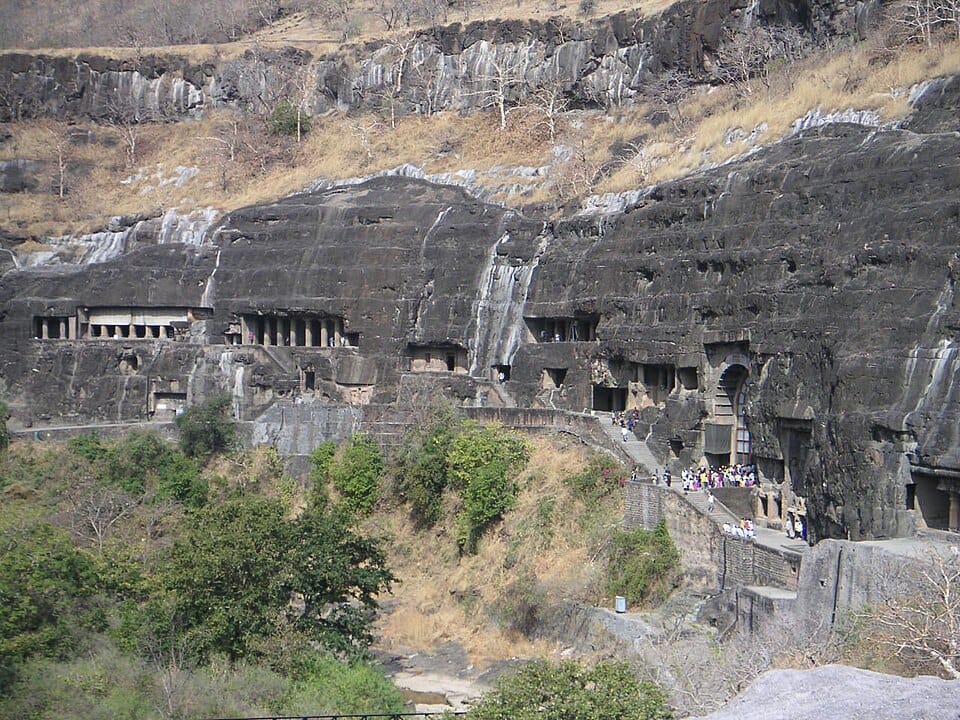
In the Deccan, the second and most magnificent phase of the Ajanta Caves (including Caves 1, 2, 16, and 17) flourished between the mid-5th and early 6th centuries CE. Official Archaeological Survey of India (ASI) documentation clarifies that these caves were excavated under the Vakataka dynasty—notably minister Varahadeva during the reign of King Harishena (r. 475–500 CE)—who were contemporaries and allies of the Imperial Guptas.
The era also witnessed landmark scientific and mathematical advances. In 499 CE, at the age of 23, the astronomer Aryabhata composed the Aryabhatiya at Kusumapura (Pataliputra). His work calculated the value of pi to four decimal places (3.1416), demonstrated that the Earth rotates daily on its axis, provided rational explanations for solar and lunar eclipses, and developed sine tables. In the 6th century, polymath Varahamihira authored the Brihatsamhita and Panchasiddhantika, consolidating astronomical, meteorological, and mathematical knowledge.
Comparative Matrix: Mauryan Empire vs Gupta Empire
Sourced strictly from NCERT (Class XI Ancient India & Class XII Themes in Indian History) comparing the two major pan-Indian imperial systems.
| Feature | |||
|---|---|---|---|
| Administrative Structure | Highly centralized bureaucracy with elaborate departmental superintendents (adhyakshas) documented in the Arthashastra. | Decentralized administration with significant provincial autonomy; high offices frequently combined and hereditary. | |
| Territorial Control | Direct imperial administration over core zones and trade routes, with royal princes stationed at Taxila, Ujjain, and Tosali. | Direct governance restricted to northern heartland (Bihar, UP, Bengal); periphery governed through tributary samantas. | |
| Military Organization | Large standing state army maintained and paid directly by the central treasury through cash salaries. | Standing core imperial army supplemented by armed contingents and cavalry supplied by subordinate samantas. | |
| Revenue & Land Grants | State exercised strict fiscal control over agricultural production; no widespread practice of tax-free land grants. | Widespread issuance of copper-plate land charters (agrahara) granting fiscal immunities to priests and temples. | |
| Monetary System | Predominance of silver and copper punch-marked coins (pana) stamped with state imperial symbols. | Spectacular gold dinaras of high purity in early phase, tapering off with debasement in late 5th century. | |
| Epigraphic Language & Style | Prakrit written in Brahmi and Kharosthi scripts; direct moral edicts addressed to the general public. | Classical Sanskrit written in late Brahmi script; ornate court poetry (prashastis) eulogizing sovereign virtues. | |
| Temple Architecture | Dominance of monolithic rock-cut pillars, caves (Barabar), and circular stupa foundations; no surviving structural stone temples. | Pioneering structural stone and brick temples with early shikharas (Deogarh, Bhitargaon) and classic sculpted panels. |
Historiographical Debates & Evidential Status
Every claim below is evaluated against contemporary epigraphy (Corpus Inscriptionum Indicarum Vol. III), official archaeological documentation, and current NCERT syllabi.
- Modern interpretation
Samudragupta was an undefeated conqueror across the entire subcontinent.
Harishena's Prayaga Prashasti portrays Samudragupta as an all-conquering monarch without equal on earth. However, NCERT instructs students that court prashastis were composed as literary poetry rather than literal historical fact. Fleet noted that the submission of 'pratyanta' rulers could simply mean they recognized a frontier boundary rather than being annexed.
- Established by the evidence
Samudragupta revived the ancient Vedic Ashvamedha sacrifice.
While the Ashvamedha is not mentioned in Harishena's Allahabad pillar prashasti, it is confirmed by Samudragupta's own gold 'Ashvamedha-type' coins and the later Bhitari pillar inscription of Skandagupta, which explicitly credits his grandfather with restoring the sacrifice that had long been in abeyance.
- Modern interpretation
The Mehrauli Iron Pillar was erected by Chandragupta II Vikramaditya.
The iron pillar inscription records the exploits of a powerful king named simply 'Chandra' who conquered Vanga and crossed the seven mouths of the Indus. While the majority of historians identify Chandra with Chandragupta II on paleographical and historical grounds, NCERT explicitly frames this identification as conditional ('If Chandra is considered identical...').
- Disputed
Skandagupta's Junagadh rock inscription records a decisive military victory over the Hunas.
Popular study guides frequently mischaracterize the Junagadh inscription as a military war record. In primary epigraphy (Fleet No. 14), it is a civic public works record detailing how the embankment of the Sudarshana lake burst in Gupta Year 136 and was restored in Year 137 by governor Parnadatta's son, Chakrapalita. Conflict with the Hunas is recorded on the Bhitari pillar.
- Disputed
The classical caves and murals of Ajanta were commissioned directly by Gupta emperors.
Official ASI and UNESCO records confirm that Ajanta's second classical phase (Caves 1, 2, 16, and 17) was patronized by the Vakataka dynasty—notably minister Varahadeva during the reign of Harishena (r. 475–500 CE)—and their feudatory princes. While Vakatakas were contemporaries and allies of the Guptas, they were an independent peninsular dynasty.
- Disputed
The tapering off of 6th-century gold coin finds proves an economic collapse of urban India.
Current NCERT Class XII textbook emphasizes that historians remain divided. While some scholars link declining gold coin hoards to the collapse of Western Roman trade networks, others point out that internal trade networks continued to expand and that lack of buried hoards may indicate active coin circulation rather than monetary contraction.
Associated Architecture Styles
Regional Presence
Temple Legacy
Temples of the Gupta Dynasty
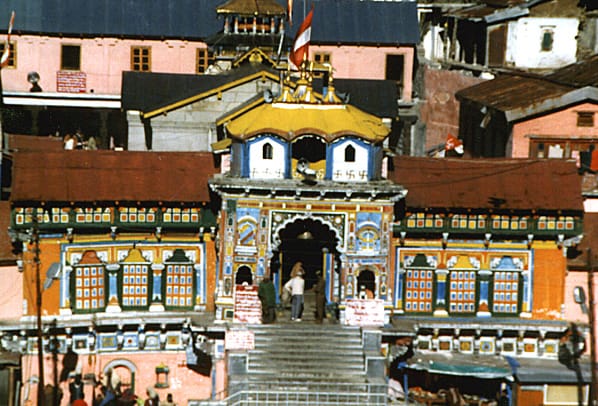
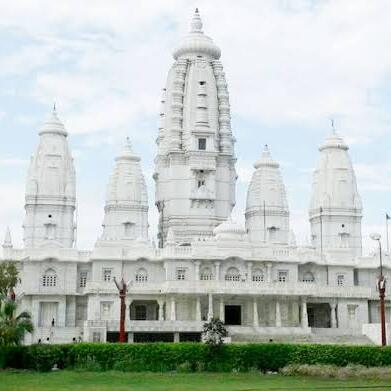
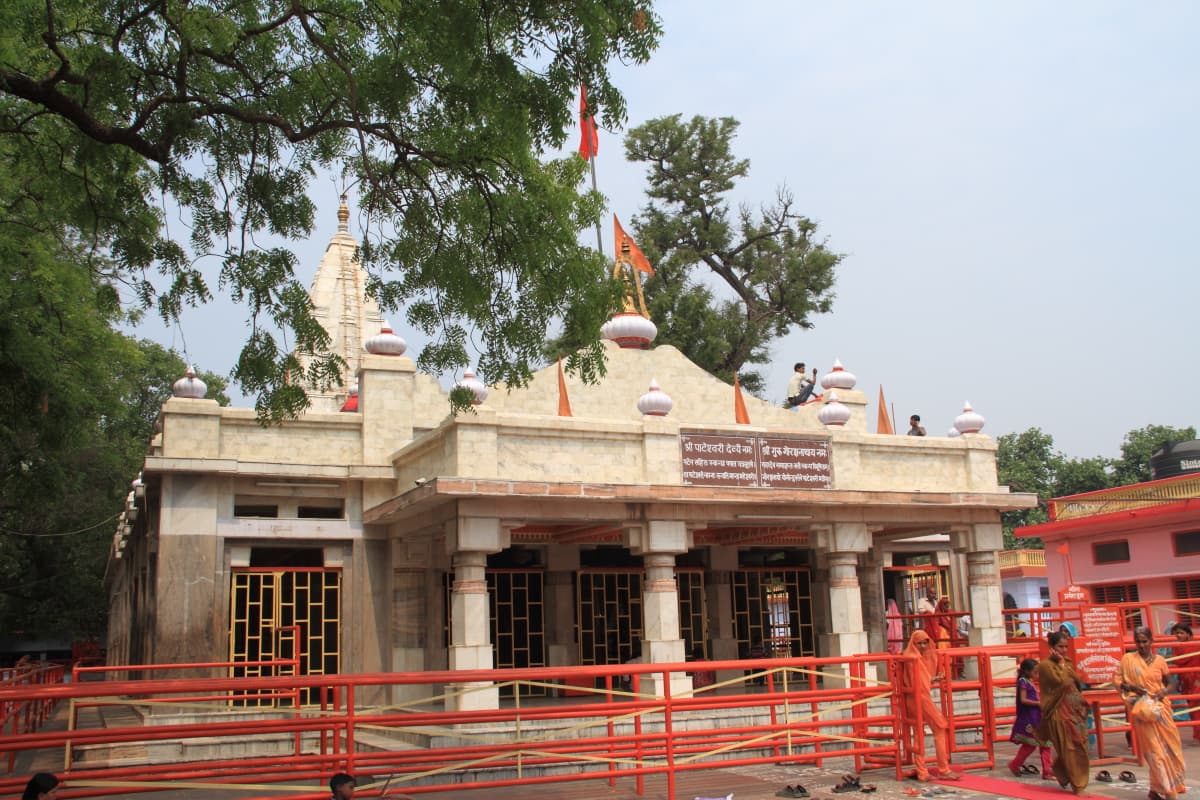
Sacred architecture patronized by the Gupta rulers.
Exam Revision & Practice Questions
Structured high-yield study material and original verified practice questions.
Relevant for:UPSC Civil Services Examination (Prelims & Mains GS-I)SSC CGL / CHSL (General Awareness - Ancient History)State PSCs (UPPSC, BPSC, MPPSC General Studies)UGC NET History (Paper II)NDA / CDS (General Knowledge)
Key Facts at a Glance
Inauguration of the Gupta Era
Established around A.D. 319–20 (epoch confirmed by J.F. Fleet; current NCERT writes 'c. 320 CE') marking the accession of Chandragupta I, who took the title Maharajadhiraja.
Prayaga Prashasti (Allahabad Pillar)
Composed in ornate Sanskrit by court poet Harishena on an Ashokan pillar; details Samudragupta's fivefold conquest policy (annexation of Aryavarta, liberation of Dakshinapatha).
Prabhavati Gupta's Land Grant
Daughter of Chandragupta II married to Vakataka ruler Rudrasena II; issued copper-plate land charters in violation of theoretical Dharmashastra restrictions on female property ownership.
Sudarshana Lake Restoration (Junagadh)
Restored between Gupta Years 136 and 138 (c. 455–458 CE) under Skandagupta by governor Parnadatta and Chakrapalita; demonstrates continued public works after Ashoka and Rudradaman.
Deogarh Dashavatara Temple Architecture
Early 6th-century stone temple in Jhansi district featuring one of northern India's earliest shikharas, a square panchayatana terrace, and river goddesses Ganga-Yamuna on doorway jambs.
Aryabhata's Aryabhatiya (499 CE)
Composed at Kusumapura when Aryabhata was 23 years old; introduced accurate value of pi (3.1416), diurnal rotation of the Earth, rational eclipse explanations, and trigonometry.
Memory Tips & Common Traps
Ruler Succession: 'S-A-C-K' Mnemonic
Remember the four great imperial sovereigns in sequence: **S**amudragupta → **C**handragupta II → **K**umaragupta I → **S**kandagupta. Chandragupta I preceded Samudragupta as founder.
Allahabad vs Bhitari Inscriptions
Do not confuse the pillars: **Prayaga (Allahabad)** = Samudragupta's conquests composed by Harishena; **Bhitari (Ghazipur)** = Skandagupta's conflict with the Hunas and Ashvamedha note.
Junagadh: Lake Repair, Not War
Exam traps often claim Junagadh is Skandagupta's battle inscription. Remember: **Junagadh = Sudarshana lake public works**; **Bhitari = Huna military engagement**.
5th-Century Scholars: Aryabhata vs Varahamihira
**Aryabhata** belonged to the late 5th century (*Aryabhatiya* 499 CE); **Varahamihira** (*Brihatsamhita*) flourished in the 6th century. Do not merge their timelines.
High-Yield Fast Revision Sheet
Capital Cities:Pataliputra was the primary dynastic seat; Ujjain served as the celebrated western capital under Chandragupta II.
Gold Dinaras:Early Gupta gold coins featured extraordinary purity and diverse motifs; coin quality and hoards tapered off from the late 5th century.
Samanta Administrative Model:Core provinces were overseen by uparikas and vishayapatis; peripheral areas were held by samantas providing military levies and tribute.
Sanchi 5th-Century Additions:UNESCO documents the final structural additions to Sanchi's Great Stupa as four shrines at the cardinal entrances built during the Gupta period.
Ajanta Cave Patronage Clarification:The classical second phase of Ajanta (Caves 16, 17) was built by ministers and feudatories of the contemporary Vakataka dynasty, not direct Gupta royalty.
Migration of Silk Weavers (473 CE):The Mandasor inscription documents a guild of silk weavers migrating from Gujarat to Malwa, illustrating late 5th-century commercial transformations.
Interactive Practice MCQs (10)
Select your answers below to verify your understanding. Detailed rationale is provided for each option.
Practice Questions
Original practice questions written to test verified historical, epigraphic, and architectural records.
The Prayaga Prashasti on the Allahabad pillar was composed by which court poet of the Gupta Empire?
Which dated epigraphic document of Chandragupta II's reign records a gift to the Buddhist vihara of Kakanadabode (Sanchi)?
Which epigraphic record explicitly states that Samudragupta 'restored the Ashvamedha sacrifice that had long been in abeyance'?
What is the primary subject matter documented in Skandagupta's Junagadh rock inscription dated Gupta Years 136–138?
According to current NCERT history textbooks, political authority in the 4th-century Gupta state increasingly depended upon:
How does NCERT explain the noticeable tapering off of Gupta gold coin finds from circa the 6th century CE onward?
According to UNESCO documentation, which structural addition was made to the Great Stupa at Sanchi during the Gupta period?
Official Archaeological Survey of India (ASI) documentation attributes the second phase of Ajanta Caves (Caves 16 and 17) to:
In what year and at what age did the astronomer Aryabhata complete his seminal treatise, the Aryabhatiya?
The classical Dashavatara Temple at Deogarh in Uttar Pradesh is historically significant because it preserves:
Frequently Asked Questions: Gupta Empire
Who was the founder of the Gupta Empire?
A.
The Gupta dynasty was founded by Sri Gupta (c. late 3rd century CE), followed by Ghatotkacha, both bearing the subordinate title 'Maharaja'. The real imperial founder of the sovereign empire was Chandragupta I (c. 319/320–335 CE), who assumed the imperial title 'Maharajadhiraja' ('King of Kings') and established the Gupta Era beginning in 319–320 CE following his alliance with the Lichchhavis.
What is the historical significance of the Prayaga Prasasti (Allahabad Pillar)?
A.
The Prayaga Prasasti is a 33-line Sanskrit eulogy composed in champu kavya style by court poet Harishena on an Ashokan sandstone pillar. It documents the extensive military conquests of Samudragupta, classifying defeated monarchs into four distinct strategic categories: Aryavarta rulers who were violently exterminated, Dakshinapatha (southern) kings who were captured and liberated (grahan-moksha), forest kings who were subjugated, and frontier/foreign rulers who rendered homage.
Who visited India during the reign of Chandragupta II?
A.
The Chinese Buddhist pilgrim Faxian (Fa-Hien) travelled extensively across northern India between 399 and 414 CE during the reign of Chandragupta II 'Vikramaditya'. His travelogue describes a peaceful, prosperous society with mild penal laws, no death penalty, and vegetarian customs among the elite, although he strikingly never mentions the emperor by personal name.
Which temples represent classical Gupta architecture?
A.
Foremost Gupta architectural monuments include the Dashavatara (Vishnu) Temple at Deogarh (Uttar Pradesh), one of the earliest surviving north Indian structural stone panchayatana temples with classical relief panels of Sheshashayi Vishnu; Temple No. 17 at Sanchi (Madhya Pradesh), featuring a flat-roofed sanctum with a pillared porch; and the brick temple at Bhitargaon.
Why did the Gupta Empire decline?
A.
The empire declined in the late 5th and early 6th centuries due to repeated invasions by the Hunas (Alchon Huns under Toramana and Mihirakula), which depleted imperial finances and devastated western trade routes; succession disputes among later Gupta princes; and the rise of autonomous feudatories (such as the Maitrakas of Vallabhi and Yashodharman of Malwa) who asserted sovereign independence.
Answers are based on verified information. Site rules may change — verify locally before visiting.
Continue Exploring
Sources & References
All citations above link directly to opened, verifiable official repositories (NCERT textbooks, UNESCO World Heritage dossiers, ASI Circle records, Corpus Inscriptionum Indicarum Vol. III, and university research archives). No claim relies on unverified tourist blogs or compromised commercial domains.
National Council of Educational Research and Training (NCERT)
Themes in Indian History Part I — Theme 2: Kings, Farmers and Towns (Reprint 2026-27)
Prayaga Prashasti composed in Sanskrit by Harishena; caution on reading prashastis; samanta definition; Prabhavati Gupta land grant; timeline c. 320 / c. 335–375 / c. 375–415; gold coin finds tapering debate; Junagadh lake repair.
Government record
Open source (opens in a new tab)National Council of Educational Research and Training (NCERT)
Ancient India: A History Textbook for Class XI (by R.S. Sharma)
Gupta era start A.D. 319–20; five conquest categories of Samudragupta; Napoleon of India qualified; Meghavarman Gaya mission; Vakataka alliance and Ujjain; administration (bhukti/vishaya/vithi); silk-weaver migration 473 CE; Aryabhata and Varahamihira.
Published work
Open source (opens in a new tab)Superintendent of Government Printing, Calcutta
Corpus Inscriptionum Indicarum, Vol. III — Inscriptions of the Early Gupta Kings and Their Successors (ed. J.F. Fleet)
Critical editions and translations of Allahabad Pillar (No. 1), Sanchi Year 93 (No. 5), Bhitari (No. 13), Junagadh (No. 14), Kahaun (No. 15), Mandasor (No. 34); epigraphic computation of Gupta era epoch A.D. 319–20.
Primary source
Open source (opens in a new tab)Archaeological Survey of India / Government of India
Epigraphia Indica, Vol. VI (ed. E. Hultzsch & F. Kielhorn)
Critical text of Pulakeshin II Aihole inscription confirming absence of Gupta-ruled territorial list; Gauda copper plates dated Gupta-Samvat 300 proving ongoing regional currency of Gupta era.
Scholarly source
Open source (opens in a new tab)UNESCO World Heritage Centre
Buddhist Monuments at Sanchi (Inscribed 1989, Dossier 524)
Official confirmation that the last structural additions to the Great Stupa were four shrines added at cardinal entrances during the Gupta dynasty (5th century CE).
World Heritage documentation
Open source (opens in a new tab)UNESCO World Heritage Centre
Ajanta Caves (Inscribed 1983, Dossier 242)
Documentation that the second classical phase of richly decorated caves was excavated during the Gupta period (5th–6th centuries CE) under the Basim branch of the Vakatakas.
World Heritage documentation
Open source (opens in a new tab)UNESCO World Heritage Centre
Mahabodhi Temple Complex at Bodh Gaya (Inscribed 2002, Dossier 1056)
Confirmation that the grand structural form of the Mahabodhi Temple largely dates to the 5th–6th centuries CE (Gupta period).
World Heritage documentation
Open source (opens in a new tab)UNESCO World Heritage Centre
Archaeological Site of Nalanda Mahavihara at Nalanda, Bihar (Inscribed 2016, Dossier 1502)
Documentation of Nalanda's developmental span from 5th to 13th century CE, founded during the imperial Gupta period.
World Heritage documentation
Open source (opens in a new tab)Archaeological Survey of India (ASI)
World Heritage Buddhist Monuments at Sanchi — Official Circle Record
Ancient site names Kakanaya and Kakanadabota; historical presence of Gupta-period shrines and classical seated Buddha sculptures.
Primary archaeological record
Open source (opens in a new tab)Archaeological Survey of India (ASI)
World Heritage Ajanta Caves — Official Circle Record
Documentation of the Vakataka period as contemporaries of the Imperial Guptas; Cave 16 built by minister Varahadeva under Harishena (r. 475–500 CE); Cave 17 commissioned by a feudatory prince.
Primary archaeological record
Open source (opens in a new tab)Leiden University Repository
The Iconography of the Viṣṇu Temple at Deogarh (A.A. Lubotsky)
Architectural analysis of the Deogarh Vishnu temple as a masterwork of Gupta art dating to the first half of the 6th century CE; evaluation of the modern label 'Dashavatara'.
Scholarly source
Open source (opens in a new tab)MacTutor History of Mathematics Archive (University of St Andrews)
Aryabhata the Elder — Biography & Mathematical Works
Aryabhata born 476 CE; Aryabhatiya completed in 499 CE at age 23; value of pi (3.1416), diurnal rotation of Earth, planetary periods, and trigonometric sines.
Scholarly source
Open source (opens in a new tab)
— every record linked above was re-requested for this release, so the link still resolves and the publisher still serves the document. It is a link check, not a re-verification of every sentence on this page.
Missing something, or found an error? Send us a correction with the record that supports it, or read how we choose sources.
— every record linked above was re-requested for this release, so the link still resolves and the publisher still serves the document. It is a link check, not a re-verification of every sentence on this page.