Sacred Destinations
Chandigarh
4Sacred Sites
5Major Temples
The city beautiful blends modernist Le Corbusier architecture with profound spiritual heritage, deriving its name from the Chandi Mandir temple and serving as a convergence point for Hindu and Sikh traditions at the foothills of the Shivalik range.
Quick Facts
Capital
Chandigarh
Population
1.2 million
Area
114 km²
Languages
Hindi, Punjabi, English
Best Time to Visit
September to March
Major Pilgrimage
Chandi Mandir, Mansa Devi, Gurudwara Nada Sahib
Temple Style
Traditional, Rajput-Mughal, Modern
UNESCO Count
0
Major River
Sukhna Choe, Patiali Rao (seasonal)
Highest Point
~400 m (Shivalik foothills)
Why Visit Chandigarh
Chandigarh, known globally for its visionary urban planning by Le Corbusier, holds a distinct spiritual heartbeat beneath its modernist grid. The city derives its name from the Chandi Mandir, a temple dedicated to Goddess Chandi. Beyond the concrete facades and manicured gardens, the city offers sanctuaries ranging from the ISKCON temple to Gurudwara Nada Sahib. The spiritual landscape is intertwined with both Hindu and Sikh traditions, reflecting the diverse cultural fabric of the Punjab and Haryana regions it bridges.
The Chandi Mandir bestows a protective, martial yet maternal energy upon the city. The proximity to Mata Mansa Devi (a prominent Shakti temple) and Gurudwara Nada Sahib (consecrated by Guru Gobind Singh Ji) elevates Chandigarh from a capital to a basecamp for significant regional pilgrimages. The Saketri Temple's rare four-spire modern architecture and the ISKCON temple's vibrant kirtan culture add further spiritual depth.
Temple Categories
Shakti Temples
2Chandi Mandir (namesake), Mata Mansa Devi — prominent goddess shrines in the region.
Shiva Temples
1Saketri Shiv Temple — ancient shrine with modern four-spire architecture.
ISKCON Centers
1ISKCON Chandigarh — Sri Sri Radha Madhava Temple in Sector 36.
Sikh Gurudwaras
1Gurudwara Nada Sahib — historic 1688 site on Ghaggar river bank.
Featured Sacred Places
Chandigarh
ISKCON Chandigarh (Sri Sri Radha Madhava Temple)
A prominent Gaudiya Vaishnava temple in Chandigarh's Sector 36, enshrining deities of Sri Sri Radha Madhava and Sri Sri Pancha Tattva, renowned for vibrant kirtans, Sunday discourses, and Vedic cultural…
Explore Temple
Chandigarh
Mata Mansa Devi Temple
A major Shakti pilgrimage shrine located in Panchkula on the Chandigarh border, set across 100 acres in the Shivalik foothills with twin 19th-century sanctums established under the rulers of Manimajra…
Explore Temple
Chandigarh
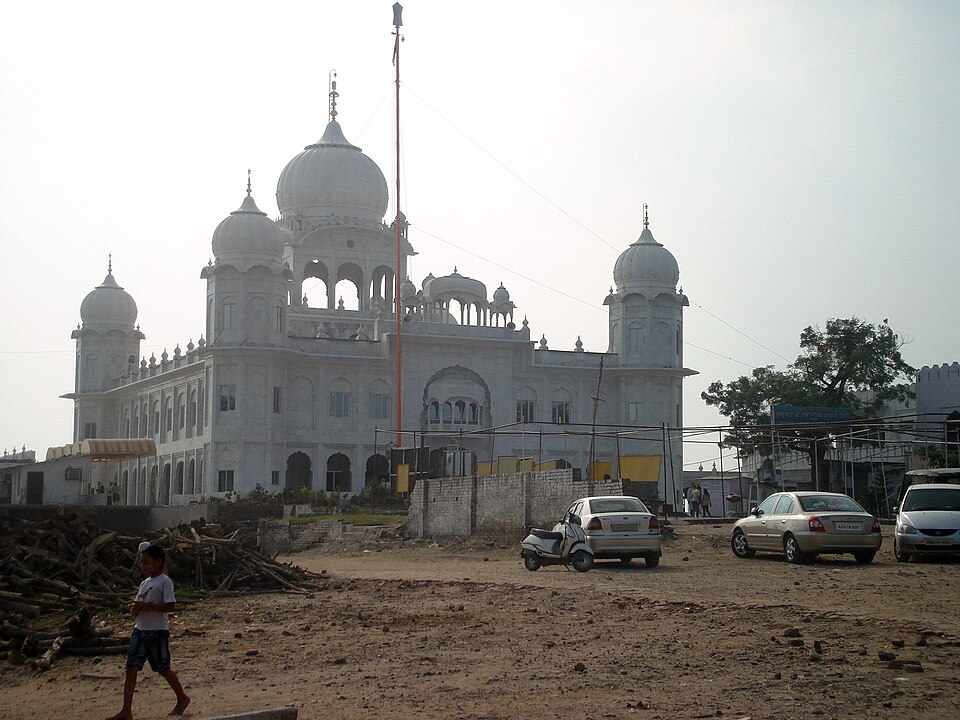
Gurudwara Nada Sahib
A historic Sikh shrine on the banks of the Ghaggar River in the Shivalik foothills, commemorating Guru Gobind Singh Ji's halt in 1688 following the Battle of Bhangani.
Explore Temple
Chandigarh
Saketri Temple
An ancient Shiva shrine located in Saketri village near Chandigarh's Sukhna Lake, known for its distinctive multi-spire architecture, thousands of pilgrims during Maha Shivaratri, and serene Shivalik setting.
Explore Temple
Pilgrimage Circuits
Tricity Spiritual Circuit
4 templesChandi Mandir-Mansa Devi-Saketri-Nada Sahib, covering all major sites in a single day.
Devotees combine visits to Chandi Mandir, Mata Mansa Devi (Panchkula), and Saketri Shiva Temple. Sikh devotees visit Gurudwara Nada Sahib combined with Anandpur Sahib. Chandigarh serves as a comfortable, well-connected hub for these pilgrimages. The compact spiritual circuit can be covered in a single day.
Temple Architecture
Chandigarh's temples reflect its unique mid-20th-century context. The Chandi Mandir follows traditional North Indian temple architecture. Mata Mansa Devi features distinctive onion-shaped domes in a rare Rajput-Mughal blend. The Saketri Temple's four identical spires represent a geometric evolution of the traditional shikhara — a unique modern departure. The ISKCON temple is built in modern traditional fusion style with white marble. Gurudwara Nada Sahib follows traditional Sikh architecture with domes and white marble.
Historical Timeline
1688Sikh History
Guru Gobind Singh Ji halts at Nada Sahib after Battle of Bhangani; Gurudwara established.
1811-1815Manimajra
Mata Mansa Devi main temple built by Maharaja Gopal Singh of Manimajra.
1953Republic of India
Chandigarh inaugurated as the capital of Punjab; city named after Chandi Mandir.
1840Patiala
Patiala Temple (upper shrine) built by Maharaja Karam Singh of Patiala.
Temple Statistics
5+
Major Temples
City center and periphery
4+
Architectural Styles
Traditional, Rajput-Mughal, Sikh, Modern
~1688
Oldest Shrine
Gurudwara Nada Sahib
Chandi Mandir
City Namesake
Goddess Chandi + Garh (fortress)
Festivals
Navratri Mela
March-April, September-OctoberMata Mansa Devi, Chandi Mandir
9 days
Hundreds of thousands of devotees across both goddess temples; grand fairs and bhandaras.
Janmashtami
August-SeptemberISKCON Chandigarh
1 day
Midnight aarti, elaborate decorations, cultural programs at Sector 36 temple.
Gurpurabs
VariousGurudwara Nada Sahib
1 day each
Massive Nagar Kirtans through city boulevards; continuous langar for thousands.
Maha Shivaratri
February-MarchSaketri Shiv Temple
1 day
Night-long vigil, massive fair at Saketri, thousands of devotees.
Navratri is celebrated with immense fervor at Chandi Mandir and Mansa Devi, drawing hundreds of thousands. Gurpurabs are marked by massive Nagar Kirtans (processions) through Chandigarh's wide boulevards, with Gurudwara Nada Sahib as a focal point. Janmashtami at ISKCON features elaborate decorations. Diwali transforms the modernist city into a glowing spectacle.
Travel Guide
Best Time
September to March (10-25°C)
Climate
Summer up to 42°C; mild winters
Nearest Airport
Chandigarh (IXC)
Railway
Chandigarh Junction
Road
NH-44, NH-5
Local Transport
CTU buses, taxis, auto-rickshaws
Temple Etiquette
Cover head in Gurudwara; remove footwear in all
Suggested Duration
1 day for all major sites
Nearby Attractions
Sculpture garden
Rock Garden
Nek Chand's visionary 12-acre garden built from industrial and urban waste, featuring thousands of sculptures.
Lake
Sukhna Lake
Le Corbusier-designed 3-km² lake at the foothills; popular for walks, boating, and sunset views.
Archaeological site
Bhima Devi Temple Complex
8th-11th century temple ruins in Pinjore with intricate stone carvings and ASI protection.
Interesting Facts
01
Chandigarh is the only Indian city named after a Hindu goddess temple: Chandi Mandir. 'Chandi' (the goddess) + 'Garh' (fortress) = Chandigarh.
02
Gurudwara Nada Sahib is maintained primarily by the Indian Army, which also operates a langar serving meals to thousands of visitors daily throughout the year.
03
The Saketri Temple's four identical spires, representing a geometric evolution of the traditional shikhara, are a unique mid-20th-century departure from conventional temple architecture.
Frequently Asked Questions
The city takes its name from the Chandi Mandir — a temple dedicated to Goddess Chandi standing 15 km from the city center. 'Chandi' (goddess) + 'Garh' (fortress) formed Chandigarh when the city was planned in the 1950s.
The Saketri Shiv Temple features a rare modern architectural design with four identical spires of equal height, representing a geometric evolution of the traditional shikhara style — a unique departure from conventional temple towers.
Yes, Gurudwara Nada Sahib offers a Sarai (free guesthouse) for pilgrims. Visitors can stay overnight, participate in the continuous langar (free kitchen), and join early morning prayers.
The spiritual circuit is compact. Chandi Mandir is 15 km from the city center, Mansa Devi is 8 km, and Nada Sahib is 12 km. All sites can be covered in a single day using local transport.
Sources & References
These records back the history, architecture, temple listings and visitor guidance published on this Chandigarh page.
Archaeological Survey of India
Archaeological Survey of India — monument records and conservation reports
Protected-monument status, dating, architectural classification and conservation records for the temples and monuments named across this Chandigarh guide.
Primary archaeological record
Open source (opens in a new tab)Ministry of Tourism, Government of India
Ministry of Tourism — official destination information
Official Government of India visitor information, access routes and pilgrimage circuits for Chandigarh.
Government record
Open source (opens in a new tab)
— every record linked above was re-requested for this release, so the link still resolves and the publisher still serves the document. It is a link check, not a re-verification of every sentence on this page.
Missing something, or found an error? Send us a correction with the record that supports it, or read how we choose sources.