Sacred Destinations
Punjab
1Sacred Sites
3Major Temples
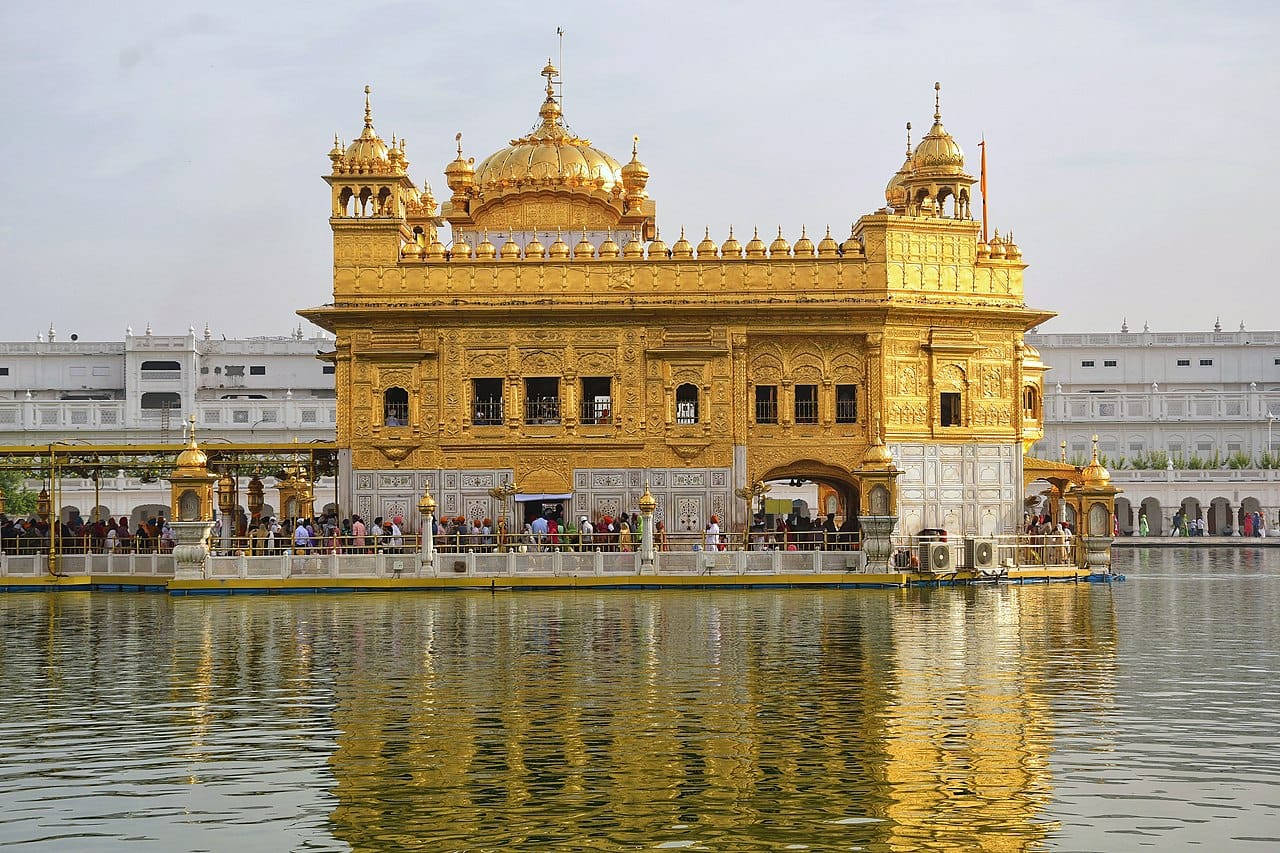
Punjab, the land of five rivers in northwestern India, is the spiritual homeland of Sikhism while also containing significant Hindu and Jain pilgrimage sites. The state's sacred landscape is dominated by the Harmandir Sahib (Golden Temple) in Amritsar, the holiest shrine of Sikhism, alongside ancient Hindu temples like Mukteshwar and the Durgiana Mandir.
Quick Facts
Capital
Chandigarh
Population
31 million
Area
50,362 km²
Languages
Punjabi, Hindi, English
Best Time to Visit
October to March
Major Pilgrimage
Golden Temple, Anandpur Sahib, Durgiana Mandir
Temple Style
Sikh (marble, gold), Nagara
UNESCO Count
0
Major River
Sutlej, Beas, Ravi
Highest Point
Shivalik foothills (~600 m)
Why Visit Punjab
Punjab's religious geography centers on the Sikh tradition founded by Guru Nanak in the 15th century. The Harmandir Sahib complex attracts over 100,000 visitors daily and serves as the spiritual and temporal capital of Sikhism. Hindu sacred sites include the Mukteshwar Temple, associated with the Pandavas, and the Durgiana Mandir, constructed in the architectural style of the Golden Temple. Jain pilgrimage centers preserve connections to that faith's medieval presence.
The Harmandir Sahib is the most important shrine in Sikhism, housing the Guru Granth Sahib as the living Guru and serving as the seat of the Akal Takht, the highest temporal authority of Sikhism. Hindu temples like Mukteshwar (where the Pandavas obtained liberation from a curse) preserve pre-Sikh devotional traditions. The Jallianwala Bagh memorial connects spiritual pilgrimage with India's independence movement.
Temple Categories
Featured Sacred Places
Pilgrimage Circuits
Panj Takht Circuit
3 templesThe five temporal seats of Sikh authority: Akal Takht, Patna Sahib, Keshgarh Sahib, Hazur Sahib, Damdama Sahib.
Akal Takht AmritsarTakht Sri Keshgarh SahibTakht Sri Damdama Sahib
Amritsar Heritage Circuit
3 templesGolden Temple, Jallianwala Bagh, Durgiana Mandir, Wagah Border.
Harmandir SahibDurgiana MandirGurudwara Tarn Taran
The Panj Takht circuit covers the five temporal seats of Sikh authority: Akal Takht (Amritsar), Patna Sahib (Bihar), Keshgarh Sahib (Anandpur), Hazur Sahib (Maharashtra), and Damdama Sahib (Talwandi Sabo). The Hindu circuit includes Mukteshwar and Durgiana Mandir. The Kartarpur Corridor permits visa-free access to Gurudwara Darbar Sahib in Pakistan.
Temple Architecture
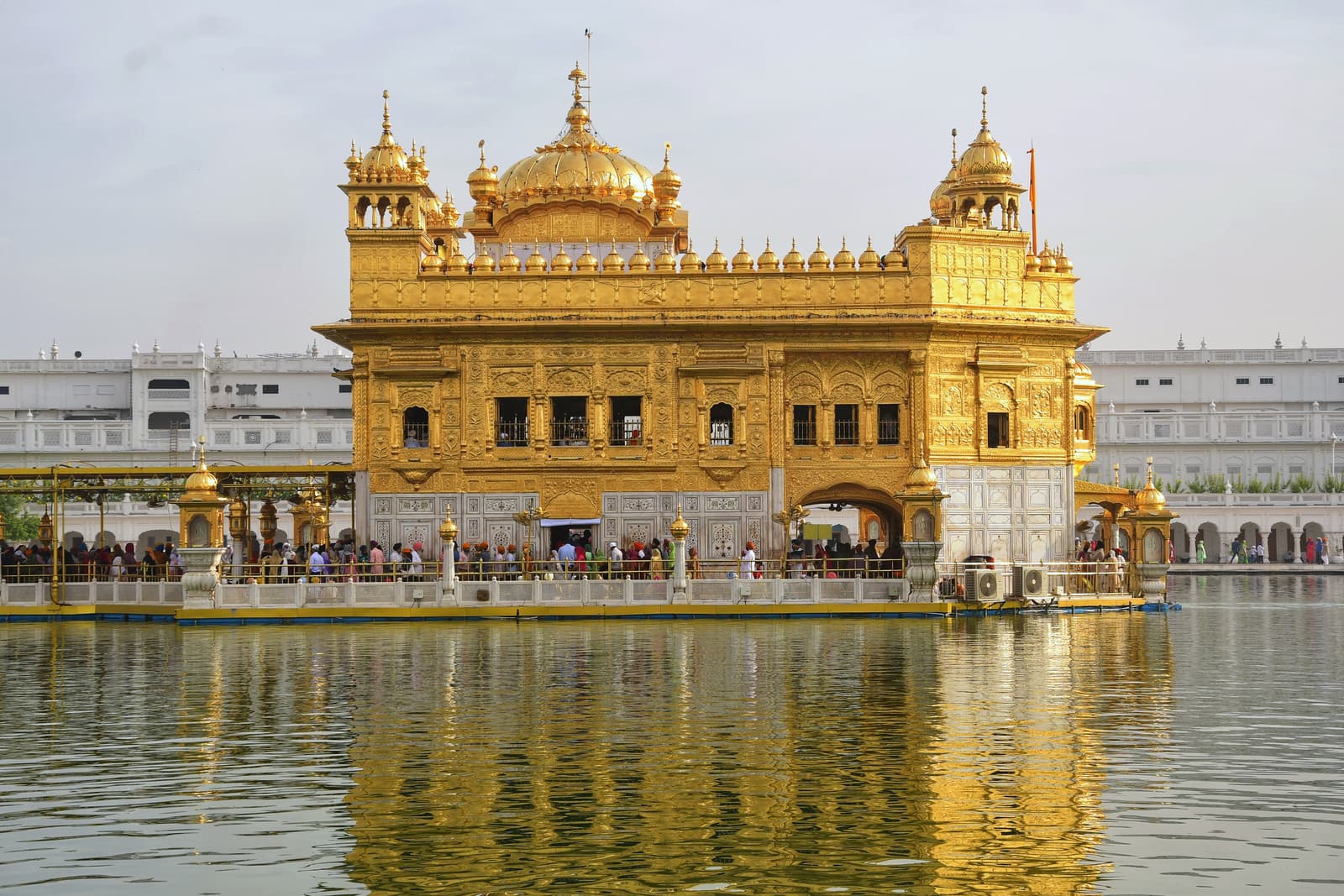
The Harmandir Sahib is a two-story marble structure with gold leaf covering, standing in a 150-meter-square sacred tank (Amrit Sarovar). The upper floors feature copper-gold plating; interiors are decorated with floral frescoes, mirror work, and marble inlay. The Akal Takht, a five-story octagonal building, exemplifies Sikh martial architecture. Durgiana Mandir replicates the Harmandir's style with a surrounding water tank.
Historical Timeline
1469Sikh
Guru Nanak born at Nankana Sahib (now in Pakistan); Sikhism founded.
1604Sikh
Harmandir Sahib (Golden Temple) built by Guru Arjan Dev.
1699Sikh
Guru Gobind Singh founds the Khalsa at Anandpur Sahib on Baisakhi.
1830Sikh Empire
Maharaja Ranjit Singh completes gold plating of Harmandir Sahib.
1947Independent India
Partition divides Punjab; Amritsar remains in India.
Temple Statistics
5
Sikh Takhts
Across India; 3 in Punjab
Mahabharata era
Oldest Temple
Mukteshwar Temple
100,000+
Daily Visitors (Golden Temple)
Free langar feeds all
750 kg
Gold Used
Golden Temple plating
Festivals
Baisakhi
April 13-14Takht Sri Keshgarh Sahib, Anandpur
3 days
Sikh New Year; founding of the Khalsa (1699); processions and martial arts displays.
Guru Nanak Gurpurab
NovemberHarmandir Sahib, Amritsar
3 days
Akhand Path (continuous scripture reading); processions; free langar for all visitors.
Diwali at Golden Temple
October-NovemberHarmandir Sahib, Amritsar
2 days
Thousands of lamps and fireworks; commemorates Guru Hargobind's release from Gwalior Fort.
Baisakhi (April 13-14) marks the Sikh New Year and the founding of the Khalsa by Guru Gobind Singh in 1699. Guru Nanak Gurpurab (November) is celebrated with Akhand Path and processions. Diwali at Harmandir Sahib commemorates the release of Guru Hargobind from Gwalior Fort. Navratri features nine-night worship at Durgiana Mandir.
Travel Guide
Best Time
October to March (10-25°C)
Climate
Summer up to 45°C; winter fog
Nearest Airport
Amritsar (ATQ)
Railway
Amritsar, Ludhiana, Jalandhar
Road
NH-3, NH-44
Local Transport
State buses, taxis, auto-rickshaws
Temple Etiquette
Cover head; remove footwear; no tobacco/alcohol
Suggested Duration
2-4 days for main sites
Nearby Attractions
Memorial
Jallianwala Bagh
Site of the 1919 massacre; preserved bullet marks and a memorial flame within a walled garden.
Ceremony
Wagah Border Ceremony
Daily flag-lowering ceremony at the India-Pakistan border, 30 km from Amritsar.
Dam
Bhakra Nangal Dam
One of the highest gravity dams in the world (225 m) on the Sutlej River; scenic Gobind Sagar Lake.
Interesting Facts
01
The Harmandir Sahib is the only major Sikh shrine entered from all four sides, symbolizing that all people are equal regardless of caste, creed, or religion.
02
The Golden Temple's free langar (community kitchen) serves over 100,000 meals daily, making it the world's largest free kitchen, operating 24/7 without interruption since 1604.
03
The word 'juggernaut' derives from Jagannath, but the related term 'tank' (as in thinking tank) traces its origin to the Amrit Sarovar — the sacred pool surrounding the Golden Temple.
Frequently Asked Questions
Maharaja Ranjit Singh commissioned the gold plating in 1830, covering the upper two stories with approximately 750 kg of gold leaf. The work took eight years under Sikh artisan Bhai Gurmukh Singh.
Durgiana Mandir in Amritsar (1920s, modeled after the Golden Temple), Mukteshwar Temple (Mahabharata period), and Shiv Mandir near Kurukshetra.
The partition placed Guru Nanak's birthplace (Nankana Sahib) and many Sikh shrines in Pakistan. Indian Punjab retained Harmandir Sahib and Anandpur Sahib. The Kartarpur Corridor was established in 2019 for visa-free access.
Sources & References
These records back the history, architecture, temple listings and visitor guidance published on this Punjab page.
Archaeological Survey of India
Archaeological Survey of India — monument records and conservation reports
Protected-monument status, dating, architectural classification and conservation records for the temples and monuments named across this Punjab guide.
Primary archaeological record
Open source (opens in a new tab)Ministry of Tourism, Government of India
Ministry of Tourism — official destination information
Official Government of India visitor information, access routes and pilgrimage circuits for Punjab.
Government record
Open source (opens in a new tab)
— every record linked above was re-requested for this release, so the link still resolves and the publisher still serves the document. It is a link check, not a re-verification of every sentence on this page.
Missing something, or found an error? Send us a correction with the record that supports it, or read how we choose sources.