From ancient rock-cut marvels to towering imperial shrines, discover the architectural soul of Bharat through our verified digital archive.
Explore More Temples
Location
Mangeshi, Priol
Presiding Deity
Lord Mangesh (Lord Shiva)
Architecture
Indo-Portuguese (Goan Hindu style)
Dynasty
Maratha — Sonde Kings Patronage
Timings
The temple is open for darshan from 6:00 AM to 10:00 PM daily. The main morning rituals occur between 7:00 AM and 11:00 AM, and the evening Aarti is performed at approximately 7:30 PM. The Monday Palakhi procession usually starts around 8:00 PM.
Entry Fee
Free
Best Time
The best time to visit the Shri Mangeshi Temple is from November to February, when the weather in Goa is pleasant and the festive season is at its peak. Visiting on a Monday evening is particularly recommended to witness the weekly Palakhi procession. For those seeking the ultimate cultural experience, the Magha Jatra in February is the ideal time, though one must be prepared for large crowds.
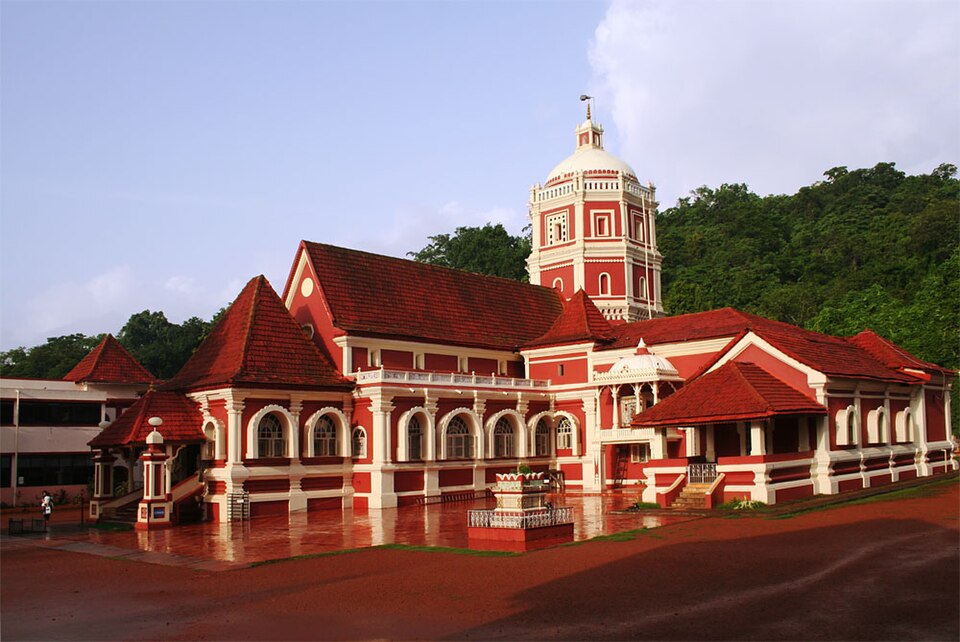
One of Goa's most prominent and wealthiest Hindu shrines, famous for its unique Indo-Portuguese architecture and the tallest Deepastambha in the state.
The history of the Shri Mangeshi Temple is a dramatic saga of migration, survival, and royal patronage. Originally, the Mangesh Linga was enshrined in a magnificent temple at Kushasthali (modern-day Cortalim) in the Salcete district. However, in the mid-16th century, when the Portuguese Inquisition reached Goa, many Hindu temples were targeted for destruction. To save the sacred idol from desecration and to avoid forced conversions, the devotees of Lord Mangesh undertook a 'Great Migration' in 1560. Under the cover of night, they clandestinely moved the Linga across the Zuari River to the village of Priol, which was then part of the territory ruled by the Hindu Kings of Sonde, who were independent of Portuguese control. The first structure at the new site was simple, but over the next two centuries, the temple grew in grandeur, especially under the patronage of the Maratha Empire. In 1739, the Peshwa rulers of the Marathas donated the entire village of Mangeshi to the temple, ensuring its financial stability and making it one of the largest land-owning religious institutions in Goa. The present-day grand structure was completed in the late 18th century, reflecting the 'Goan Baroque' style that had evolved by that time. A fascinating legend explains the name 'Mangesh': it is said that Lord Shiva once disguised himself as a tiger to play a prank on Goddess Parvati. Terrified, she cried out 'Trahi Mam Girisha!' (Save me, O Lord of Mountains). In her panic, she uttered 'Mam Girisha,' which over centuries evolved into the word 'Mangesh.' This legend is a beloved part of the local folklore and is often depicted in the temple's art and folk songs.
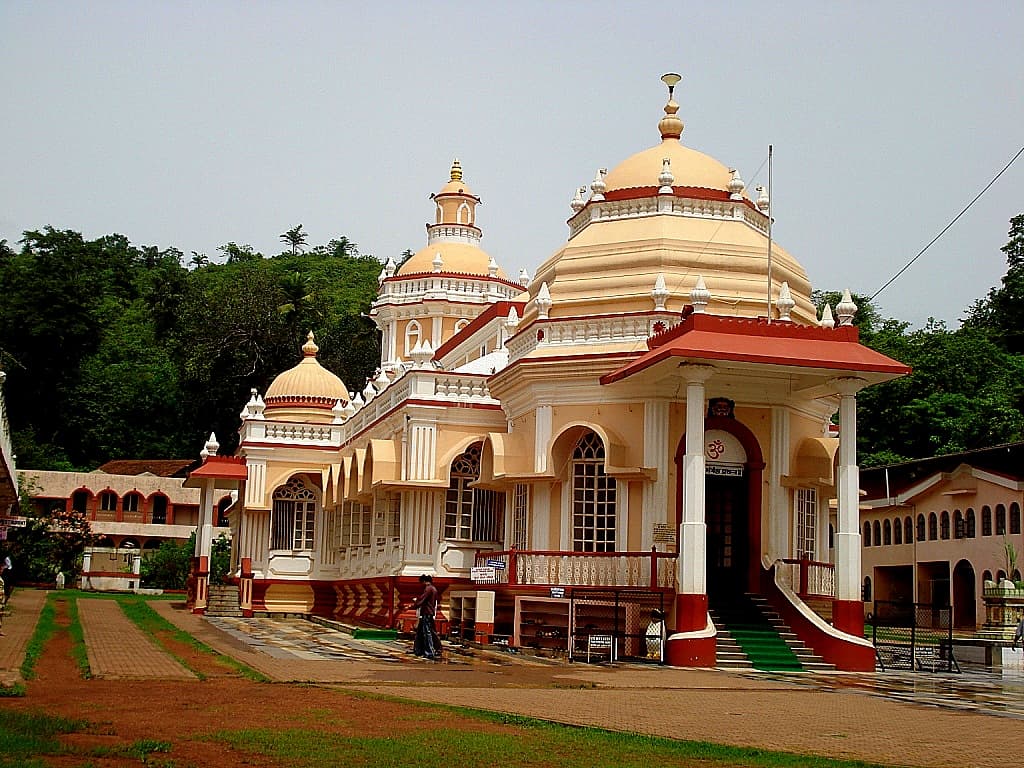
The architecture of the Shri Mangeshi Temple is a masterpiece of the 'Indo-Portuguese' or 'Goan Hindu' style, a hybrid aesthetic that emerged from the unique historical conditions of the region. The most iconic feature of the temple is the **Deepastambha** (Tower of Light)—a magnificent seven-story, octagonal white tower that stands at the entrance. It is the tallest of its kind in Goa and is designed with niches to hold hundreds of oil lamps, which when lit during festivals, create a breathtaking vision of spiritual illumination. Unlike the traditional temples of North or South India with their Shikharas or Gopurams, the main Mangeshi temple features a prominent central dome and a multi-tiered roof that shows influence from both Portuguese church architecture and Mughal design. The facade of the temple, with its Roman-style arches, balustrades, and intricate plasterwork, could easily be mistaken for a colonial villa or a chapel from the outside—a deliberate design choice by the 18th-century builders to ensure the temple's survival. However, the interior is purely Hindu in its ritualistic layout. The 'Sabha Griha' (assembly hall) is exceptionally grand, featuring 19th-century European crystal chandeliers and a floor paved with polished marble. The entrance to the inner sanctum is plated with intricate silver relief work depicting scenes from the Shiva Purana. The ancient sacred tank (Kund) located within the complex is considered the oldest surviving part of the structure, predating the 16th-century migration, and its cool waters are believed to be perennially purified by hidden mountain springs.
Signature Feature: The iconic seven-story white Deepastambha (lamp tower).. The architecture reflects the post-Portuguese influence on Hindu temples in Goa, featuring domes and balustrades.
The rituals at Shri Mangeshi are performed with a high degree of precision and grace, following the Shaiva Smarta tradition. The daily schedule is divided into three main sessions. The morning begins with the 'Panchopchar Puja' and the 'Abhishek' of the Lingam with water from the sacred tank and milk. This is a serene period, often accompanied by the quiet chanting of the Rudram. A unique and signature ritual of this temple is the **Monday Palakhi (Palanquin) Procession**. Every Monday evening, the processional idol of Lord Mangesh is placed in a beautifully decorated silver palanquin and carried by the devotees around the temple courtyard. This procession is accompanied by traditional Goan musical instruments like the 'Ghumot' and 'Shahnai', and Vedic hymns are chanted in a call-and-response format. The sight of the palanquin moving rhythmically through the white corridors of the temple under the glow of the Deepastambha is a highlight of the spiritual week in Goa. The rituals conclude with the 'Shej Aarti' late at night, a gentle ceremony to put the Lord to sleep, reflecting the intimate and maternal relationship the Goan community shares with their presiding deity.
The festival calendar of Shri Mangeshi is a vibrant display of Goan Hindu culture. The most important event is the **Magha Jatra (Annual Fair)**, held in the month of February (Magha month). This week-long celebration attracts thousands of people and features grand 'Rathotsav' (chariot processions) where the deity is taken out on massive wooden chariots. The entire village of Mangeshi is transformed into a carnival of faith, with cultural programs, music performances, and traditional markets. **Mahashivratri** is celebrated with night-long prayers and multiple Abhishekas, with the temple remaining open 24 hours. The **Navratri** festival is also a major event, marked by the 'Makharotsav', where the deity is placed on a beautifully decorated swing (Makhar) and gently swayed while devotional songs are sung. The festival of **Shigmo** (the Goan Holi) is celebrated with great gusto, featuring folk dances like the 'Dashavatara' in the temple courtyard. These festivals are not just religious events but are essential social gatherings where the far-flung members of the GSB community reconnect with each other and their shared heritage.
Tallest Deepastambha in Goa, Indo-Portuguese Architecture, Mangeshkar Family Heritage, Monday Palki Procession, Great Migration Legend
The best time to visit the Shri Mangeshi Temple is from November to February, when the weather in Goa is pleasant and the festive season is at its peak. Visiting on a Monday evening is particularly recommended to witness the weekly Palakhi procession. For those seeking the ultimate cultural experience, the Magha Jatra in February is the ideal time, though one must be prepared for large crowds.
The temple is open for darshan from 6:00 AM to 10:00 PM daily. The main morning rituals occur between 7:00 AM and 11:00 AM, and the evening Aarti is performed at approximately 7:30 PM. The Monday Palakhi procession usually starts around 8:00 PM.
A. The name comes from a prank Lord Shiva played on Parvati by disguising himself as a tiger. Parvati cried out 'Trahi Mam Girisha' (Save me, O Lord of Mountains), and 'Mam Girisha' eventually became 'Mangesh'.
A. Lata Mangeshkar's father, Master Deenanath Mangeshkar, was born in the village of Mangeshi. He took the surname 'Mangeshkar' to identify with his family deity and his ancestral village, making the temple a significant site for the family's heritage.
A. It is a prime example of Indo-Portuguese fusion, featuring a white-washed facade with Roman arches, European chandeliers, and a central dome, combined with the traditional Hindu Deepastambha (lamp tower).
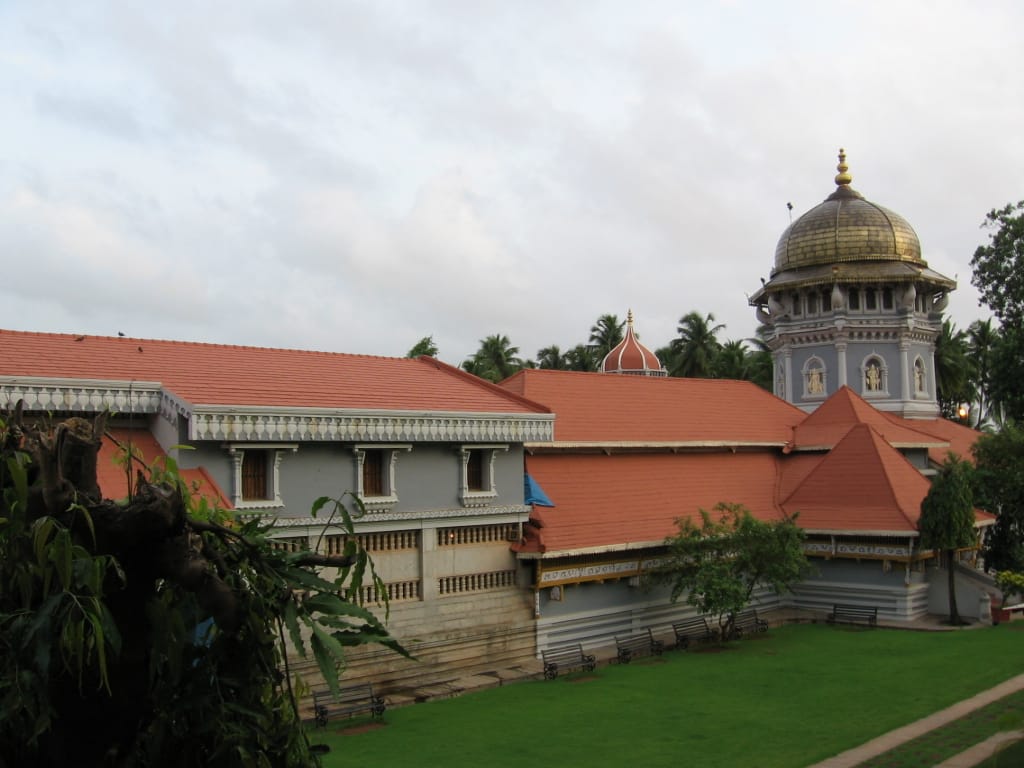
Shanta Durga Temple
A premier Shakti shrine in Goa, dedicated to the peaceful manifestation of Durga who mediated between Shiva and Vishnu, featuring unique Indo-Portuguese architecture.
Mahalasa Narayani Temple
A unique and ancient shrine dedicated to the Mohini avatar of Lord Vishnu, famous for its 21-story brass Deepastambha and its history of survival during the Portuguese Inquisition.
Nagueshi Temple
One of the few Goan temples that remained in its original 15th-century location throughout the colonial era, famous for its 1413 AD stone inscription and exquisite wood carvings.
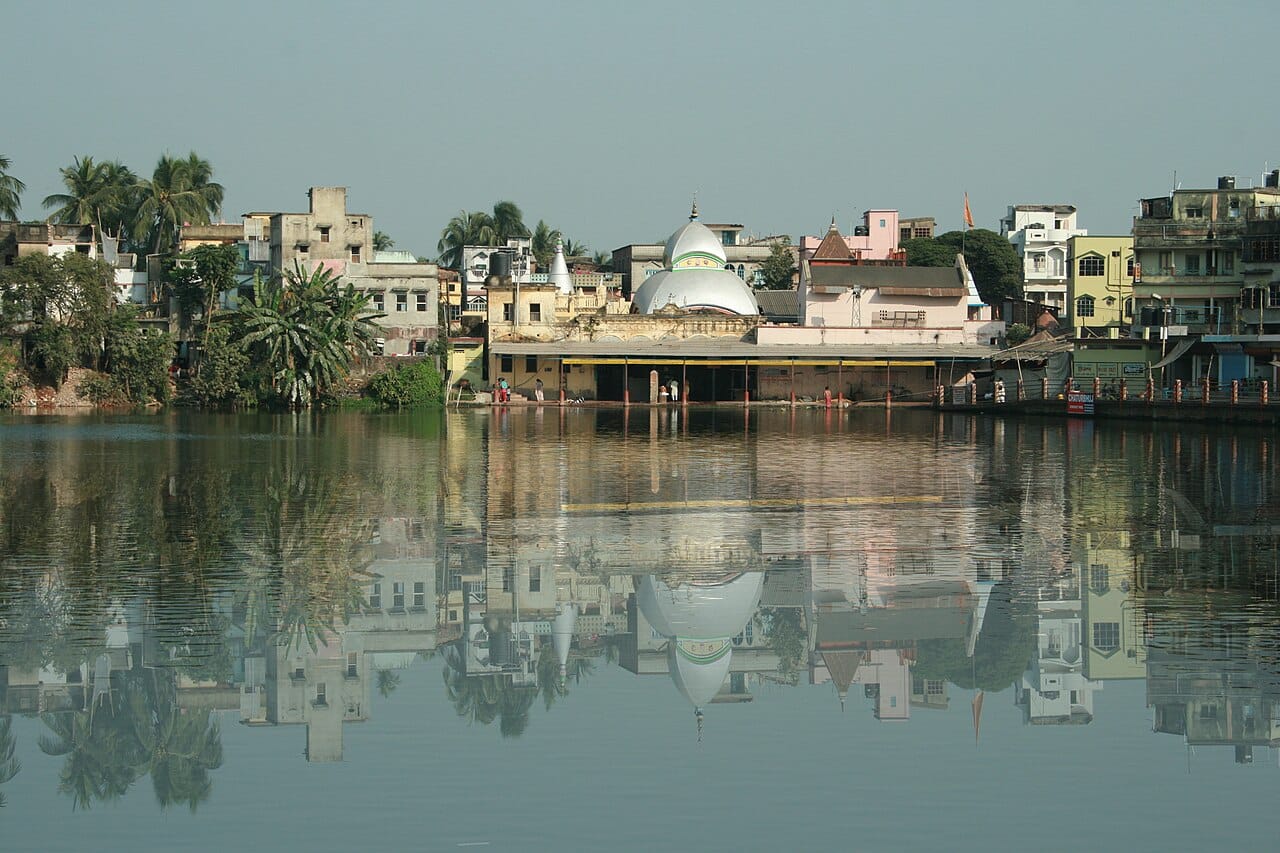
Tarakeshwar Temple Hooghly
A massive 18th-century pilgrimage site dedicated to Lord Taraknath, especially vibrant during the Gajan festival.
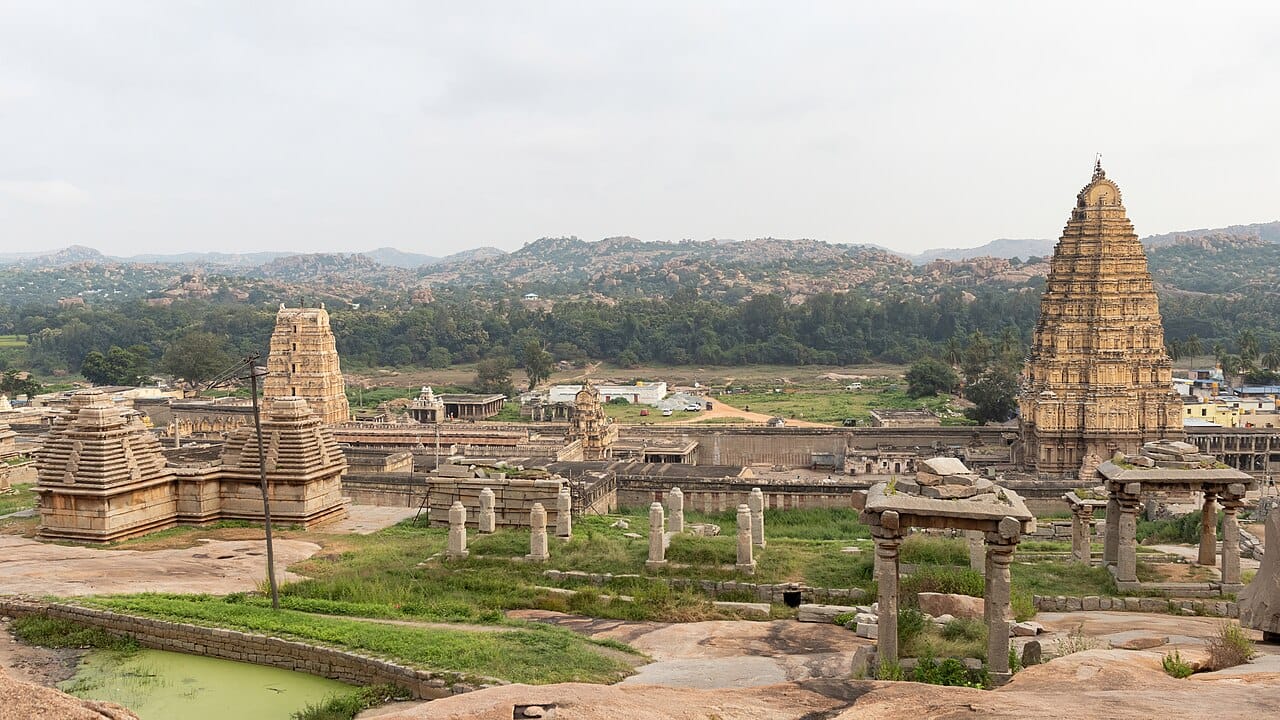
Virupaksha Temple
The Virupaksha Temple in Hampi, Karnataka, is a UNESCO World Heritage Site and the oldest functioning temple in India, dedicated to Lord Shiva as Virupaksha.
Jageshwar Temple
A cluster of 124 ancient stone temples from the 7th-12th centuries, nestled in a dense deodar forest.
Neelkanth Mahadev Temple
Situated at 1,330 meters, this is where Lord Shiva is believed to have consumed the poison (Halahala) during the Samudra Manthan.
Tungnath Temple
The highest Shiva temple in the world, situated at 3,680 meters on the Chandranath Parbat; it is the 'Tritiya Kedar' in the sacred Panch Kedar pilgrimage circuit.
Rudranath Temple
One of the Panch Kedar shrines, representing Lord Shiva's face, situated at an altitude of 2,286 meters amidst meadows and rhododendron forests.
India's temples are living traditions — not museums. Every temple has its own customs. This guide helps first-time visitors prepare with confidence and respect.
Foreign visitor information is being researched
Please verify with the official temple authority before planning your visit.
Foreign Visitors
Verify Before VisitingVisitor Information
Entry policies vary between temples. Most temples welcome visitors, while some may restrict access to specific areas, rituals, or the inner sanctum. Always verify the latest entry guidelines with the official temple authorities before your visit.
Modest clothing is expected at every Indian temple — a sign of respect, not a restriction. Think of it as dressing for a formal ceremony.
A scarf is always useful — it covers shoulders, works as a head covering, and can double as a makeshift face cover if needed.
Outdoor photography is generally permitted. Indoor photography is often restricted. Always look for signage or ask a priest before taking photos inside.
The best time to visit the Shri Mangeshi Temple is from November to February, when the weather in Goa is pleasant and the festive season is at its peak. Visiting on a Monday evening is particularly recommended to witness the weekly Palakhi procession. For those seeking the ultimate cultural experience, the Magha Jatra in February is the ideal time, though one must be prepared for large crowds.
April — June
July — September
English is widely understood at major tourist temples. In smaller local temples, Hindi and the regional language are more common. A smile and simple hand gestures go a long way. Learning a few words of the local language is always appreciated.
Cash (Indian Rupees) is the most reliable option, especially for temple offerings, small shops, and local transport.
UPI digital payments (Google Pay, PhonePe, Paytm) are widely accepted across India — even at roadside stalls. Download one before you arrive.
International credit/debit cards work at most ATMs, hotels, and larger establishments. Smaller vendors may only accept cash or UPI.
Carry small denominations (₹10, ₹20, ₹50, ₹100 notes) for offerings and temple donations. Large notes (₹500, ₹2000) can be hard to break at smaller counters.
Many historic temples have uneven stone floors, multiple steps, and narrow passages. Wheelchair access is limited at older sites — contact the temple in advance.
Basic restroom facilities and drinking water are available at most major temples. Some charge a small fee (₹5–₹10).
Stay hydrated — carry a reusable water bottle, especially in hot climates.
Keep valuables secure — use hotel lockers for passports and excess cash.
Wear comfortable, sturdy footwear — temple floors can be hot, wet, or uneven.
Beware of unofficial guides or touts near temple entrances. Only use authorised services.
Carry a photocopy of your passport and visa. Leave originals in your hotel safe.
Download offline maps — mobile networks can be unreliable near remote temple sites.
These short explanations help make sense of what you see and experience.
Darshan means 'seeing' — but in a temple it means being seen by the deity. It is a sacred moment of connection, not just a viewing.
Removing footwear is a sign of humility. It also keeps the temple floor clean, since devotees sit and pray on the ground.
Food offered to the deity and then distributed to devotees. It is considered blessed. Accept it with both hands and do not discard it.
The bell creates a focused acoustic atmosphere, wards off distractions, and announces your presence before entering the inner sanctum.
Circumambulation (pradakshina) is done clockwise, keeping the sanctum on your right — an auspicious direction aligned with the sun's path.
Flowers symbolise devotion, coconuts represent the ego being broken, incense purifies the air, and lamps represent the victory of light over darkness.
Sacred viewing of the deity; the central act of temple worship.
Clockwise circumambulation of the sanctum.
Blessed food offered to the deity and distributed to devotees.
The innermost sanctum where the main deity resides.
The towering spire above the sanctum, a defining feature of temple architecture.
A pillared hall or pavilion within the temple complex.
The Indian Rupee (?, INR) is the local currency. ATMs are widely available in cities and towns. For temple offerings, keep small notes (₹10, ₹20, ₹50). Most temples accept donations in cash only — digital payments are uncommon at the offering counter itself.
Offerings (dakshina) are given with the right hand. Place cash in the donation box (hundi) or give it directly to the priest. There is no fixed amount — give what feels appropriate. Some temples have fixed fees for special entry or puja participation.
Shoes and sandals are removed before entering the temple building. Most temples have a designated shoe counter (free or a small fee of ₹5–₹20). Socks are generally allowed. In monsoon, carry a plastic bag for wet shoes.
Darshan queues can take 30 minutes to 3 hours at popular temples. Many offer paid VIP darshan (₹100–₹500) for faster entry. Special queues for women, elderly, and disabled visitors exist at some temples. No line jumping.
Major festivals draw enormous crowds — sometimes hundreds of thousands. Book accommodation months in advance. Expect road closures, restricted vehicle access, and limited phone network. Arrive early (before dawn) to avoid the worst congestion.
Always look for signage before taking photos. When in doubt, ask a priest. Never take photos of devotees in prayer without permission. Selfie sticks are banned at most temples. Silently switch your phone to silent mode.
Police / Ambulance / Fire: 112 (National Emergency Number)
Tourist Helpline: 1800-111-363 (Multi-lingual, Ministry of Tourism)
Women's Helpline: 1091
Temple-specific visitor information is continuously researched and updated from official sources. Where specific data is unavailable, general India travel guidance is provided. Always verify current policies with the temple authority before your visit.
Information last verified July 2026. Temple-specific data coming soon.
Continue your journey through the spiritual and architectural wonders of India.

A premier Shakti shrine in Goa, dedicated to the peaceful manifestation of Durga who mediated between Shiva and Vishnu, featuring unique Indo-Portuguese architecture.

A unique and ancient shrine dedicated to the Mohini avatar of Lord Vishnu, famous for its 21-story brass Deepastambha and its history of survival during the Portuguese Inquisition.

One of the few Goan temples that remained in its original 15th-century location throughout the colonial era, famous for its 1413 AD stone inscription and exquisite wood carvings.

A massive 18th-century pilgrimage site dedicated to Lord Taraknath, especially vibrant during the Gajan festival.
"UNESCO was founded in 1945 to promote world peace and security through international cooperation."