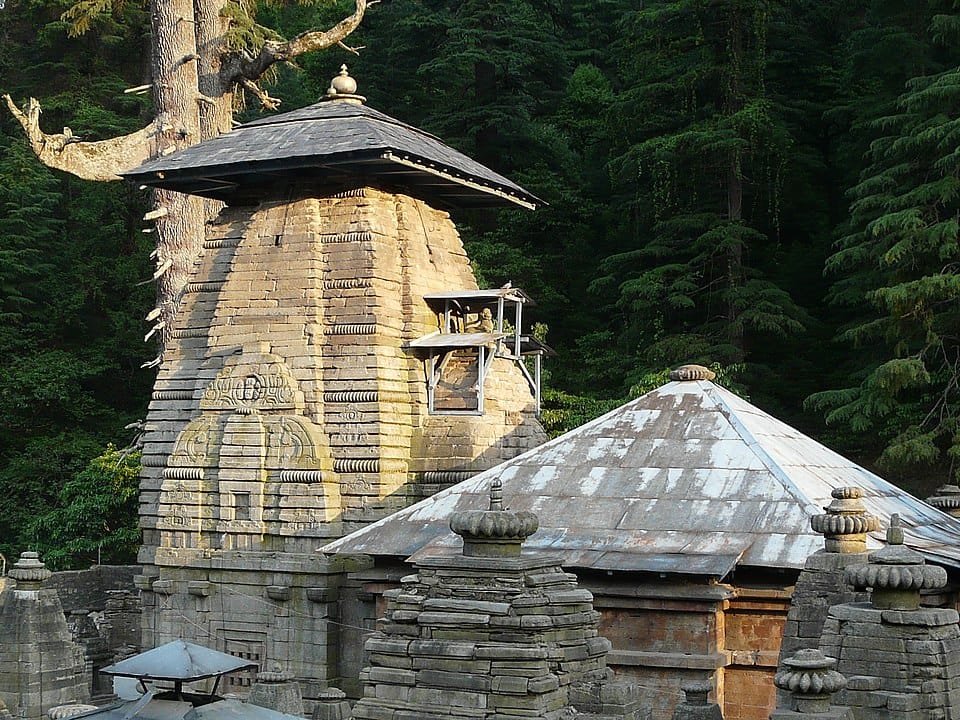
The Katarmal Sun Temple was raised in the ninth century CE by Katarmalla, a king of the Katyuri dynasty that ruled much of Kumaon from its seat at Kartikeyapur. It is the only Sun temple in Kumaon, and one of the very few surviving Surya shrines in north India outside Odisha. The main sanctuary is surrounded by a cluster of forty-four smaller shrines, which brings the complex to forty-five stone structures arranged around a central courtyard.
Two of the subsidiary shrines are dedicated to Shiva and Parvati and another to Lakshmi and Narayana, so the complex serves more than one cult despite its solar dedication. The buildings are raised from local stone blocks set without mortar and bound with a paste of lime, jaggery and pulses that has hardened over eleven centuries.
After an idol was taken from the sanctum, the carved wooden doors and painted panels were removed for safekeeping and are now held in the National Museum in New Delhi. The Archaeological Survey of India protects the monument, which is recorded as the Surya Temple at Katarmal among the Monuments of National Importance in Uttarakhand. The core shrine is dated to the ninth century, while the image now worshipped in the sanctum is generally assigned to a later replacement.