From ancient rock-cut marvels to towering imperial shrines, discover the architectural soul of Bharat through our verified digital archive.
Explore More Temples
Location
Kurukshetra
Presiding Deity
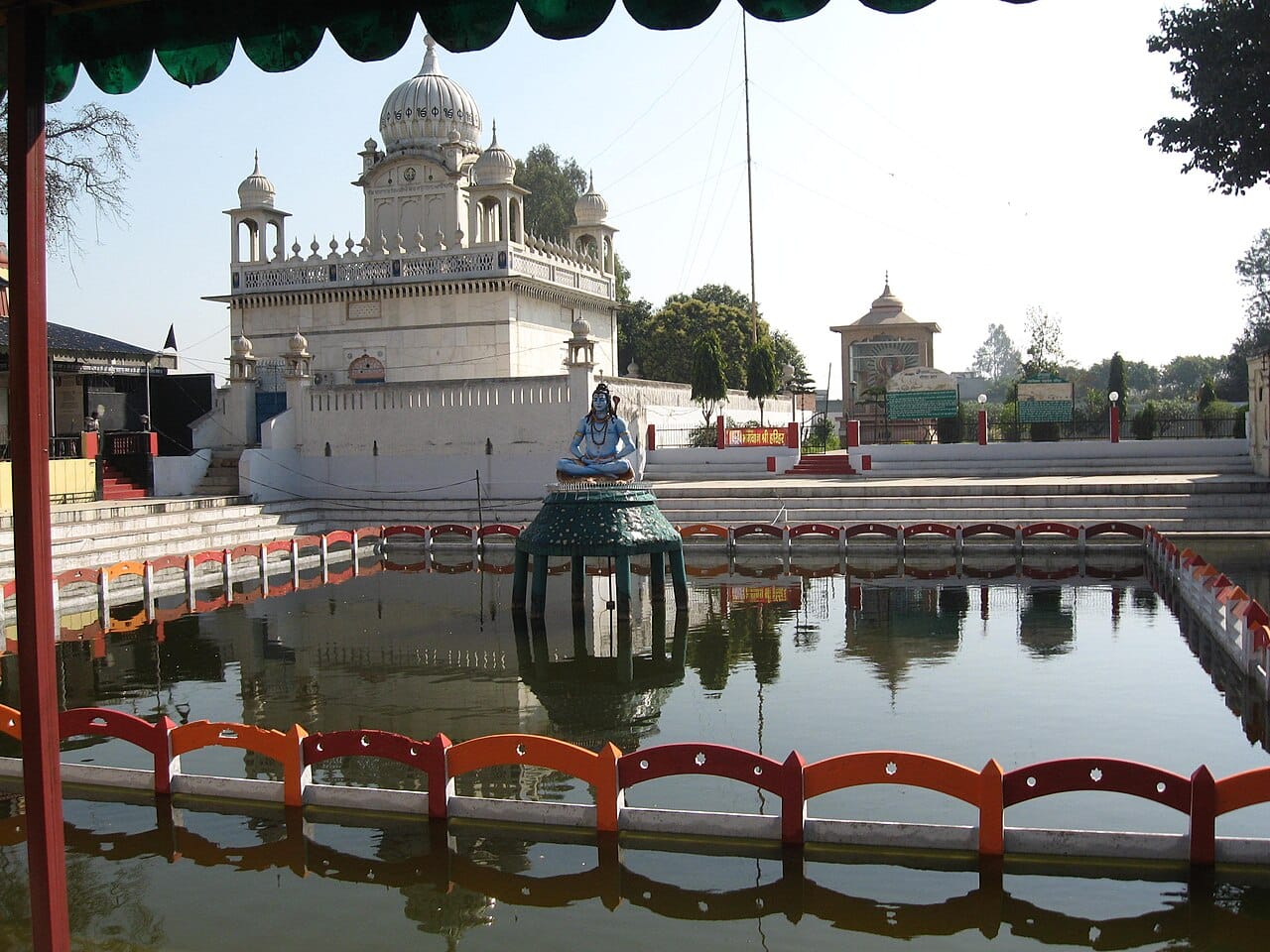
While Brahma Sarovar is fundamentally a vast sacred water body rather than a standard enclosed temple, its primary spiritual focal point is unequivocally Lord Brahma, the supreme creator of the universe. The entire sheer expanse of the water is considered a direct embodiment and manifestation of Brahma's infinite creative energy. Devotees do not worship a specific idol of Brahma here; rather, they offer their prayers and oblations directly to the water itself, treating the Sarovar as a living, divine entity. Additionally, within the complex, the prominent shrine located on the small island in the middle of the Sarovar is dedicated to Lord Shiva, worshipped here as Sarveshwar Mahadev. According to localized legend, the Shiva Lingam housed in this specific shrine was personally installed and consecrated by Lord Brahma himself. The powerful presence of Lord Krishna is also palpable throughout the site, a natural consequence of the Sarovar's location in the heart of Kurukshetra. The grand, imposing bronze chariot of Krishna and Arjuna serves as a profound visual deity for those seeking to connect with the timeless wisdom of the Bhagavad Gita. Furthermore, the numerous smaller shrines scattered around the extensive ghats house various prominent deities from the Hindu pantheon, including Lord Hanuman, Goddess Durga, and Lord Vishnu. This variety allows pilgrims to engage in diverse, personalized forms of worship. However, the overarching and unifying divine presence remains the formless, boundless creative power of the supreme, tangibly manifested through the purifying, life-giving waters of the Sarovar.
Architecture
Man-made water architecture with stepped ghats
Dynasty
Ancient (Mentioned in Puranas & Mahabharata)
Timings
Brahma Sarovar is accessible 24 hours a day for bathing and circumambulation, reflecting its status as a public water body. However, the absolute best times to visit are during the serene early morning at sunrise (approximately 5:30 AM to 7:00 AM) for a peaceful, uncrowded holy bath, and in the early evening (around 6:00 PM to 7:30 PM) to secure a good viewing spot for the spectacular Maha Aarti and to actively participate in the Deep Daan. The smaller shrines within the walled complex follow standard North Indian temple hours, opening early in the morning and closing around 8:00 PM.
Entry Fee
Free
Best Time
The ideal and most comfortable time to visit Brahma Sarovar is during the winter months, specifically from October to March. The weather during this period is cool, crisp, and highly pleasant, making it physically comfortable to walk the extensive, miles-long parikrama (circumambulation) and actively participate in prolonged outdoor rituals. Visiting during the internationally renowned Gita Jayanti festival (November-December) offers a deeply enriching cultural and spiritual experience. For devout seekers looking to acquire the ultimate spiritual merit, meticulously planning a visit to coincide with a solar eclipse is highly recommended, though one must be fully prepared to navigate and endure immense, unprecedented crowds.
A magnificent ancient water tank in Kurukshetra, deeply tied to the Mahabharata and the creation of the universe by Lord Brahma.
The historical and mythological trajectory of Brahma Sarovar is as deep and vast as the waters it contains. The earliest recorded references to this sacred site are firmly embedded in India's most ancient scriptures, including the Rig Veda, various Puranas, and the epic Mahabharata. The Matsya Purana states that the original Sarovar was excavated by King Kuru, the illustrious patriarch of the Kuru dynasty and the common ancestor of both the Kauravas and the Pandavas. It was King Kuru's unparalleled asceticism and fierce dedication that sanctified the land, earning it the name Kurukshetra, the field of Kuru. During the era of the Mahabharata, the Sarovar was not merely a landmark but a central stage for pivotal events. On the final day of the epic war, the defeated and severely wounded Kaurava prince, Duryodhana, famously used his mystical powers to hide beneath the waters of this very tank, only to be discovered, challenged, and ultimately defeated by the Pandava warrior Bhima. Throughout subsequent centuries, Brahma Sarovar witnessed the rise and fall of numerous mighty empires, remaining a constant center of pilgrimage. It drew the reverence of prominent historical figures across different eras. The Mughal Emperor Akbar is recorded to have visited the site, while the 17th-century French physician and traveler François Bernier documented the staggering scale of devotee gatherings here during solar eclipses, noting the immense socio-religious importance of the location. During the medieval period, the site faced phases of neglect and structural damage due to political upheavals, but it was continually revived and protected by local rulers and devoted saints who understood its intrinsic value. In the 11th century, the celebrated Persian scholar Al-Biruni detailed the Sarovar in his seminal text, 'Kitab-ul-Hind', highlighting its fame beyond the Indian subcontinent. The modern, highly organized structure we see today—with its expansive red sandstone ghats, paved circumambulatory pathways, and orderly layout—is the result of comprehensive restoration efforts initiated after India's independence, spearheaded primarily by the Kurukshetra Development Board. These vital renovations have successfully preserved the ancient spiritual essence of the Sarovar while equipping it to safely accommodate the logistical needs of millions of modern-day pilgrims, thereby securing its monumental legacy for future generations.
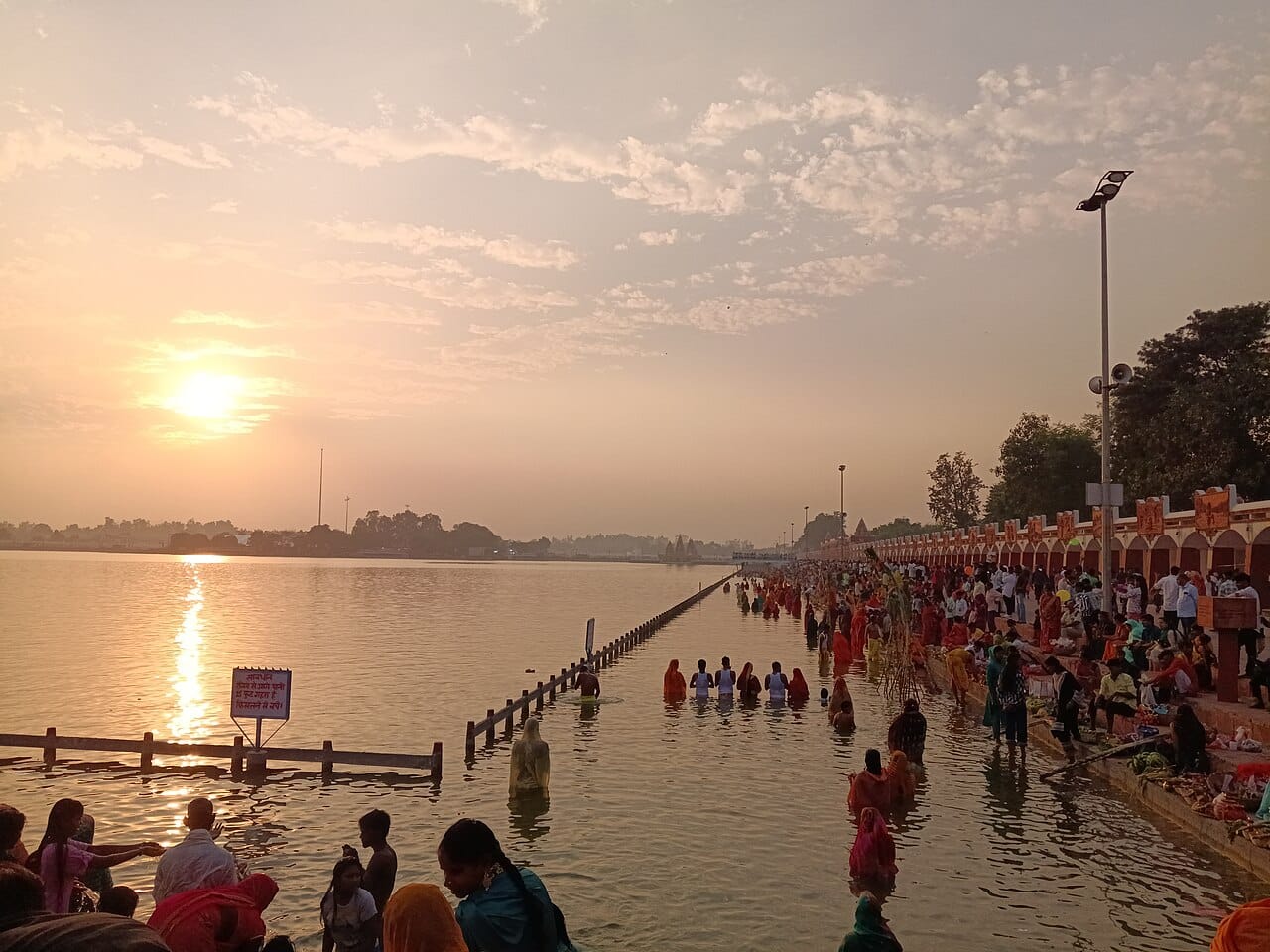
Unlike traditional Hindu temples characterized by towering stone shikharas, the 'architecture' of Brahma Sarovar is defined entirely by its colossal horizontal scale, geometric precision, and its meticulous, modern water management system. The Sarovar is a breathtakingly massive rectangular water tank, measuring approximately 3,600 feet in length and 1,500 feet in width. This staggering dimension makes it one of the largest man-made sacred water bodies in the entirety of Asia. The sheer expanse of the water is visually awe-inspiring, resembling a serene, enclosed inland lake rather than a conventional temple tank. The entire perimeter of the Sarovar is meticulously lined with an uninterrupted series of wide steps, or 'ghats', constructed from vibrant red sandstone. These ghats gently lead down to the water level, designed specifically to facilitate safe, easy, and simultaneous access for hundreds of thousands of pilgrims during major bathing festivals. The architectural layout incorporates a very wide, well-paved circumambulatory path (Parikrama) that circles the entire perimeter of the massive tank. This pathway is thoughtfully dotted with numerous small, dedicated shrines, peaceful ashrams, and elevated viewing pavilions (chhatris) constructed in traditional North Indian architectural styles. These pavilions offer welcome shade, a place for quiet contemplation, and sweeping panoramic views of the water. In the center of the eastern half of the Sarovar stands a beautiful, distinct shrine dedicated to Lord Shiva, which is accessible via a picturesque small concrete bridge. This island shrine adds a striking, singular focal point to the vast expanse of water. Additionally, a massive, brilliantly crafted bronze chariot depicting Lord Krishna acting as the charioteer for Arjuna—a direct visual homage to the Bhagavad Gita—serves as a prominent artistic and spiritual installation near the Sarovar's edge, greatly enhancing the site's epic, historical ambiance. The modern architectural and engineering interventions have heavily focused on environmental sustainability; the integration of advanced filtration plants ensures constant water circulation and purification, thus impeccably maintaining the sanctity and physical cleanliness of the site despite the exceptionally heavy daily footfall of devotees.
Signature Feature: The world's largest bronze chariot and the immense 3600-foot long holy tank.. Solar eclipses attract millions here as it is believed bathing during an eclipse grants immense merit.
The daily and periodic rituals observed at Brahma Sarovar are primarily centered around physical and spiritual water purification, as well as profound ancestral homage. The most fundamental and widely practiced ritual is the 'Snan' or the holy dip in the Sarovar's waters. Devotees firmly believe that completely immersing themselves in these waters, particularly during the serene, early morning hours before sunrise, effectively cleanses them of persistent physical ailments and deep-seated spiritual impurities. This sacred act of bathing is almost always accompanied by the rhythmic chanting of ancient Vedic mantras and heartfelt prayers dedicated to Lord Surya (the Sun God) and Lord Brahma. Another critically important ritual performed with great reverence along the banks is 'Pind Daan' or 'Shraddha'—the offering of rice balls and black sesame seeds to deceased ancestors. The peaceful, grounded environment of the ghats is considered astrologically and spiritually ideal for these specific rites, which are believed to be instrumental in helping the wandering souls of ancestors attain ultimate Moksha (liberation). As the day transitions into evening, the Sarovar undergoes a magnificent transformation with the performance of a grand 'Maha Aarti'. Groups of priests perform elaborate, synchronized ceremonies using large, multi-tiered, heavy brass lamps (diyas). This visual spectacle is accompanied by the rhythmic, booming beating of large drums and the resonant blowing of conch shells. The shimmering reflection of hundreds of lit lamps dancing on the dark, still water creates an ethereal, deeply moving spiritual atmosphere that draws hundreds of mesmerized spectators every single evening. Visitors also frequently engage in the beautiful practice of 'Deep Daan', gently floating small, leaf-based earthen lamps on the surface of the water, a poetic act symbolizing the dispelling of inner ignorance and the ultimate triumph of divine, guiding light.
Brahma Sarovar serves as the vibrant epicenter for numerous massive festivals, the most prominent and globally recognized being the **Gita Jayanti** festival. This is held over several days in late November or early December. This massive, multi-day international event joyously celebrates the birth of the Bhagavad Gita. During the festival, the entire Sarovar complex is spectacularly illuminated with millions of lights. The event features continuous, marathon recitations of the Gita by scholars, elaborate cultural performances from various Indian states, expansive traditional art and craft exhibitions, and massive, coordinated deep daan ceremonies. It attracts renowned scholars, artists, and millions of pilgrims from across the globe, effectively transforming Kurukshetra into a bustling, vibrant hub of deep spiritual discourse and cultural celebration. The occurrence of a **Solar Eclipse (Surya Grahan)** marks the most significant and intense astronomical event at the Sarovar. Driven by the deep-rooted scriptural belief that the waters of all sacred Indian rivers physically converge here during the exact moments of an eclipse, millions of pilgrims gather shoulder-to-shoulder to take a holy dip precisely when the celestial alignment occurs. The local administration sets up extensive, city-wide facilities to safely manage this massive, sudden influx of devotees. **Somvati Amavasya** (a highly auspicious new moon day that coincides with a Monday) is another critical occasion that draws massive, overflowing crowds specifically for ritual bathing and extensive ancestral offerings. The beautiful festival of **Karthik Purnima** is also celebrated here with immense fervor, marked by extensive, complex illuminations and the sight of thousands of floating lamps simultaneously lighting up the vast, dark expanse of the Sarovar, creating a breathtaking visual spectacle.
Massive sacred water tank, central connection to Lord Brahma's creation of the universe, premier site for solar eclipse gatherings, deep ties to the epic Mahabharata, global Gita Jayanti celebrations, and the spectacular evening Maha Aarti.
The ideal and most comfortable time to visit Brahma Sarovar is during the winter months, specifically from October to March. The weather during this period is cool, crisp, and highly pleasant, making it physically comfortable to walk the extensive, miles-long parikrama (circumambulation) and actively participate in prolonged outdoor rituals. Visiting during the internationally renowned Gita Jayanti festival (November-December) offers a deeply enriching cultural and spiritual experience. For devout seekers looking to acquire the ultimate spiritual merit, meticulously planning a visit to coincide with a solar eclipse is highly recommended, though one must be fully prepared to navigate and endure immense, unprecedented crowds.
Brahma Sarovar is accessible 24 hours a day for bathing and circumambulation, reflecting its status as a public water body. However, the absolute best times to visit are during the serene early morning at sunrise (approximately 5:30 AM to 7:00 AM) for a peaceful, uncrowded holy bath, and in the early evening (around 6:00 PM to 7:30 PM) to secure a good viewing spot for the spectacular Maha Aarti and to actively participate in the Deep Daan. The smaller shrines within the walled complex follow standard North Indian temple hours, opening early in the morning and closing around 8:00 PM.
A. According to ancient Hindu mythology and specific texts within the Puranas, Lord Brahma, the supreme creator, performed a massive, unparalleled yajna (fire sacrifice) at this exact geographical location to conceptualize and physically manifest the entire universe, firmly establishing it as the cradle of all creation.
A. Scriptures explicitly state that during a solar eclipse, the holy waters of all sacred rivers (such as the Ganga and Yamuna) mystically gather in Brahma Sarovar. Bathing here during this specific astrological window is believed to grant the devotee spiritual merit equivalent to performing thousands of Ashvamedha Yajnas.
A. Yes, it is intimately and directly connected. It was on the banks of this very sarovar that several key events occurred, most notably, it is the exact spot where Duryodhana used his mystical abilities to hide beneath the waters on the final day of the Kurukshetra war before being discovered and defeated by Bhima.
Mata Mansa Devi Temple
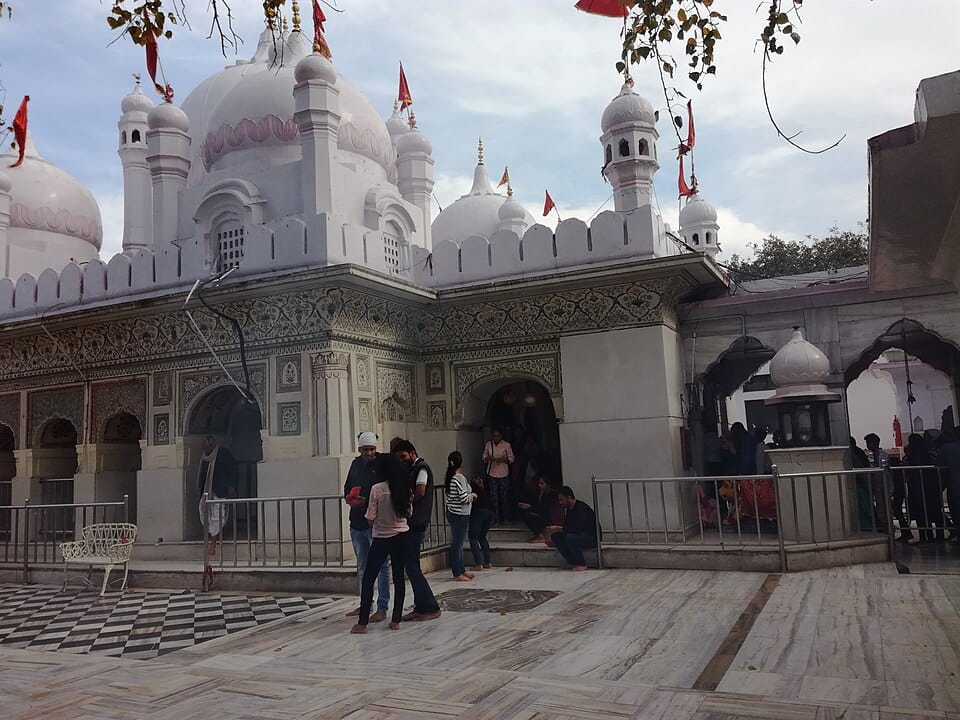
A premier Shakti Peetha where the head of Sati is believed to have fallen, famous for its 19th-century wall paintings and the twin Navratri melas.
Sthaneshwar Mahadev Temple
An ancient and highly revered shrine dedicated to Lord Shiva, intimately connected to the Mahabharata epic and the mighty Pushyabhuti dynasty of Emperor Harshavardhana.
Bhima Devi Temple
Often hailed as the 'Khajuraho of North India', this 8th-to-11th-century architectural marvel features magnificent Gurjara-Pratihara ruins and an open-air museum.
Tarakeshwar Temple Hooghly
A massive 18th-century pilgrimage site dedicated to Lord Taraknath, especially vibrant during the Gajan festival.
Virupaksha Temple
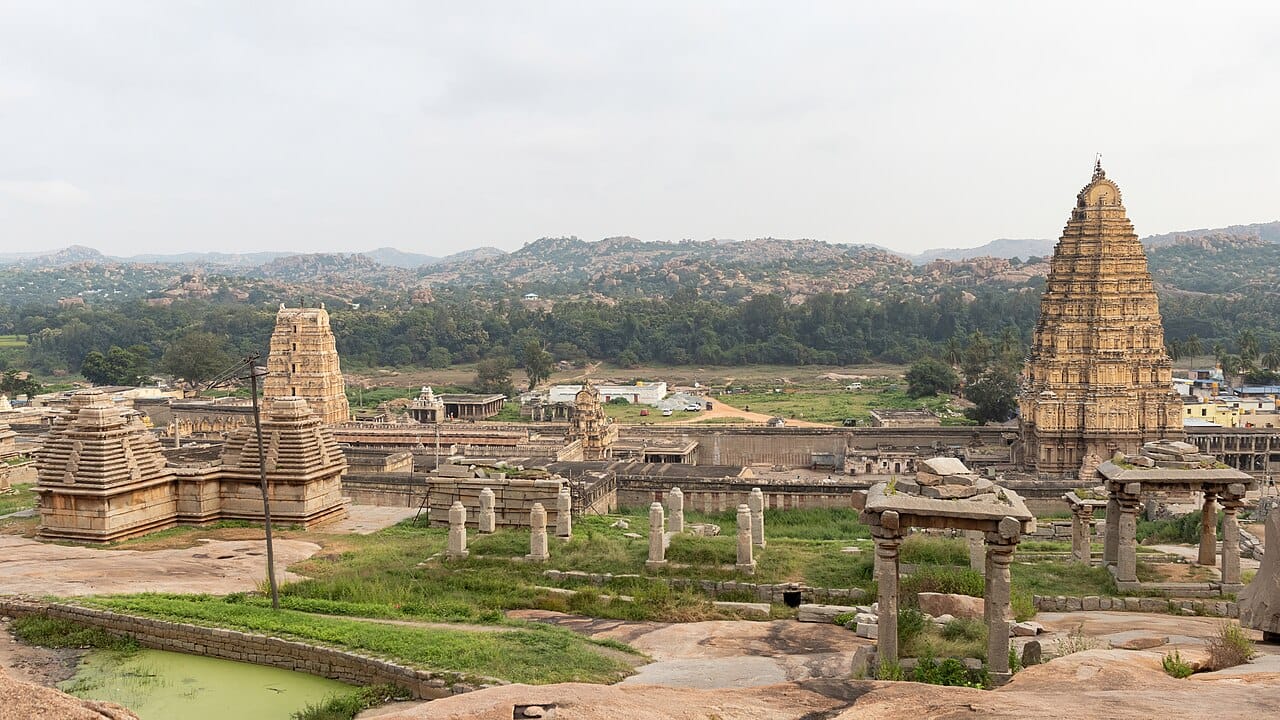
The Virupaksha Temple in Hampi, Karnataka, is a UNESCO World Heritage Site and the oldest functioning temple in India, dedicated to Lord Shiva as Virupaksha.
Jageshwar Temple
A cluster of 124 ancient stone temples from the 7th-12th centuries, nestled in a dense deodar forest.
Neelkanth Mahadev Temple
Situated at 1,330 meters, this is where Lord Shiva is believed to have consumed the poison (Halahala) during the Samudra Manthan.
Tungnath Temple
The highest Shiva temple in the world, situated at 3,680 meters on the Chandranath Parbat; it is the 'Tritiya Kedar' in the sacred Panch Kedar pilgrimage circuit.
Rudranath Temple
One of the Panch Kedar shrines, representing Lord Shiva's face, situated at an altitude of 2,286 meters amidst meadows and rhododendron forests.
India's temples are living traditions — not museums. Every temple has its own customs. This guide helps first-time visitors prepare with confidence and respect.
Foreign visitor information is being researched
Please verify with the official temple authority before planning your visit.
Foreign Visitors
Verify Before VisitingVisitor Information
Entry policies vary between temples. Most temples welcome visitors, while some may restrict access to specific areas, rituals, or the inner sanctum. Always verify the latest entry guidelines with the official temple authorities before your visit.
Modest clothing is expected at every Indian temple — a sign of respect, not a restriction. Think of it as dressing for a formal ceremony.
A scarf is always useful — it covers shoulders, works as a head covering, and can double as a makeshift face cover if needed.
Outdoor photography is generally permitted. Indoor photography is often restricted. Always look for signage or ask a priest before taking photos inside.
The ideal and most comfortable time to visit Brahma Sarovar is during the winter months, specifically from October to March. The weather during this period is cool, crisp, and highly pleasant, making it physically comfortable to walk the extensive, miles-long parikrama (circumambulation) and actively participate in prolonged outdoor rituals. Visiting during the internationally renowned Gita Jayanti festival (November-December) offers a deeply enriching cultural and spiritual experience. For devout seekers looking to acquire the ultimate spiritual merit, meticulously planning a visit to coincide with a solar eclipse is highly recommended, though one must be fully prepared to navigate and endure immense, unprecedented crowds.
April — June
July — September
English is widely understood at major tourist temples. In smaller local temples, Hindi and the regional language are more common. A smile and simple hand gestures go a long way. Learning a few words of the local language is always appreciated.
Cash (Indian Rupees) is the most reliable option, especially for temple offerings, small shops, and local transport.
UPI digital payments (Google Pay, PhonePe, Paytm) are widely accepted across India — even at roadside stalls. Download one before you arrive.
International credit/debit cards work at most ATMs, hotels, and larger establishments. Smaller vendors may only accept cash or UPI.
Carry small denominations (₹10, ₹20, ₹50, ₹100 notes) for offerings and temple donations. Large notes (₹500, ₹2000) can be hard to break at smaller counters.
Many historic temples have uneven stone floors, multiple steps, and narrow passages. Wheelchair access is limited at older sites — contact the temple in advance.
Basic restroom facilities and drinking water are available at most major temples. Some charge a small fee (₹5–₹10).
Stay hydrated — carry a reusable water bottle, especially in hot climates.
Keep valuables secure — use hotel lockers for passports and excess cash.
Wear comfortable, sturdy footwear — temple floors can be hot, wet, or uneven.
Beware of unofficial guides or touts near temple entrances. Only use authorised services.
Carry a photocopy of your passport and visa. Leave originals in your hotel safe.
Download offline maps — mobile networks can be unreliable near remote temple sites.
These short explanations help make sense of what you see and experience.
Darshan means 'seeing' — but in a temple it means being seen by the deity. It is a sacred moment of connection, not just a viewing.
Removing footwear is a sign of humility. It also keeps the temple floor clean, since devotees sit and pray on the ground.
Food offered to the deity and then distributed to devotees. It is considered blessed. Accept it with both hands and do not discard it.
The bell creates a focused acoustic atmosphere, wards off distractions, and announces your presence before entering the inner sanctum.
Circumambulation (pradakshina) is done clockwise, keeping the sanctum on your right — an auspicious direction aligned with the sun's path.
Flowers symbolise devotion, coconuts represent the ego being broken, incense purifies the air, and lamps represent the victory of light over darkness.
Sacred viewing of the deity; the central act of temple worship.
Clockwise circumambulation of the sanctum.
Blessed food offered to the deity and distributed to devotees.
The innermost sanctum where the main deity resides.
The towering spire above the sanctum, a defining feature of temple architecture.
A pillared hall or pavilion within the temple complex.
The Indian Rupee (?, INR) is the local currency. ATMs are widely available in cities and towns. For temple offerings, keep small notes (₹10, ₹20, ₹50). Most temples accept donations in cash only — digital payments are uncommon at the offering counter itself.
Offerings (dakshina) are given with the right hand. Place cash in the donation box (hundi) or give it directly to the priest. There is no fixed amount — give what feels appropriate. Some temples have fixed fees for special entry or puja participation.
Shoes and sandals are removed before entering the temple building. Most temples have a designated shoe counter (free or a small fee of ₹5–₹20). Socks are generally allowed. In monsoon, carry a plastic bag for wet shoes.
Darshan queues can take 30 minutes to 3 hours at popular temples. Many offer paid VIP darshan (₹100–₹500) for faster entry. Special queues for women, elderly, and disabled visitors exist at some temples. No line jumping.
Major festivals draw enormous crowds — sometimes hundreds of thousands. Book accommodation months in advance. Expect road closures, restricted vehicle access, and limited phone network. Arrive early (before dawn) to avoid the worst congestion.
Always look for signage before taking photos. When in doubt, ask a priest. Never take photos of devotees in prayer without permission. Selfie sticks are banned at most temples. Silently switch your phone to silent mode.
Police / Ambulance / Fire: 112 (National Emergency Number)
Tourist Helpline: 1800-111-363 (Multi-lingual, Ministry of Tourism)
Women's Helpline: 1091
Temple-specific visitor information is continuously researched and updated from official sources. Where specific data is unavailable, general India travel guidance is provided. Always verify current policies with the temple authority before your visit.
Information last verified July 2026. Temple-specific data coming soon.
Continue your journey through the spiritual and architectural wonders of India.

A premier Shakti Peetha where the head of Sati is believed to have fallen, famous for its 19th-century wall paintings and the twin Navratri melas.

An ancient and highly revered shrine dedicated to Lord Shiva, intimately connected to the Mahabharata epic and the mighty Pushyabhuti dynasty of Emperor Harshavardhana.

Often hailed as the 'Khajuraho of North India', this 8th-to-11th-century architectural marvel features magnificent Gurjara-Pratihara ruins and an open-air museum.
The oldest 17th-century brick structure in Bishnupur, unique for its massive pyramidal roof and arched galleries.
"UNESCO was founded in 1945 to promote world peace and security through international cooperation."