From ancient rock-cut marvels to towering imperial shrines, discover the architectural soul of Bharat through our verified digital archive.
Explore More Temples
Location
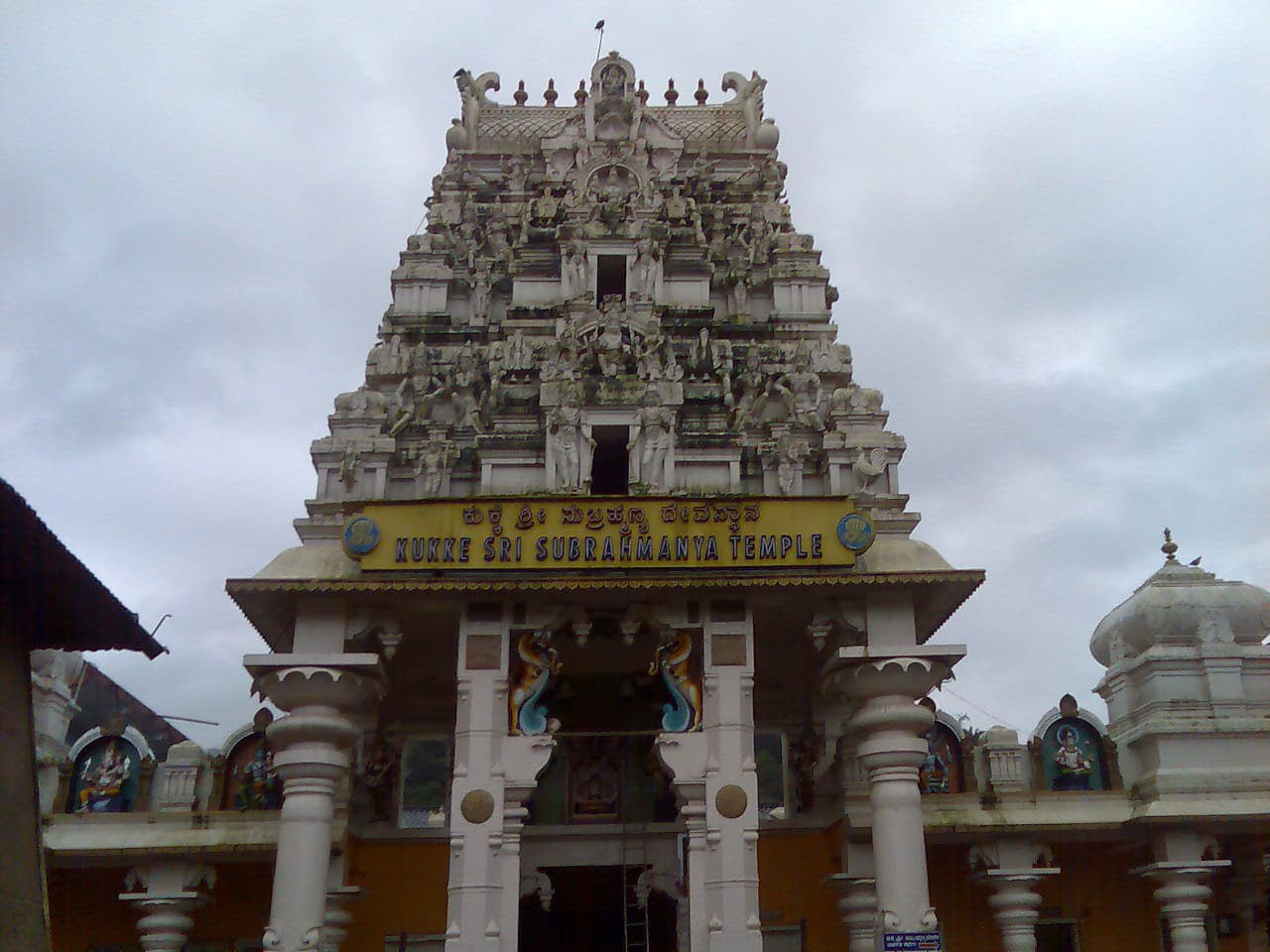
Subramanya
Presiding Deity
Lord Subramanya (Murugan/Kartikeya)
Architecture
Kerala-Dravidian style featuring sloping roofs to withstand heavy rainfall and a silver-plated Garuda Pillar.
Dynasty
Medieval (Patronage by Vijayanagara and Keladi Nayakas)
Timings
6:30 AM to 8:00 PM daily. Puja bookings are available at the temple counter. Special ritual appointments are recommended during peak seasons.
Entry Fee
Free
Best Time
October to February offers the best weather, with the Western Ghats lush green after the monsoon. Nagara Panchami (July-August) is the most significant time for those seeking serpent-related rituals.
A world-renowned temple where Lord Subramanya is worshipped as the lord of all serpents, famous for Sarpa Dosha Nivaran rituals.
The temple has ancient origins, with references found in the Skanda Purana. According to legend, the serpent king Vasuki and other serpents took refuge at Kukke under the protection of Lord Subramanya after being terrorized by Garuda, the eagle mount of Vishnu. Subramanya vanquished Vasuki's arrogance and granted him and all serpents refuge at this spot, establishing himself as the lord of serpents. The temple gained prominence under the Vijayanagara Empire and later received patronage from the Keladi Nayakas and the rulers of Mysore. The silver-plated Garuda Kamba (pillar) was installed as a symbolic reminder that even the mighty Garuda cannot approach those under Subramanya's protection.
The temple is built in the distinctive Kerala-Dravidian architectural style adapted for the heavy rainfall of the Western Ghats. The main sanctum (sreekovil) features sloping terracotta-tiled roofs with ornate wooden brackets and eaves. The most striking feature is the silver-plated Garuda Kamba (Garuda Pillar), which stands in the courtyard and is believed to protect devotees from the harmful effects of snake-related planetary afflictions. The sanctum houses the main deity alongside the serpent idols. The temple complex includes a large open courtyard, a sacred pond (kalyani), and separate shrines for Ganapathi, Shiva, and the Navagrahas (nine planets).
Signature Feature: The silver-plated Garuda Pillar (Garuda Kamba) believed to protect devotees from the poisonous breath of Vasuki. Located at the foot of Kumara Parvatha; historical records and rituals confirm its status as a major pilgrim center and the premier Sarpa Dosha Nivaran temple in South India.
The temple is world-famous for its specialized serpent-related rituals. The most important is the Sarpa Dosha Puja, performed by couples to neutralize astrological afflictions caused by serpent deities. The Sarpa Samskara involves the symbolic marriage of serpents to appease sarpa dosha. Other major rituals include Nagaprathishta (installation of serpent idols), Ashlesha Bali (a powerful ritual performed on Ashlesha nakshatra days), and Nagarakshana Puja. Daily abhishekam and aarti follow traditional Agamic procedures.
Subramanya Shashti (November-December) is the most important festival, commemorating Kartikeya's victory over the demon Tarakasura. Nagara Panchami (July-August) draws the largest crowds for serpent worship, with thousands of couples performing special pujas. Karthika Poornima and Makara Sankramana are also major celebrations with extended pooja schedules.
Sarpa Dosha Nivaran (serpent affliction remediation), Garuda Kamba (silver-plated pillar), location at Kumara Parvatha base, confluence of Kumaradhara and Netravati rivers, one of the seven sacred Murugan temples.
October to February offers the best weather, with the Western Ghats lush green after the monsoon. Nagara Panchami (July-August) is the most significant time for those seeking serpent-related rituals.
6:30 AM to 8:00 PM daily. Puja bookings are available at the temple counter. Special ritual appointments are recommended during peak seasons.
Pre-book Sarpa Dosha pujas in advance through the temple website or authorized agents, as slots fill up quickly on weekends and during Nagara Panchami. The temple has maintained traditional Kerala-style dress code — men should wear dhoti/mundu, women saree or long skirt. Photography is restricted inside the inner sanctum. The nearby Kumaradhara river is perfect for a post-darshan dip. Combine with a visit to Dharmasthala Temple (35 km) for a complete South Canara pilgrimage circuit.
A. It is a specialized Hindu ritual performed at Kukke Subramanya Temple to neutralize the malefic effects of serpent-related planetary afflictions in one's horoscope (sarpa dosha). The ritual involves abhishekam, mantra chanting, and offerings to the serpent deities.
A. The temple is 105 km from Mangalore (nearest airport and major railway station). Regular KSRTC buses ply from Mangalore, Bangalore (360 km), and nearby towns. The nearest railway station is Subramanya Road (5 km). Private taxis are available from Mangalore.
A. Yes, the temple trust maintains KSTDC and Kukke Kshetra guest houses. Private hotels and lodges are available within walking distance of the temple. Advance booking is recommended during festival seasons.
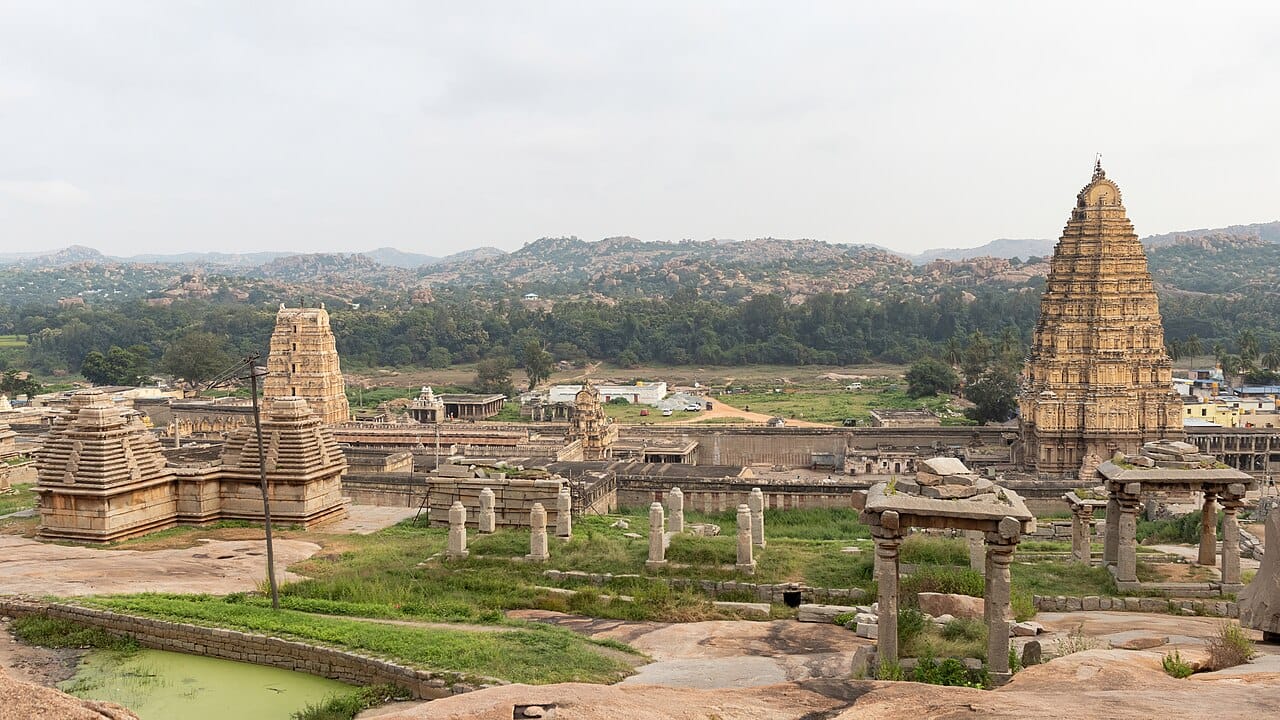
Virupaksha Temple
The Virupaksha Temple in Hampi, Karnataka, is a UNESCO World Heritage Site and the oldest functioning temple in India, dedicated to Lord Shiva as Virupaksha.
Chamundeshwari Temple
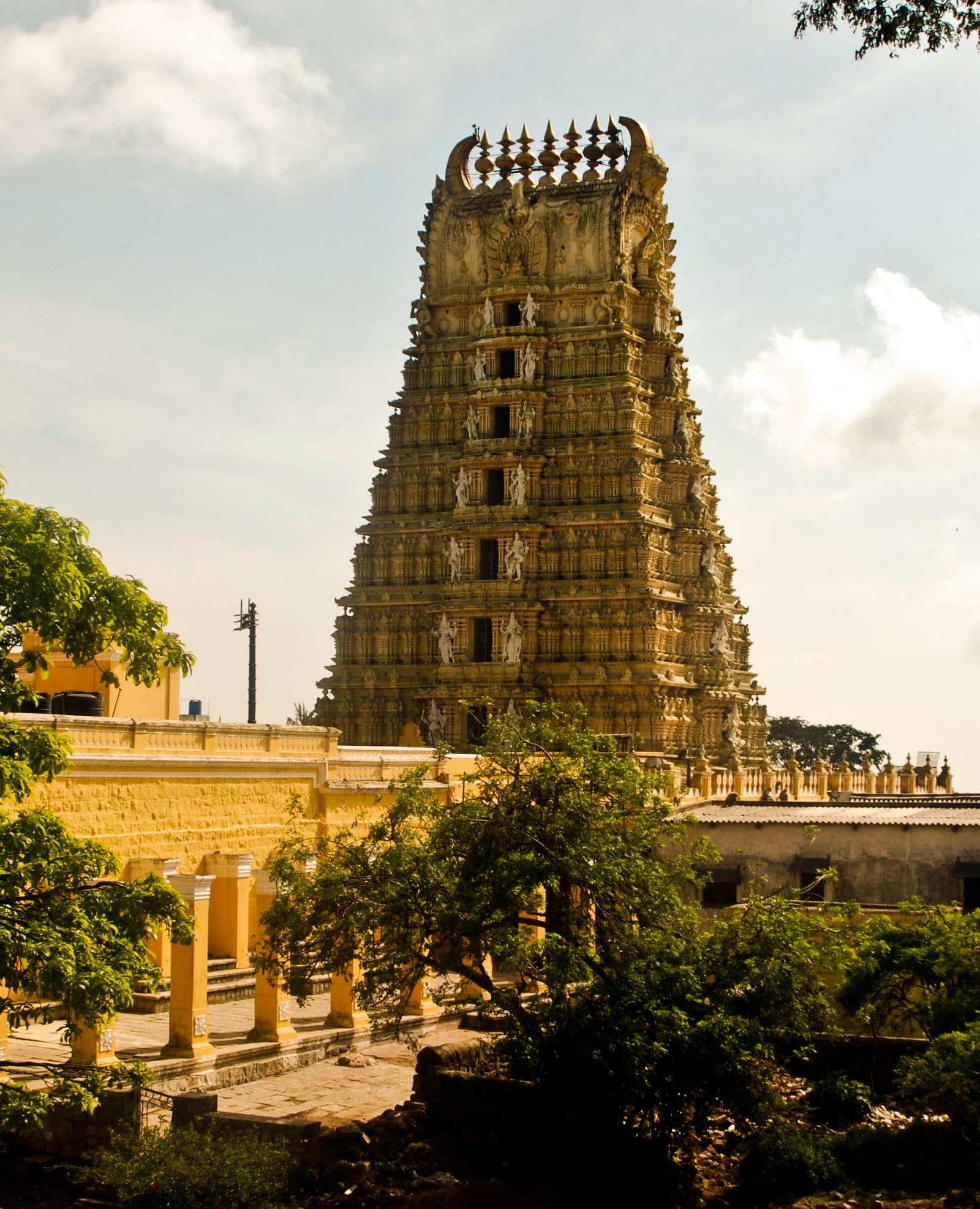
Perched atop Chamundi Hills at 3,489 feet, the Chamundeshwari Temple is the tutelary shrine of the Wodeyar dynasty of Mysore. The goddess Chamundeshwari, an eight-armed form of Durga who defeated the demon Mahishasura, is the state deity (Naada Devi) of Karnataka. The temple is accessed by 1,000 stone steps built in 1664.
Badami Cave Temples
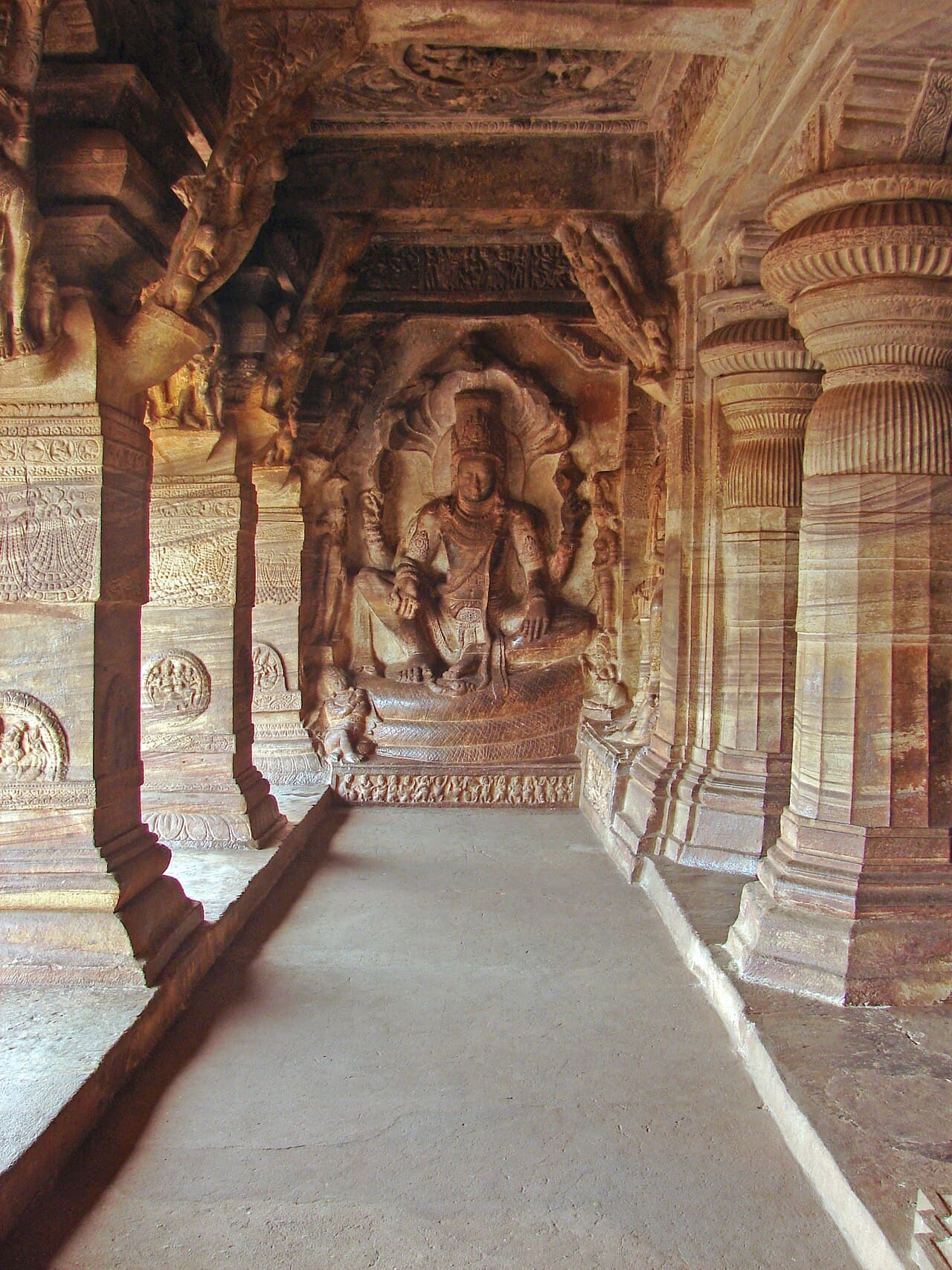
The Badami Cave Temples are a complex of four rock-cut cave temples carved into the soft sandstone cliffs of Badami, the capital of the Early Chalukya dynasty. Dating from the 6th-7th century CE, these caves represent the earliest known examples of South Indian temple architecture in rock-cut form and are considered the birthplace of Chalukya art. The site is on UNESCO's tentative list of World Heritage Sites.
Durga Temple
The Durga Temple at Aihole, built in the 7th-8th century CE, is a distinctive architectural experiment of the Early Chalukya period. Featuring a unique apsidal (horseshoe-shaped) plan modelled after a Buddhist chaitya hall, a raised gallery with carved stone pillars, and a massive Dravidian-style shikhara, it represents the creative fusion of architectural traditions that Characterises Aihole as the 'cradle of Indian temple architecture.'
Lad Khan Temple
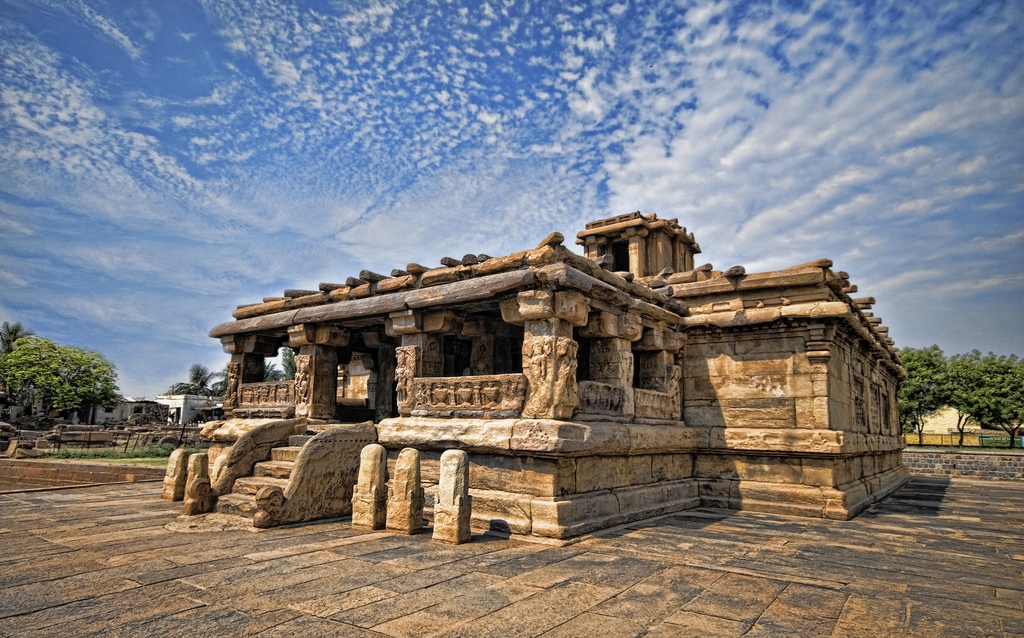
The Lad Khan Temple at Aihole is one of the oldest surviving stone temples in India, dating to the 5th century CE. Built by the Early Chalukya dynasty, the temple is a key monument in the evolution of Hindu temple architecture, representing an early experimental phase when temple builders were adapting earlier wooden and brick construction methods into permanent stone forms. The temple features a flat-roofed mandapa with 16 carved stone pillars and a small ground-level sanctum.
Meguti Temple
The Meguti Temple atop the Aihole hill is a Jain temple built in 634 CE by Ravikirti, the court poet of the Chalukya emperor Pulakeshin II. The temple is historically paramount for its inscription — the Aihole Prashasti — which provides the earliest known securely dated reference in Chalukya history and records the military campaigns of Pulakeshin II, including his victory over the Pallava king Mahendravarman I.
Rasmancha Bishnupur
The oldest 17th-century brick structure in Bishnupur, unique for its massive pyramidal roof and arched galleries.
Jor-Bangla Temple Bishnupur
Known for its 'twin hut' design and incredibly detailed terracotta panels depicting the Ramayana and Mahabharata.
Shyam Rai Temple Bishnupur
A five-towered terracotta temple famous for its circular friezes showing the Rasa-lila of Lord Krishna.
Dashavatara Temple
Dating to around 500 CE, this is the earliest known North Indian temple with a shikhara (curvilinear tower). The temple is famous for its carved panels depicting the ten incarnations (Dashavatara) of Vishnu on the sanctum walls.
Shri Ram Janmabhoomi Mandir
A grand and historic temple marking the birthplace of Lord Rama, the seventh avatar of Vishnu, representing the pinnacle of Nagara architecture.
Prem Mandir
A stunning modern white-marbled complex in Vrindavan dedicated to Divine Love, known for its life-like tableaus of Krishna's pastimes.
India's temples are living traditions — not museums. Every temple has its own customs. This guide helps first-time visitors prepare with confidence and respect.
Foreign visitor information is being researched
Please verify with the official temple authority before planning your visit.
Foreign Visitors
Verify Before VisitingVisitor Information
Entry policies vary between temples. Most temples welcome visitors, while some may restrict access to specific areas, rituals, or the inner sanctum. Always verify the latest entry guidelines with the official temple authorities before your visit.
Modest clothing is expected at every Indian temple — a sign of respect, not a restriction. Think of it as dressing for a formal ceremony.
A scarf is always useful — it covers shoulders, works as a head covering, and can double as a makeshift face cover if needed.
Outdoor photography is generally permitted. Indoor photography is often restricted. Always look for signage or ask a priest before taking photos inside.
October to February offers the best weather, with the Western Ghats lush green after the monsoon. Nagara Panchami (July-August) is the most significant time for those seeking serpent-related rituals.
April — June
July — September
English is widely understood at major tourist temples. In smaller local temples, Hindi and the regional language are more common. A smile and simple hand gestures go a long way. Learning a few words of the local language is always appreciated.
Cash (Indian Rupees) is the most reliable option, especially for temple offerings, small shops, and local transport.
UPI digital payments (Google Pay, PhonePe, Paytm) are widely accepted across India — even at roadside stalls. Download one before you arrive.
International credit/debit cards work at most ATMs, hotels, and larger establishments. Smaller vendors may only accept cash or UPI.
Carry small denominations (₹10, ₹20, ₹50, ₹100 notes) for offerings and temple donations. Large notes (₹500, ₹2000) can be hard to break at smaller counters.
Many historic temples have uneven stone floors, multiple steps, and narrow passages. Wheelchair access is limited at older sites — contact the temple in advance.
Basic restroom facilities and drinking water are available at most major temples. Some charge a small fee (₹5–₹10).
Stay hydrated — carry a reusable water bottle, especially in hot climates.
Keep valuables secure — use hotel lockers for passports and excess cash.
Wear comfortable, sturdy footwear — temple floors can be hot, wet, or uneven.
Beware of unofficial guides or touts near temple entrances. Only use authorised services.
Carry a photocopy of your passport and visa. Leave originals in your hotel safe.
Download offline maps — mobile networks can be unreliable near remote temple sites.
These short explanations help make sense of what you see and experience.
Darshan means 'seeing' — but in a temple it means being seen by the deity. It is a sacred moment of connection, not just a viewing.
Removing footwear is a sign of humility. It also keeps the temple floor clean, since devotees sit and pray on the ground.
Food offered to the deity and then distributed to devotees. It is considered blessed. Accept it with both hands and do not discard it.
The bell creates a focused acoustic atmosphere, wards off distractions, and announces your presence before entering the inner sanctum.
Circumambulation (pradakshina) is done clockwise, keeping the sanctum on your right — an auspicious direction aligned with the sun's path.
Flowers symbolise devotion, coconuts represent the ego being broken, incense purifies the air, and lamps represent the victory of light over darkness.
Sacred viewing of the deity; the central act of temple worship.
Clockwise circumambulation of the sanctum.
Blessed food offered to the deity and distributed to devotees.
The innermost sanctum where the main deity resides.
The towering spire above the sanctum, a defining feature of temple architecture.
A pillared hall or pavilion within the temple complex.
The Indian Rupee (?, INR) is the local currency. ATMs are widely available in cities and towns. For temple offerings, keep small notes (₹10, ₹20, ₹50). Most temples accept donations in cash only — digital payments are uncommon at the offering counter itself.
Offerings (dakshina) are given with the right hand. Place cash in the donation box (hundi) or give it directly to the priest. There is no fixed amount — give what feels appropriate. Some temples have fixed fees for special entry or puja participation.
Shoes and sandals are removed before entering the temple building. Most temples have a designated shoe counter (free or a small fee of ₹5–₹20). Socks are generally allowed. In monsoon, carry a plastic bag for wet shoes.
Darshan queues can take 30 minutes to 3 hours at popular temples. Many offer paid VIP darshan (₹100–₹500) for faster entry. Special queues for women, elderly, and disabled visitors exist at some temples. No line jumping.
Major festivals draw enormous crowds — sometimes hundreds of thousands. Book accommodation months in advance. Expect road closures, restricted vehicle access, and limited phone network. Arrive early (before dawn) to avoid the worst congestion.
Always look for signage before taking photos. When in doubt, ask a priest. Never take photos of devotees in prayer without permission. Selfie sticks are banned at most temples. Silently switch your phone to silent mode.
Police / Ambulance / Fire: 112 (National Emergency Number)
Tourist Helpline: 1800-111-363 (Multi-lingual, Ministry of Tourism)
Women's Helpline: 1091
Temple-specific visitor information is continuously researched and updated from official sources. Where specific data is unavailable, general India travel guidance is provided. Always verify current policies with the temple authority before your visit.
Information last verified July 2026. Temple-specific data coming soon.
Continue your journey through the spiritual and architectural wonders of India.

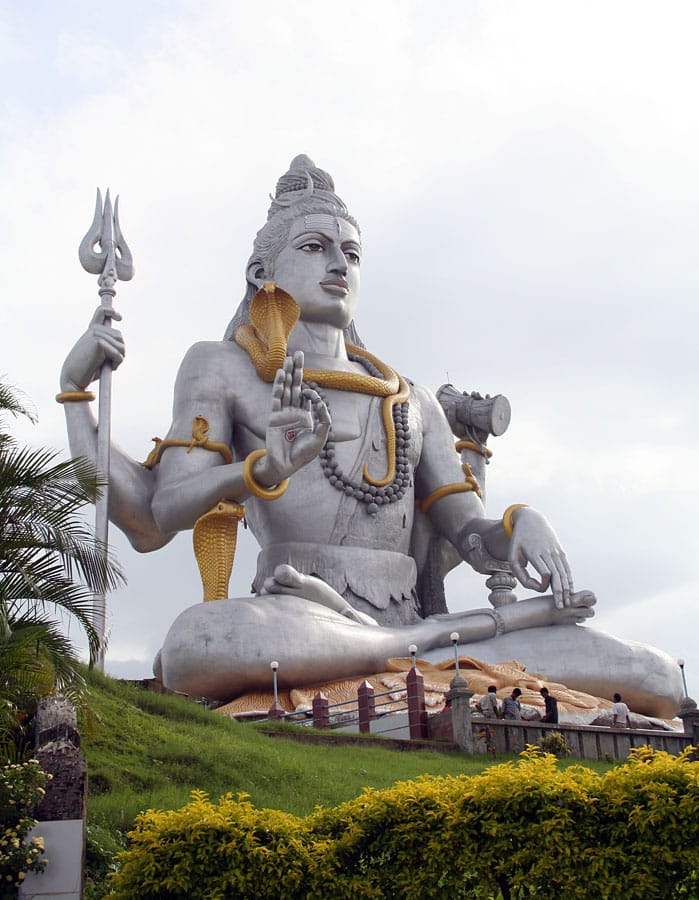
Home to the world's second-tallest Shiva statue (123 feet) and a massive 20-story Raja Gopuram overlooking the Arabian Sea.

The Virupaksha Temple in Hampi, Karnataka, is a UNESCO World Heritage Site and the oldest functioning temple in India, dedicated to Lord Shiva as Virupaksha.

Perched atop Chamundi Hills at 3,489 feet, the Chamundeshwari Temple is the tutelary shrine of the Wodeyar dynasty of Mysore. The goddess Chamundeshwari, an eight-armed form of Durga who defeated the demon Mahishasura, is the state deity (Naada Devi) of Karnataka. The temple is accessed by 1,000 stone steps built in 1664.

The Badami Cave Temples are a complex of four rock-cut cave temples carved into the soft sandstone cliffs of Badami, the capital of the Early Chalukya dynasty. Dating from the 6th-7th century CE, these caves represent the earliest known examples of South Indian temple architecture in rock-cut form and are considered the birthplace of Chalukya art. The site is on UNESCO's tentative list of World Heritage Sites.

The Durga Temple at Aihole, built in the 7th-8th century CE, is a distinctive architectural experiment of the Early Chalukya period. Featuring a unique apsidal (horseshoe-shaped) plan modelled after a Buddhist chaitya hall, a raised gallery with carved stone pillars, and a massive Dravidian-style shikhara, it represents the creative fusion of architectural traditions that Characterises Aihole as the 'cradle of Indian temple architecture.'

The Lad Khan Temple at Aihole is one of the oldest surviving stone temples in India, dating to the 5th century CE. Built by the Early Chalukya dynasty, the temple is a key monument in the evolution of Hindu temple architecture, representing an early experimental phase when temple builders were adapting earlier wooden and brick construction methods into permanent stone forms. The temple features a flat-roofed mandapa with 16 carved stone pillars and a small ground-level sanctum.

The Meguti Temple atop the Aihole hill is a Jain temple built in 634 CE by Ravikirti, the court poet of the Chalukya emperor Pulakeshin II. The temple is historically paramount for its inscription — the Aihole Prashasti — which provides the earliest known securely dated reference in Chalukya history and records the military campaigns of Pulakeshin II, including his victory over the Pallava king Mahendravarman I.

The Hoysaleswara Temple in Halebidu, built circa 1121-1160 CE, is the largest Shiva temple built by the Hoysalas. Inscribed as a UNESCO World Heritage Site in 2023 as part of the Sacred Ensembles of the Hoysalas, it is celebrated for its hyper-realistic soapstone sculptures covering every surface of the structure.
"The Hoysala temples of Belur and Halebidu are known for their star-shaped plans and extremely detailed soapstone carvings."